

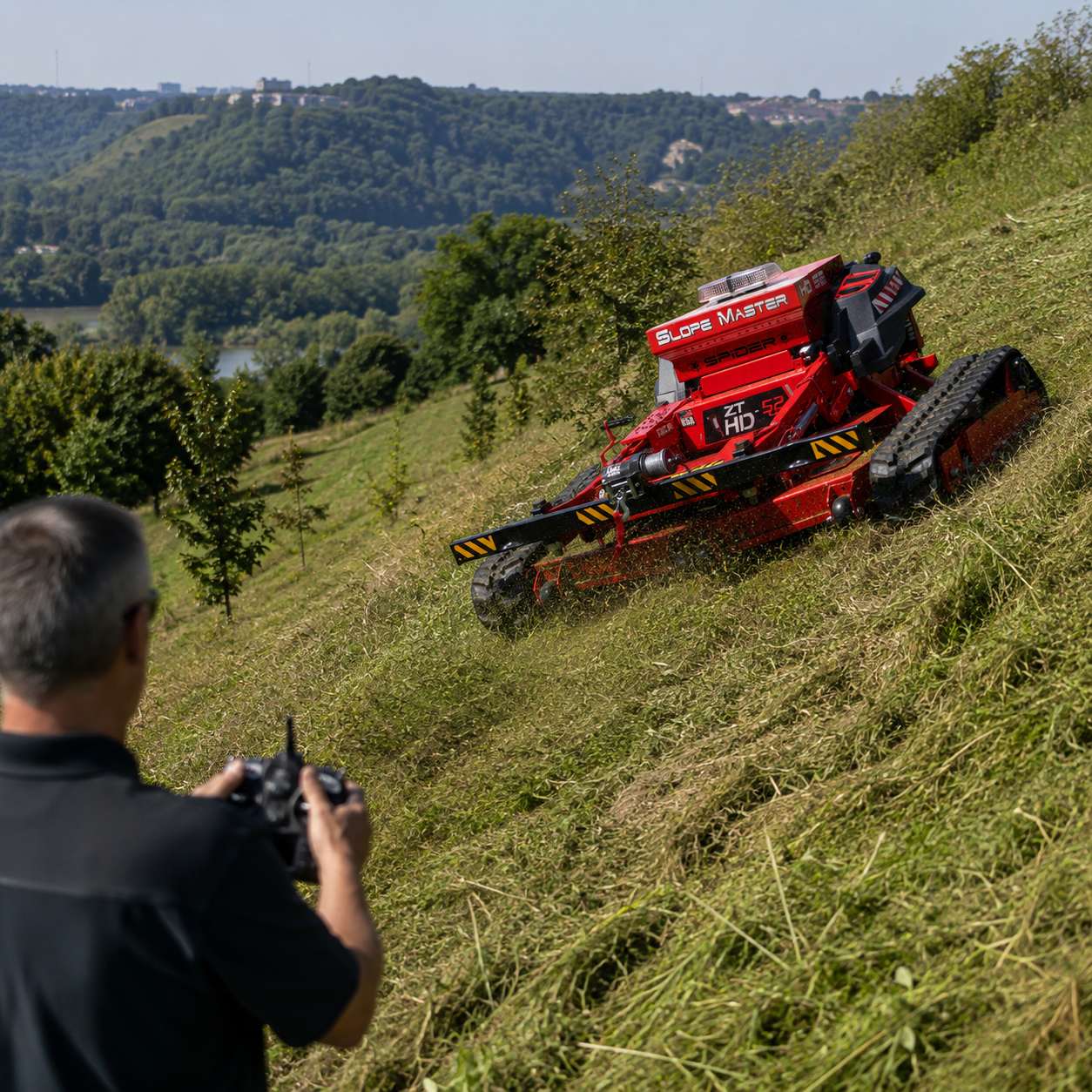
Utility Right-of-Way Mowing: Planning for Steep Banks and Difficult Access

Brandon Keen • October 22, 2026

Build a practical mowing scope around the corridor, its infrastructure, and the areas your equipment can reach.

Quick Answers

  • Where can a remote-controlled slope mower fit? Suitable grass and vegetation maintenance areas along utility corridors, access routes, and infrastructure slopes, subject to the owner's requirements and the machine's operating limits.
  • Is corridor mowing the same as line clearance or excavation? No. Mowing should have a defined scope and should not be treated as authorization for tree work, digging, or changes to utility infrastructure.
  • What should be assessed first? Authorized boundaries, site hazards, access, vegetation, protected assets, terrain, and the utility owner's work requirements.

A utility corridor is rarely one uniform mowing site. It may include a broad grass section, a steep bank, a narrow gate, a drainage crossing, and infrastructure that requires careful protection. Planning the entire route helps identify where equipment can contribute and where another approach is needed.

For utility owners and contractors, the first purchasing question should be practical: what work is authorized, and what conditions will the machine encounter while completing it?

Confirm the Work Limits With the Utility Owner

Obtain the approved maintenance boundary and scope before pricing or mobilizing. A visible cleared strip is not a substitute for a confirmed work area. Clarify access permissions, scheduling, reporting, and the contact responsible for questions or changed conditions.

Ask the owner to identify infrastructure and restrictions relevant to the job. These may include poles, guy wires, cabinets, valve locations, markers, exposed facilities, drainage structures, or areas where equipment must not travel. Use the owner's required process to resolve uncertainty.

If the project includes activities beyond mowing, such as excavation or specialized tree clearance, have those activities assessed and authorized separately. Mower capability does not establish permission or qualification to perform other utility work.

Map Access and Terrain as Separate Problems

A mower may suit the vegetation and still be impractical for the available route. Document unloading space, gates, narrow passages, turning areas, surface transitions, and any crossings that require approval. Confirm whether the proposed transport and machine dimensions fit the site.

Evaluate the terrain using the manufacturer's operating requirements. A maximum angle does not describe soil stability, obstructions, or the ability to see the work area. Remote operation requires an appropriate operating position and clear control of the work.

Mark uncertain sections for further assessment. A complete scope should explain how excluded areas will be handled rather than assuming every part of the corridor can be treated by one machine.

Divide the Corridor Into Useful Work Sections

Separating the route into sections helps estimating, equipment selection, and communication. For each section, record:

  • Approximate maintainable area and the expected vegetation.
  • Assessed terrain conditions and access constraints.
  • Structures, designated buffers, and other protected features.
  • Required finish and responsibility for clipping or debris management.
  • Areas needing another method or specialist evaluation.
  • The conditions that would require work to stop or be rescheduled.

A short access bottleneck or obstructed section can determine the overall schedule. Identify those constraints before calculating production using the open sections alone.

Match the Cutting System to the Approved Vegetation

Routine grass maintenance differs from reclaiming a corridor with woody growth. Confirm the proposed configuration's cutting limits and identify any material that requires another service. Do not assume tracks, remote control, or a steep-slope rating establish brush-cutting capacity.

Where an initial clearing phase is needed, separate it from recurring maintenance. This helps the owner compare proposals and gives the mowing crew a clear starting condition.

Our commercial mower lineup offers different configurations for evaluation. Provide vegetation photos and the required result so the recommendation can address the actual work.

Plan Around Infrastructure and Other People

Follow the utility owner's requirements and the manufacturer's instructions for site controls, working positions, clearances, and equipment use. Identify how workers, the public, vehicles, and neighboring operations could enter the area.

Where energized equipment or electrical infrastructure is involved, the utility owner or qualified personnel should establish the applicable controls before mowing begins. Remote operation should never be treated as permission to approach an electrical hazard.

Set a communication process for damaged markers, exposed facilities, fallen lines, unexpected debris, or changing ground conditions. Operators need to know when to stop, who to contact, and how to document the location without approaching the hazard.

Estimate the Full Maintenance Visit

Include travel, access coordination, assessment, setup, mowing, approved detail work, cleanup, and reporting in the estimate. Account for required support personnel and the time spent moving between separated sections.

Use records from comparable jobs or a representative evaluation to estimate production. The machine's travel speed is not a reliable stand-in for acres completed per hour. Repeat visits may have different costs than the initial maintenance effort.

For contractors developing this service, our guide to winning slope mowing contracts offers additional business context.

Use Completion Records to Improve the Next Visit

Record the sections completed, time spent, conditions encountered, and areas deferred. Photos and a marked map help the owner distinguish completed mowing from follow-up work. They also make the next estimate and maintenance schedule more realistic.

A useful report describes the work performed without implying that mowing included an engineering inspection or certification of the utility system.

Discuss Your Corridor With Slope Master

Slope Master Innovations identifies utility corridors and infrastructure slopes among the applications for its commercial remote-controlled mowers. Share the approved work scope, terrain details, vegetation, and access restrictions with our team.

Request equipment information and a quote, or call or text (606) 226-1004 to discuss your project.

Share this article:

Recent Posts

Remote-controlled slope mower working on a grassy hillside.
By Brandon Keen • October 22, 2026
Compare 50° and 60° slope mower capabilities, understand degrees versus percent grade, and choose equipment for your property's terrain.
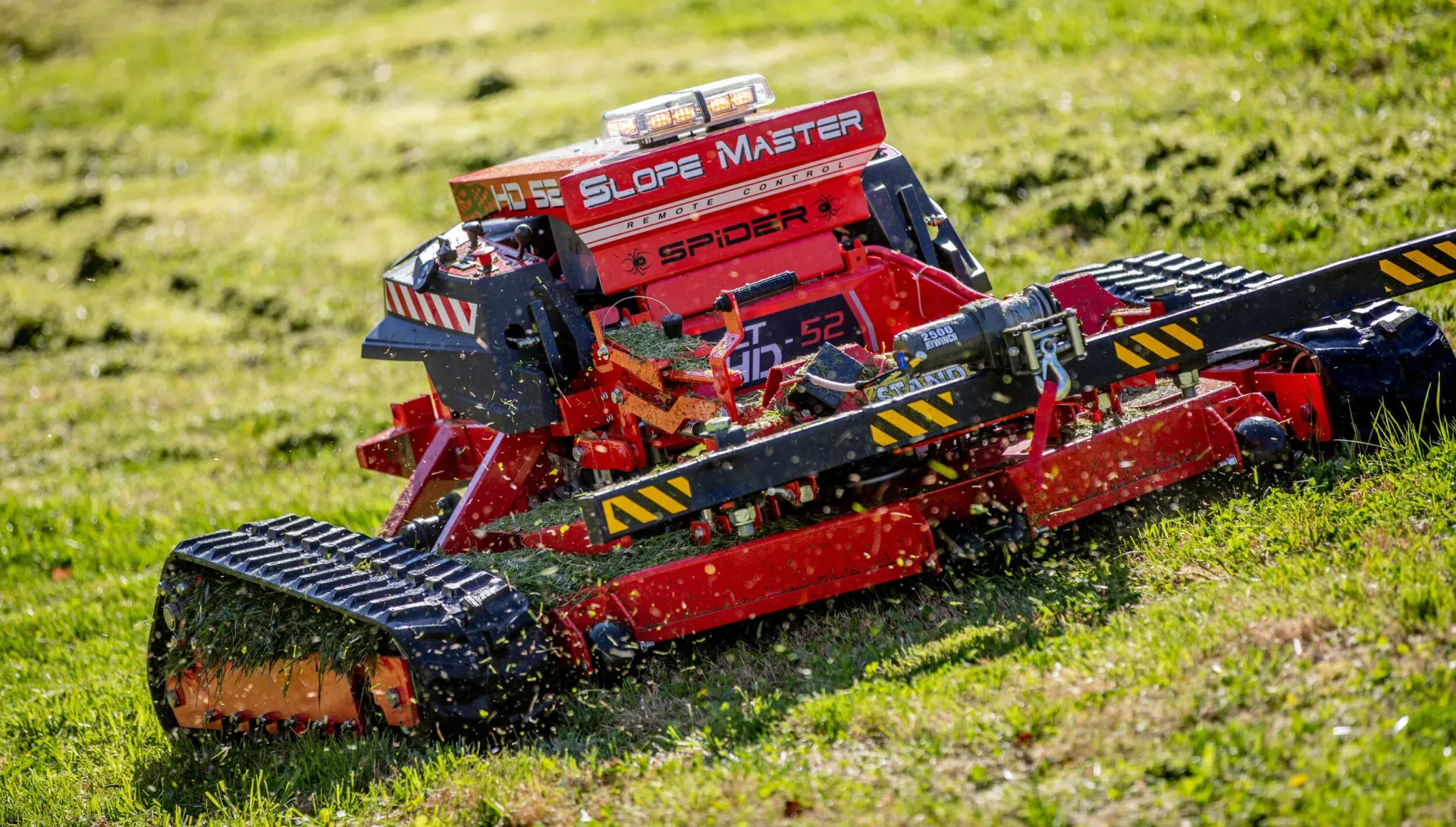
The Spider remote-controlled slope mower by Slope Master Innovations.
By Brandon Keen • October 22, 2026
Plan retention pond bank mowing with a practical checklist covering access, vegetation, ground conditions, equipment selection, and maintenance scope.
Slope Master mower at a grassy jobsite.
By Brandon Keen • October 22, 2026
Build a steep-slope mowing estimate that covers labor, equipment, access, cleanup, overhead, and profit—with a practical example for contractors.
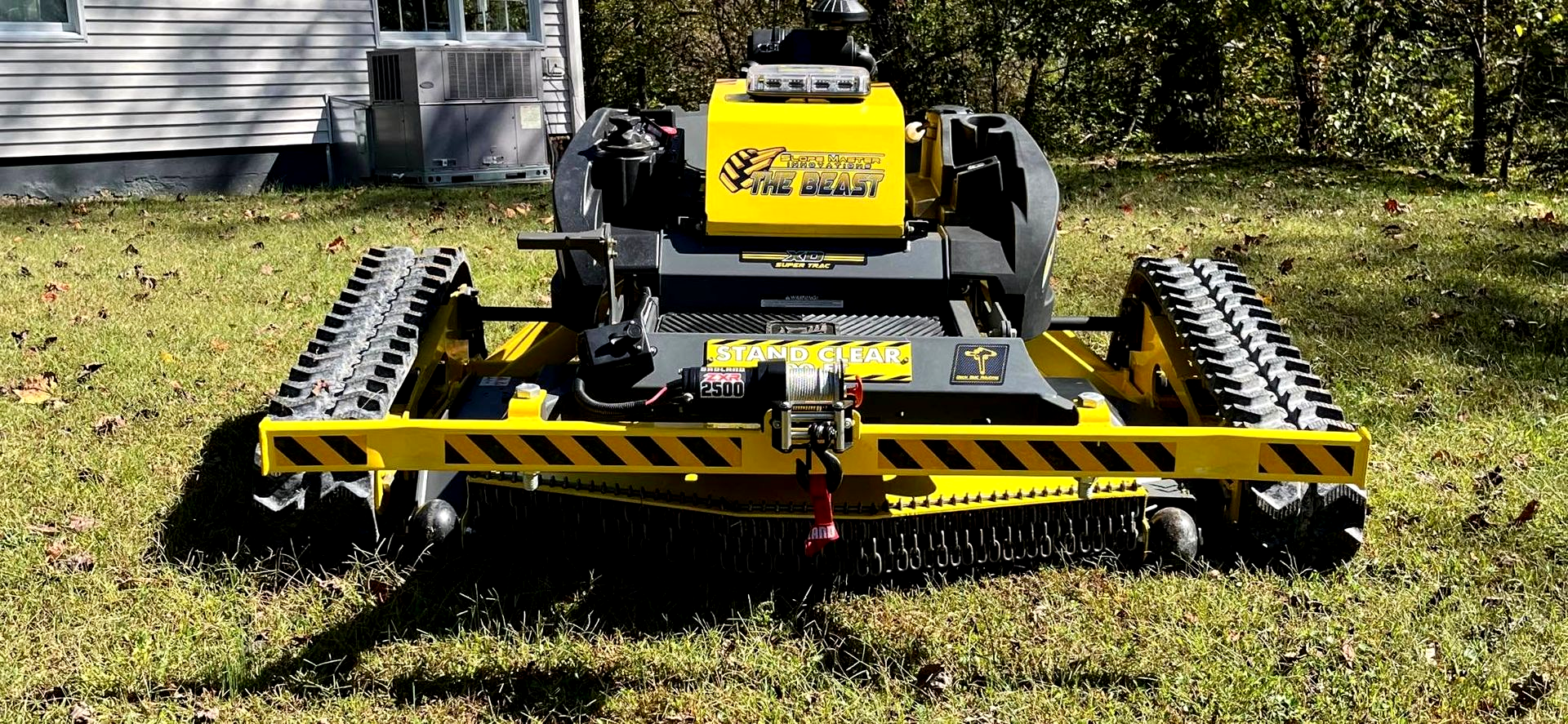
Yellow tracked slope mower on a grassy property.
By Brandon Keen • October 22, 2026
Build a public works slope mower proposal with documented workload, ownership costs, staffing needs, evaluation criteria, and measurable outcomes.
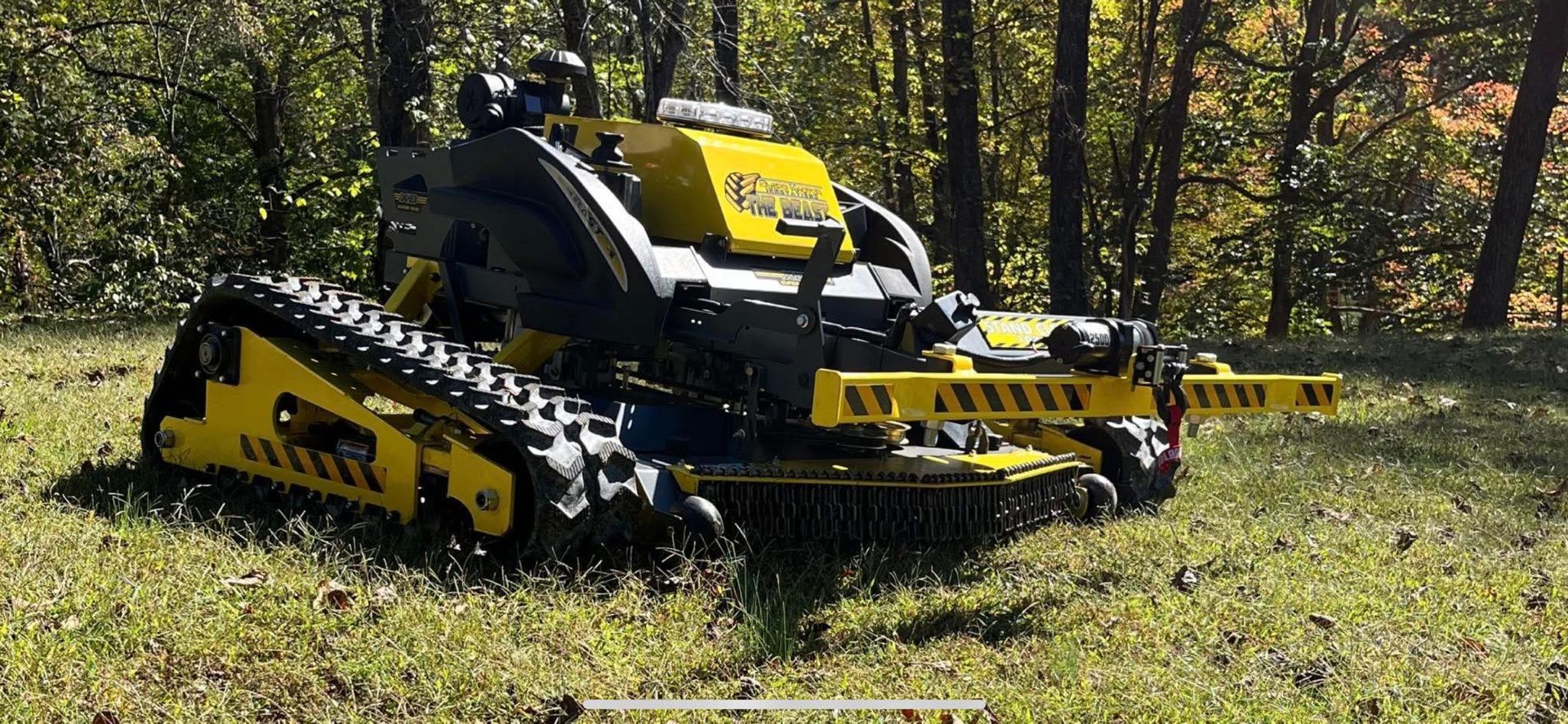
The Beast remote-controlled slope mower by Slope Master Innovations.
By Brandon Keen • October 22, 2026
Compare finish mowing and brush cutting on slopes. Match vegetation, cutting limits, site access, and desired results to the right mower configuration.
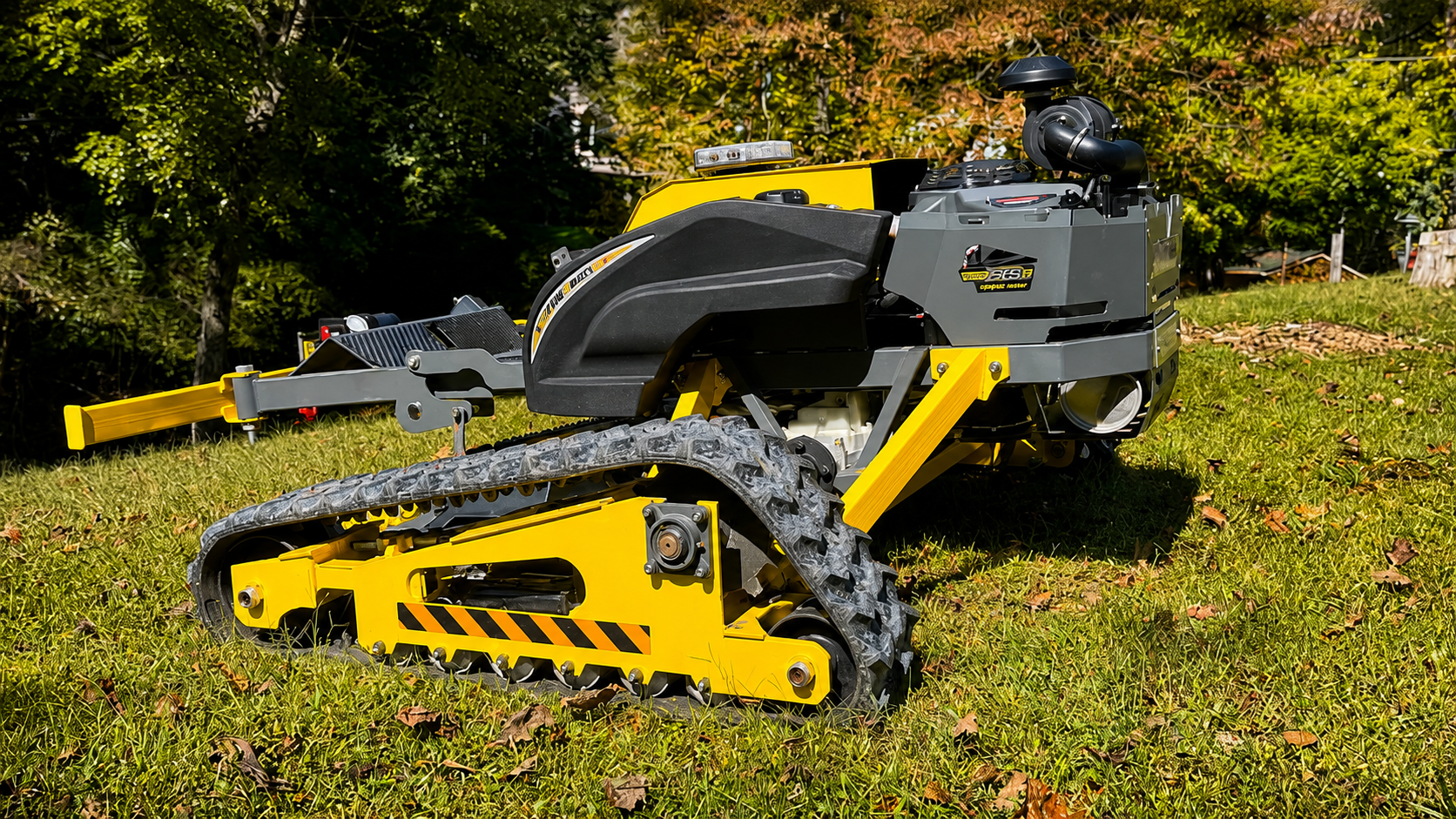
Yellow-and-black tracked mini excavator on grass, with arm extended in a wooded outdoor area
By Brandon Keen • August 14, 2026
Compare 10 specifications that define a commercial-grade slope mower, including construction, traction, engine, safety, parts, warranty, and support.
Red Slope Master Spider riding mower on a grassy roadside with a wooded background
By Brandon Keen • August 14, 2026
Compare remote-controlled and robotic slope mowers. Learn which commercial mowing equipment is built for steep hills, rough terrain, and professional use.
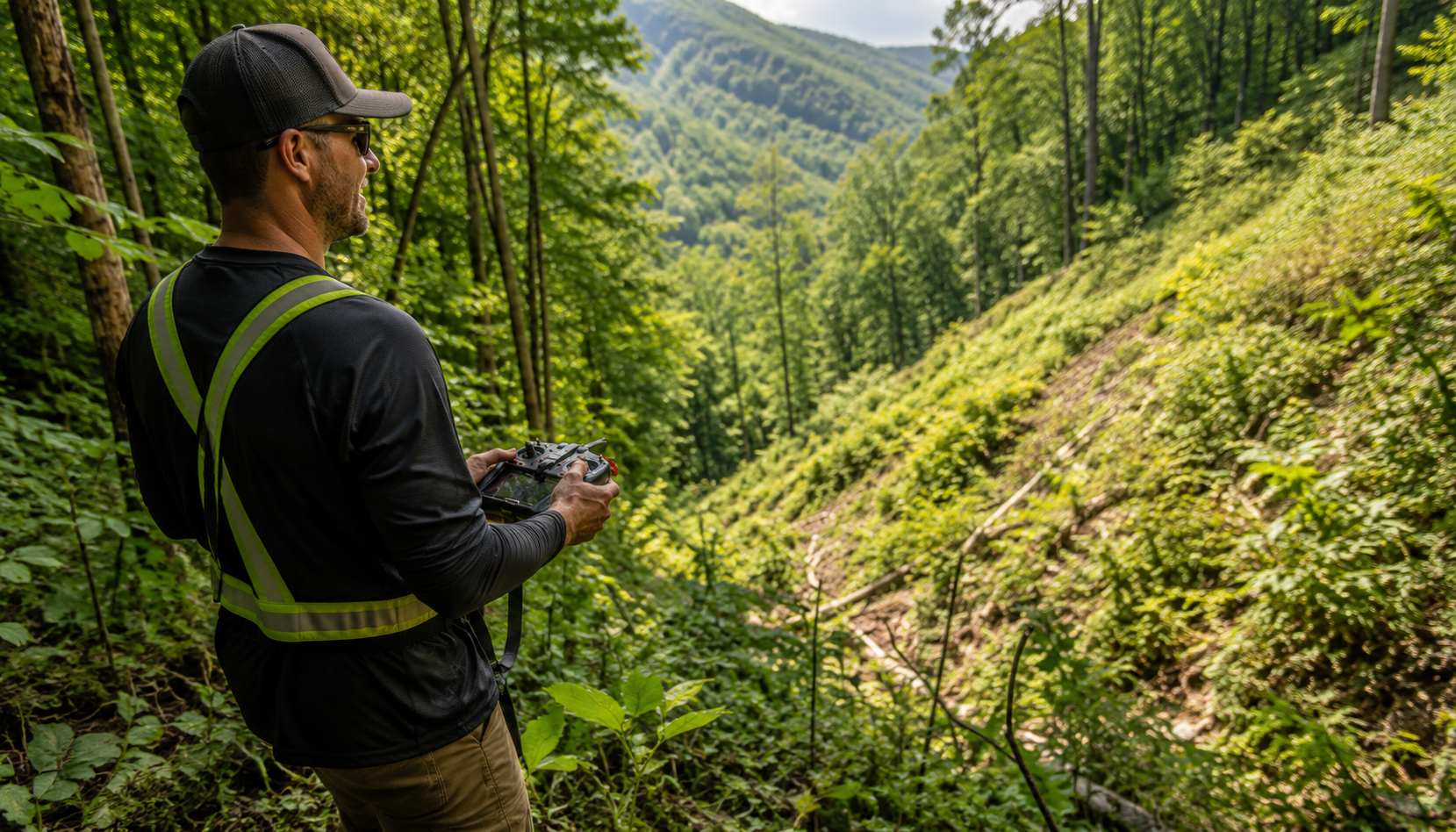
Hiker with drone controller overlooking a lush green mountain valley and forest trail
By Brandon Keen • July 23, 2026
Can you safely mow a 45-degree slope? Learn the 12 questions every commercial slope mower buyer should ask before investing in new equipment.
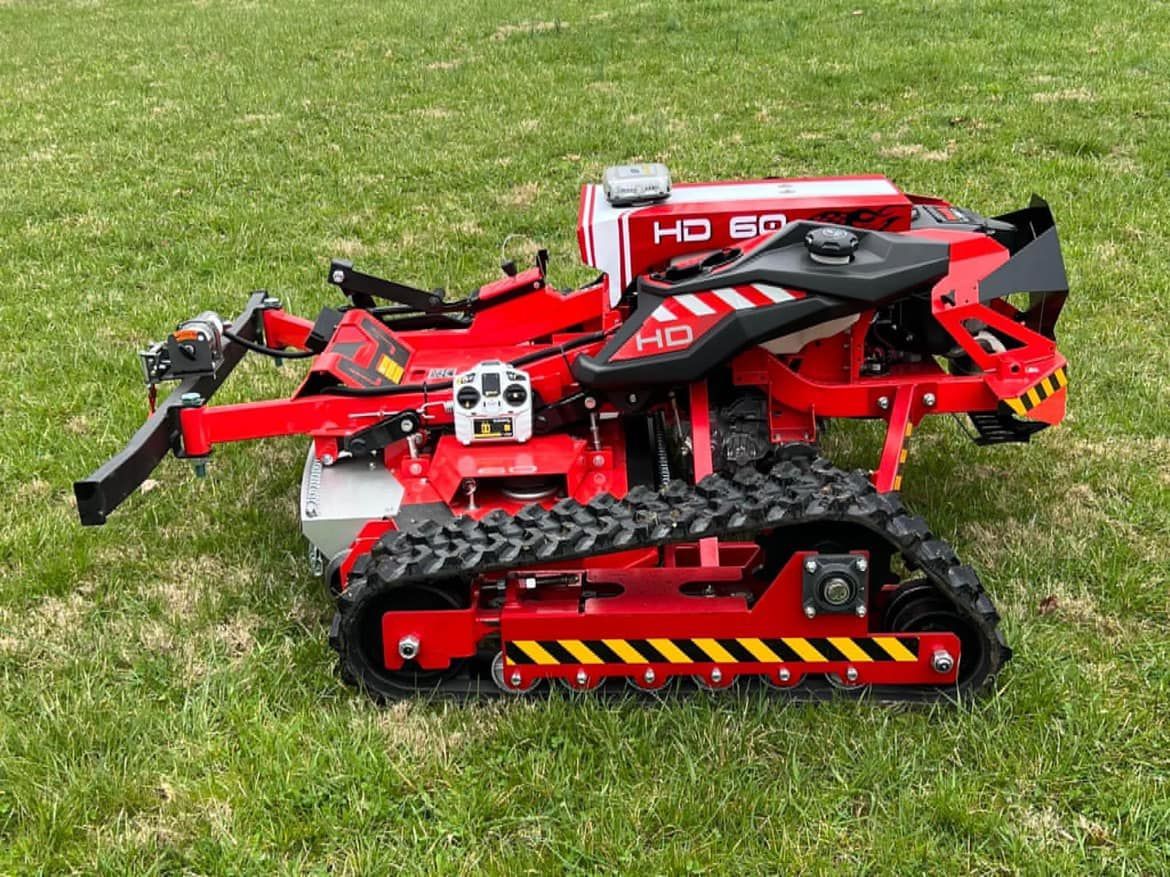
Red tracked robot on grass with black arms and hazard-striped front attachment
By Brandon Keen • July 1, 2026
Discover 12 profitable commercial applications for remote-controlled slope mowers and learn how they improve safety, productivity, and business growth.
Commercial remote-controlled slope mower working on a steep green hill.
By Brandon Keen • May 22, 2026
Discover how a commercial remote-controlled slope mower replaces 12-18 workers, ensuring maximum safety and efficiency on steep terrain and highway embankments.

Show More