

How to Mow Steep Slopes Safely: Remote Mower Guide

Brandon Keen • May 22, 2026

Mowing a steep bank requires a site-specific plan. A remote-controlled mower can let the operator work from a more suitable position, but it does not remove every hazard. Check the exact model’s operating manual and slope limits, inspect ground and access conditions, establish an exclusion zone, and stop if traction, visibility, or control is uncertain. This guide covers practical checks for commercial crews.

What is the safest way to mow a steep embankment?

Remote-controlled mowing can help keep operators off steep ground, but it does not make every site safe. Follow the exact model’s manual and slope limits. Assess moisture, soil, obstacles, runout, access, traffic and bystanders. Train operators; stop if traction or control is uncertain.

Remote operation can help trained crews stay clear of the mower, but it does not eliminate risk. Follow the model manual, maintain line of sight and control, keep people outside the work zone, and stop if visibility, traction or control becomes uncertain.

Mark Halbert, the founder of Slope Master Innovations, understood these risks better than most. With over 40 years of experience in welding and machine shop fabrication, and a background as a Marine amphibious track vehicle mechanic, Mark saw the need for a machine that could survive the rugged and mountainous terrain of Appalachia. His transition from the mining industry to specialized metal fabrication led to the birth of the Slope Master line—a series of mowers designed specifically for environments where human safety was previously compromised.

Benefits of Remote Operations

  • Remote control may keep operators off the slope, but it does not remove all hazards or guarantee lower insurance costs. Benefits depend on the model, site, operator training and maintenance.
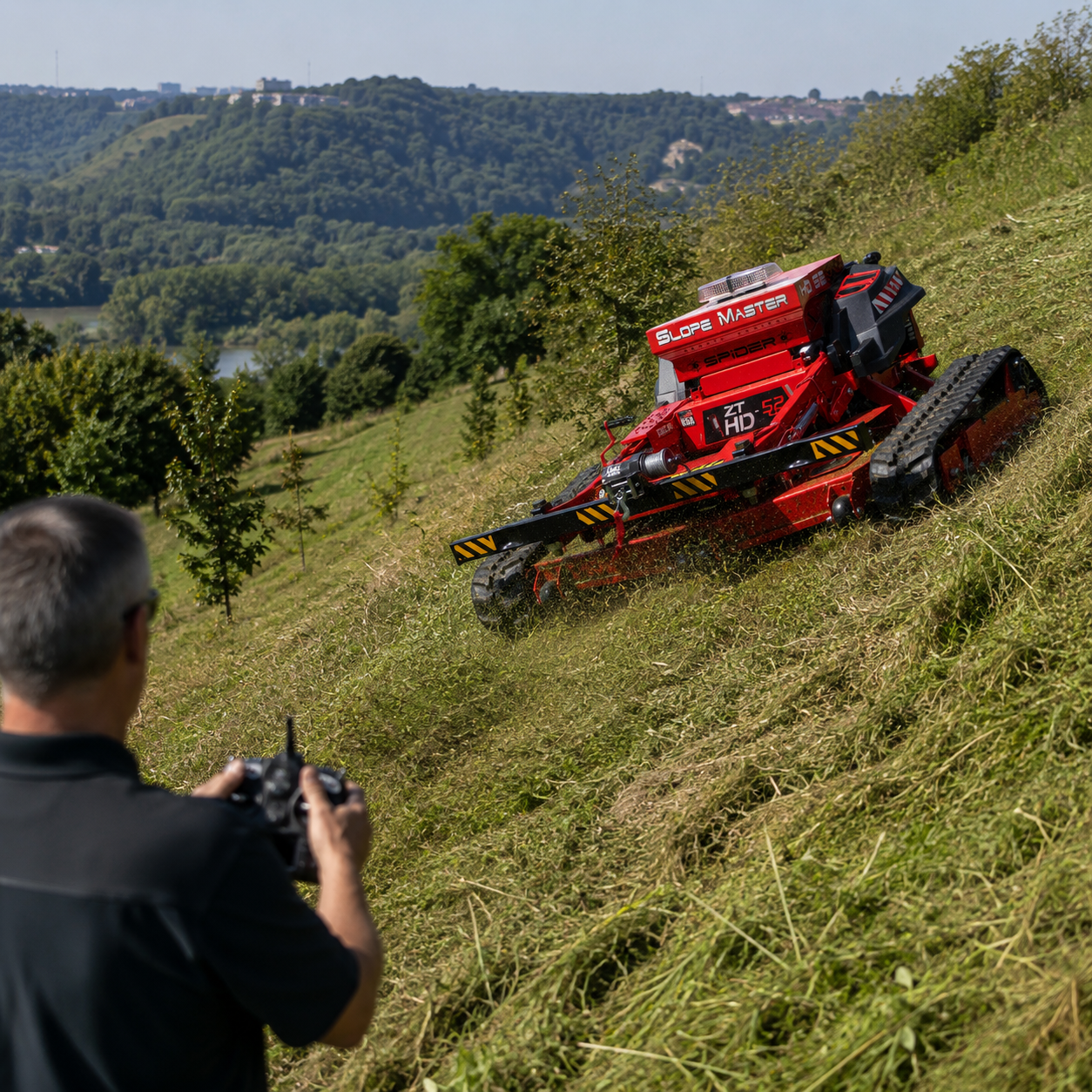
Commercial remote-controlled slope mower working on a steep green hill

Why choose a commercial remote-controlled slope mower over manual labor?

Productivity varies with slope, vegetation, access, and operator skill. Test the selected model on representative ground and compare measured job time; no fixed labor equivalent applies.

Actual time and staffing needs vary by site. Assess access, traffic control, vegetation and setup, then compare a measured trial with the current method. Do not promise a specific labor reduction or risk elimination.

Cut quality depends on blade condition, turf, terrain, mowing height and speed. Compare results on representative ground; avoid claiming one method always produces a superior finish.

Efficiency and performance metrics

Slope Master advertises capability up to 60° for suitable conditions. Limits vary by model and slope direction; verify the manual, traction, surface and site before use. Stop work outside stated limits.

Performance varies by site and model. Measure a representative job; do not assume fixed labor equivalents or percentage savings in time, fuel or maintenance.

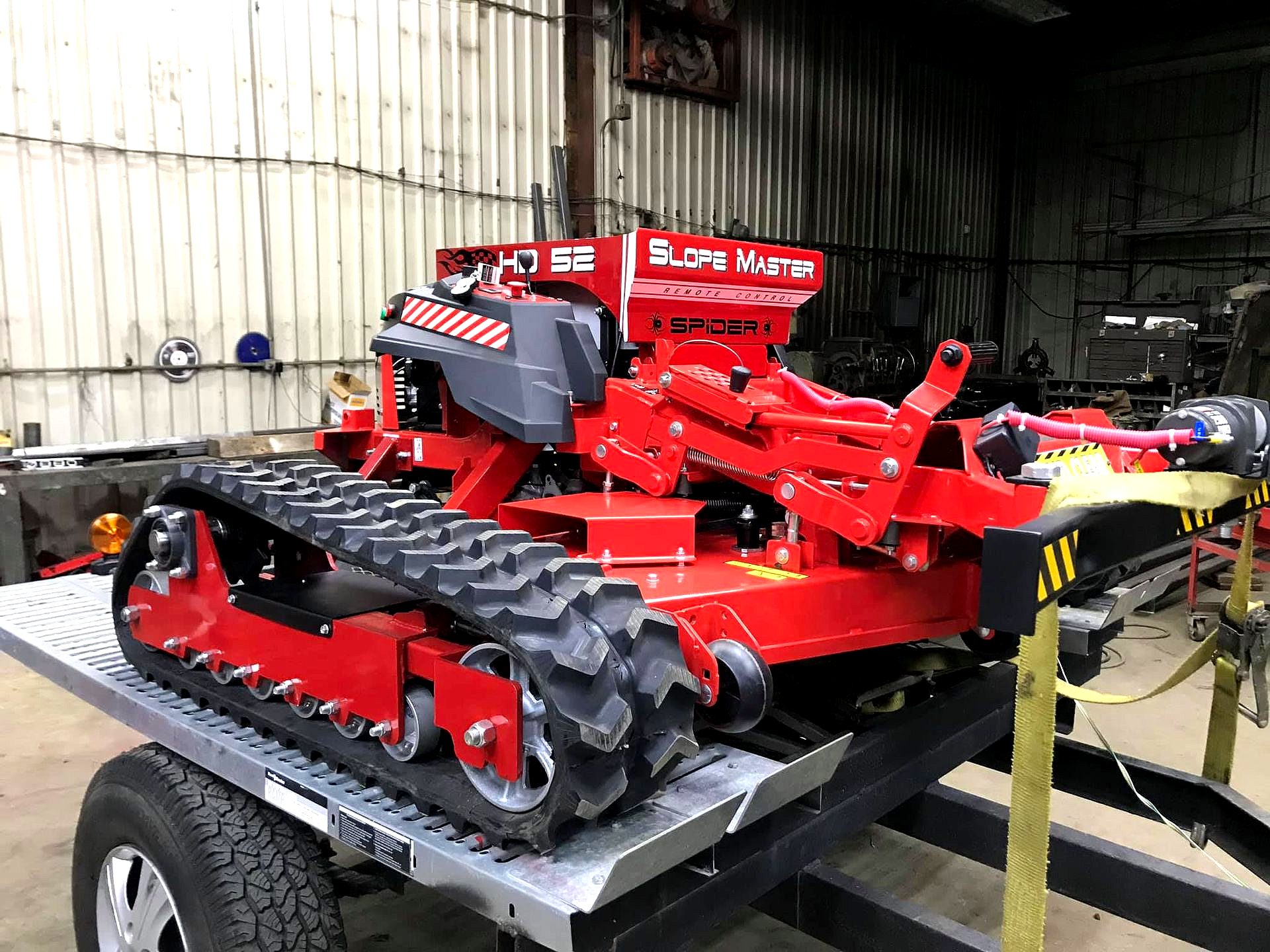
Red tracked Slope Master Innovations Slope Mower machine with a red hopper on a flatbed trailer inside a warehouse, clearly showing the commercial-grade, tank-like tracks.

How does the Slope Master product line handle rough terrain?

The Slope Master Innovations lineup is built on the foundation of Appalachian toughness. Because the region is known for its steep hills and unforgiving landscapes, the engineering behind these mowers had to be superior to standard commercial offerings. Our technology focuses on stability, power-to-weight ratios, and remote responsiveness.

Check the model specifications for cutting width, height range, slope limits and intended vegetation. Do not assume a finish mower is rated for woody brush; confirm before use.

For those requiring different scales of operation, The Spider offers incredible maneuverability in tighter spaces, while The Beast is designed for maximum coverage and power. Each machine in the Slope Master family is a testament to our technology , which prioritizes the user's ability to navigate complex topography without ever setting foot on the incline themselves.

Key features of remote mowing technology

Modern remote control mowers are not just about the remote; they are about integrated systems that work together to protect the machine and the environment. These features include:

Feature availability differs by model. Verify slope rating, cutting specifications, remote operating range, shutoff and recovery procedures in current product documentation. Do not assume GPS tracking, fail-safe functions or uninterrupted radio control.

By visiting our FAQs page, customers can learn more about the specific maintenance requirements and operational capabilities of each model. Understanding the mechanics is key to maximizing the lifespan of your investment.

Who should invest in a remote-controlled slope mower?

Our machines are not just for private contractors. We provide solutions to a wide variety of sectors across the United States. Who we serve includes a diverse list of entities that all share a common goal: safe and efficient land management.

  • Cities and Municipalities: Keeping public parks and roadsides clear without risking city employee safety.
  • State Government Agencies: Managing highway embankments and drainage basins at scale.
  • Commercial Landscapers: Increasing profit margins by reducing labor costs and increasing speed.
  • Large Land Owners: Maintaining expansive estates or agricultural land with minimal effort.
  • Industrial Organizations: Managing vegetation around factories, power plants, and solar farms.

For those located in specific regions, such as Louisville , Lexington , or Bowling Green , our commercial RC slope mowers are particularly effective for the rolling hills and limestone-rich soil of Kentucky. We invite you to check our Media page to see these machines in action across various terrains.

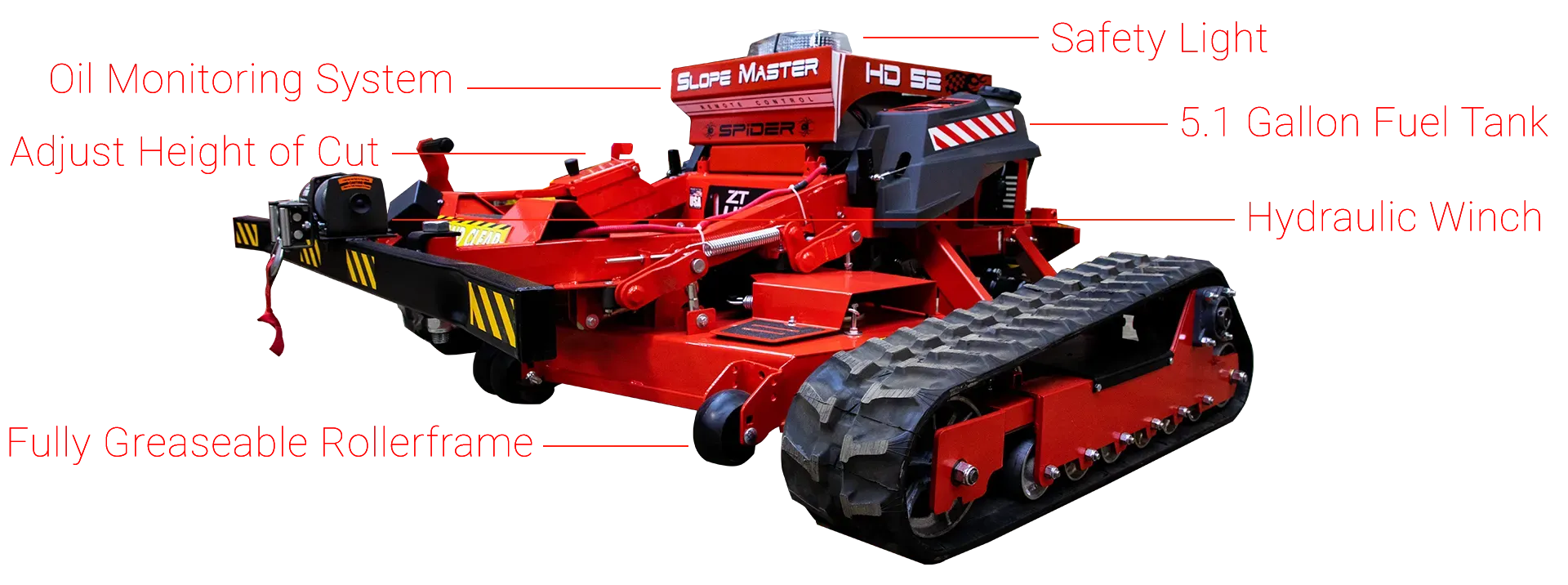
Red tracked tank-like robot with mounted mechanism on a white background

Summary of Benefits and Next Steps

Remote mowing may suit some steep sites, but it does not eliminate hazards or guarantee faster work. Check the manual, assess the site, train operators and measure results before changing a maintenance plan.

Core Takeaways:

Key points: model limits and site conditions determine safe use; remote control can keep operators off the slope but does not remove hazards. Measure results rather than assume labor, time, fuel, brush or injury reductions.

If you are ready to revolutionize your land management strategy, we encourage you to Contact Us today to discuss which Slope Master model is right for your needs. For more insights on the industry, visit our Beyond the Slope Blog .

Share this article:

Recent Posts

Remote-controlled slope mower working on a grassy hillside.
By Brandon Keen • October 22, 2026
Compare 50° and 60° slope mower capabilities, understand degrees versus percent grade, and choose equipment for your property's terrain.
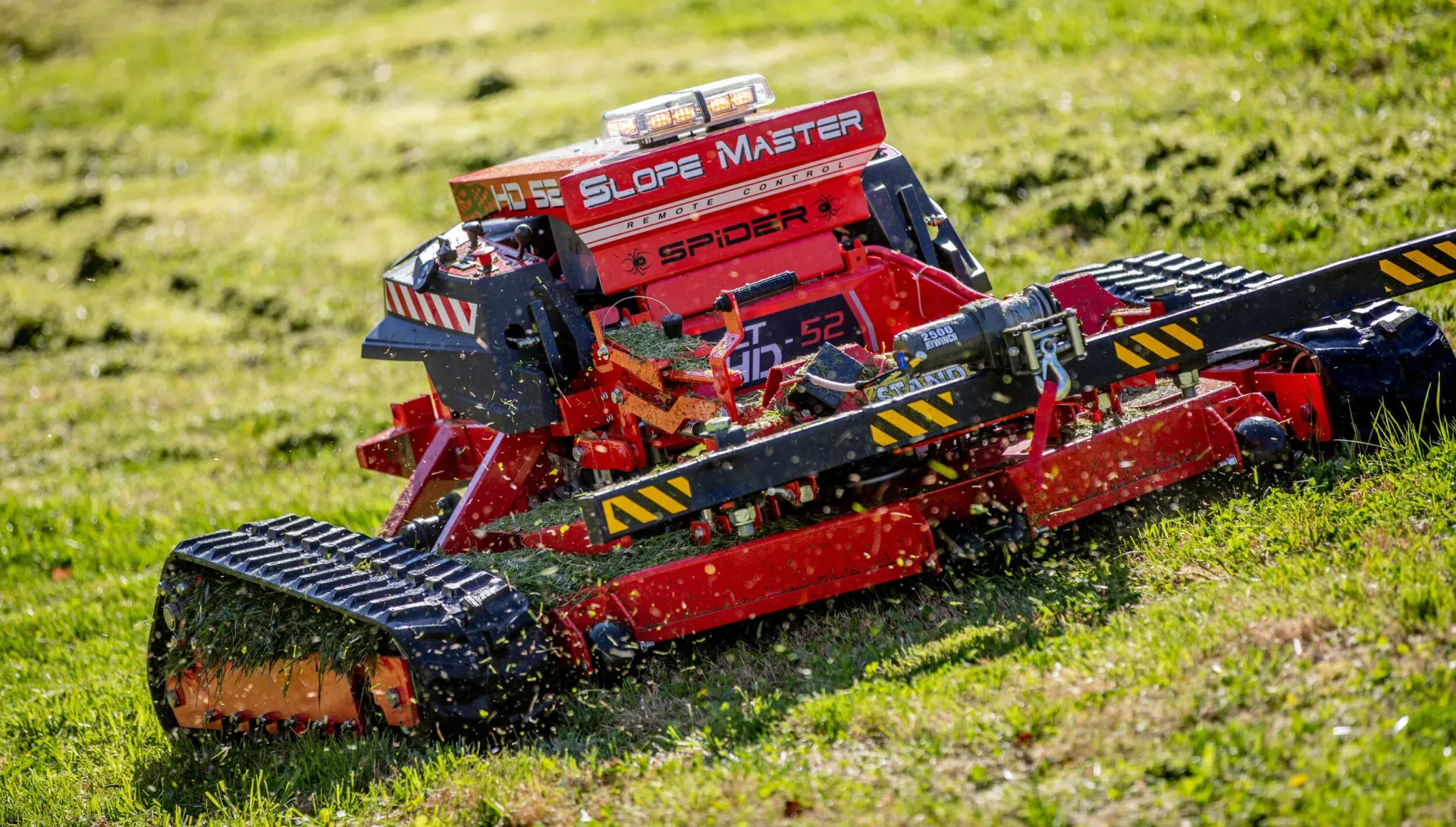
The Spider remote-controlled slope mower by Slope Master Innovations.
By Brandon Keen • October 22, 2026
Plan retention pond bank mowing with a practical checklist covering access, vegetation, ground conditions, equipment selection, and maintenance scope.
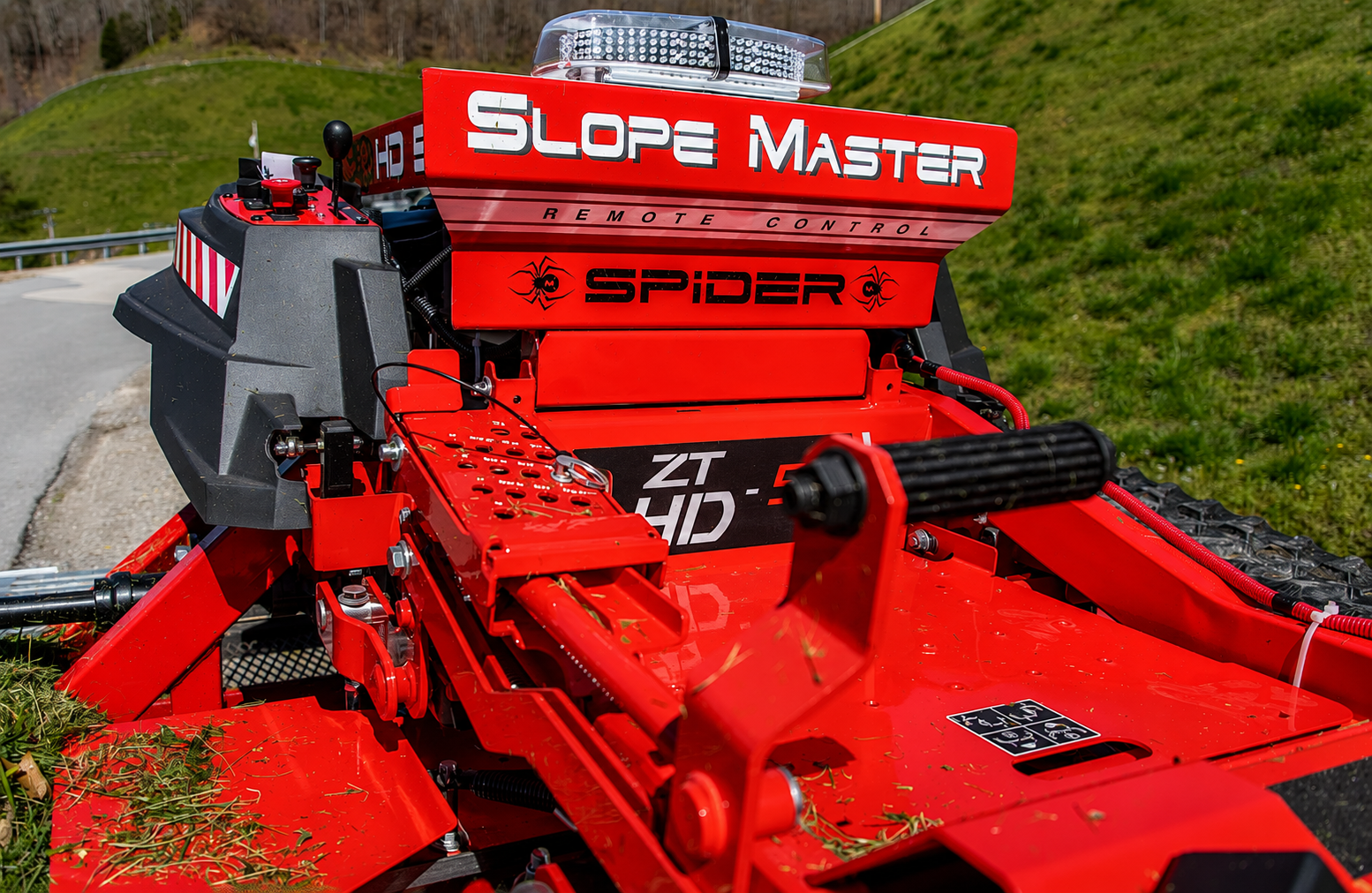
Slope Master mower at a grassy jobsite.
By Brandon Keen • October 22, 2026
Build a steep-slope mowing estimate that covers labor, equipment, access, cleanup, overhead, and profit—with a practical example for contractors.
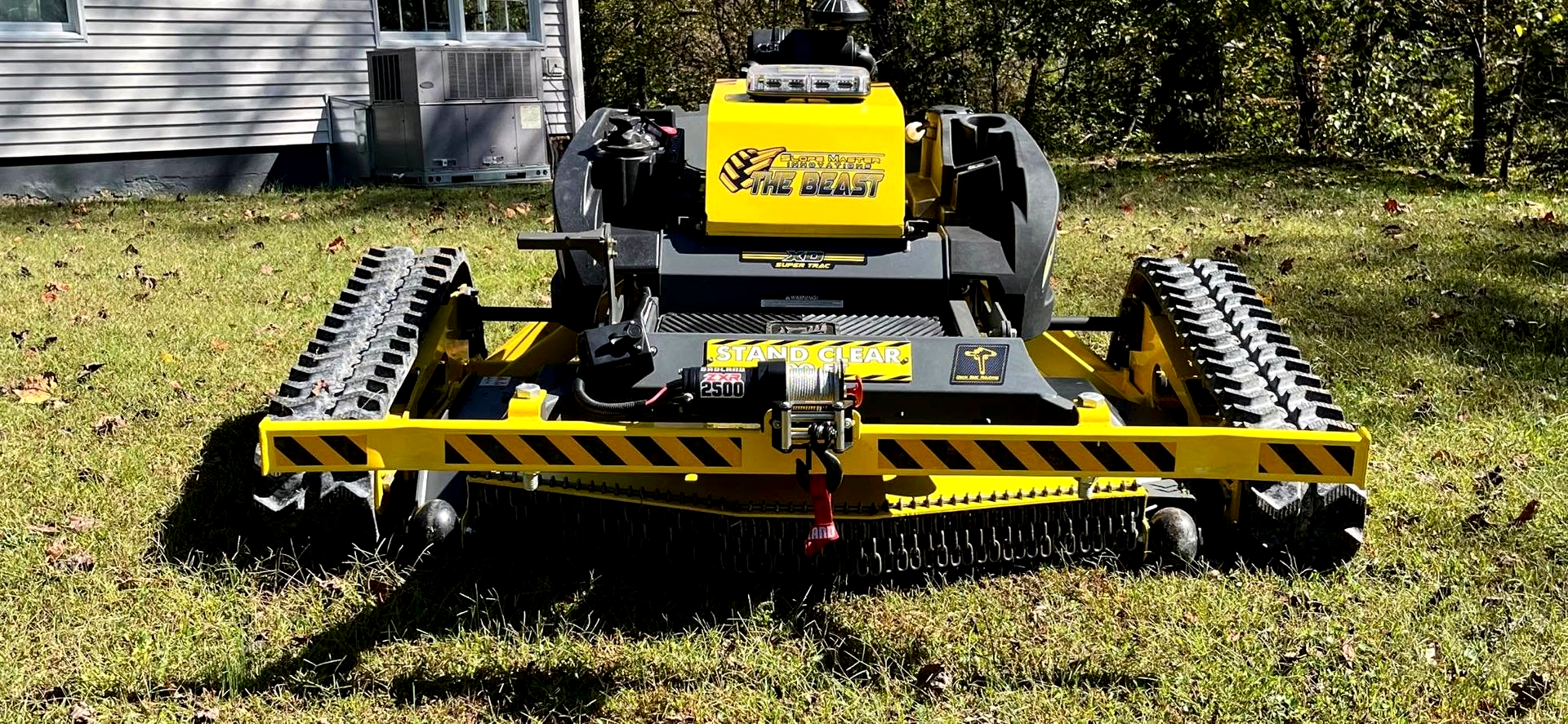
Yellow tracked slope mower on a grassy property.
By Brandon Keen • October 22, 2026
Build a public works slope mower proposal with documented workload, ownership costs, staffing needs, evaluation criteria, and measurable outcomes.
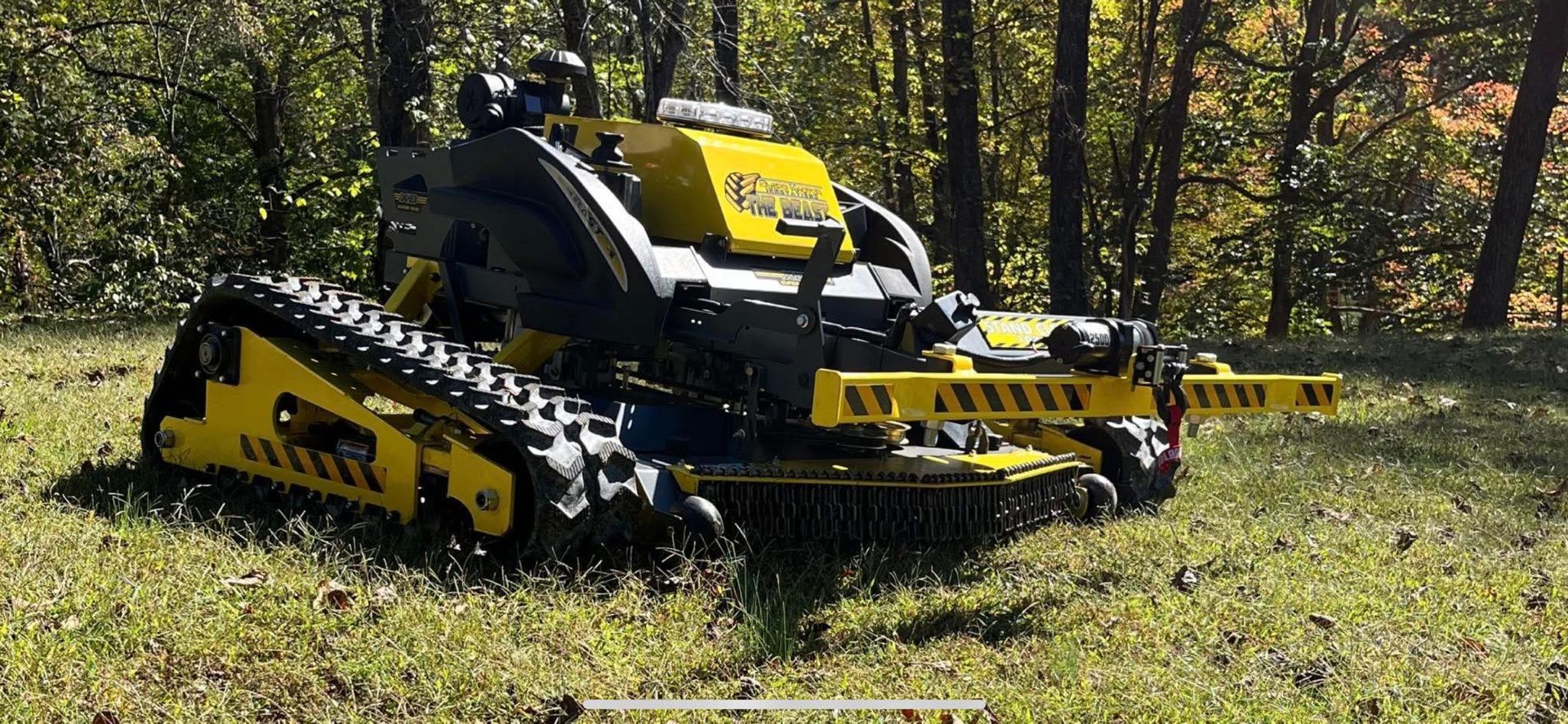
The Beast remote-controlled slope mower by Slope Master Innovations.
By Brandon Keen • October 22, 2026
Compare finish mowing and brush cutting on slopes. Match vegetation, cutting limits, site access, and desired results to the right mower configuration.
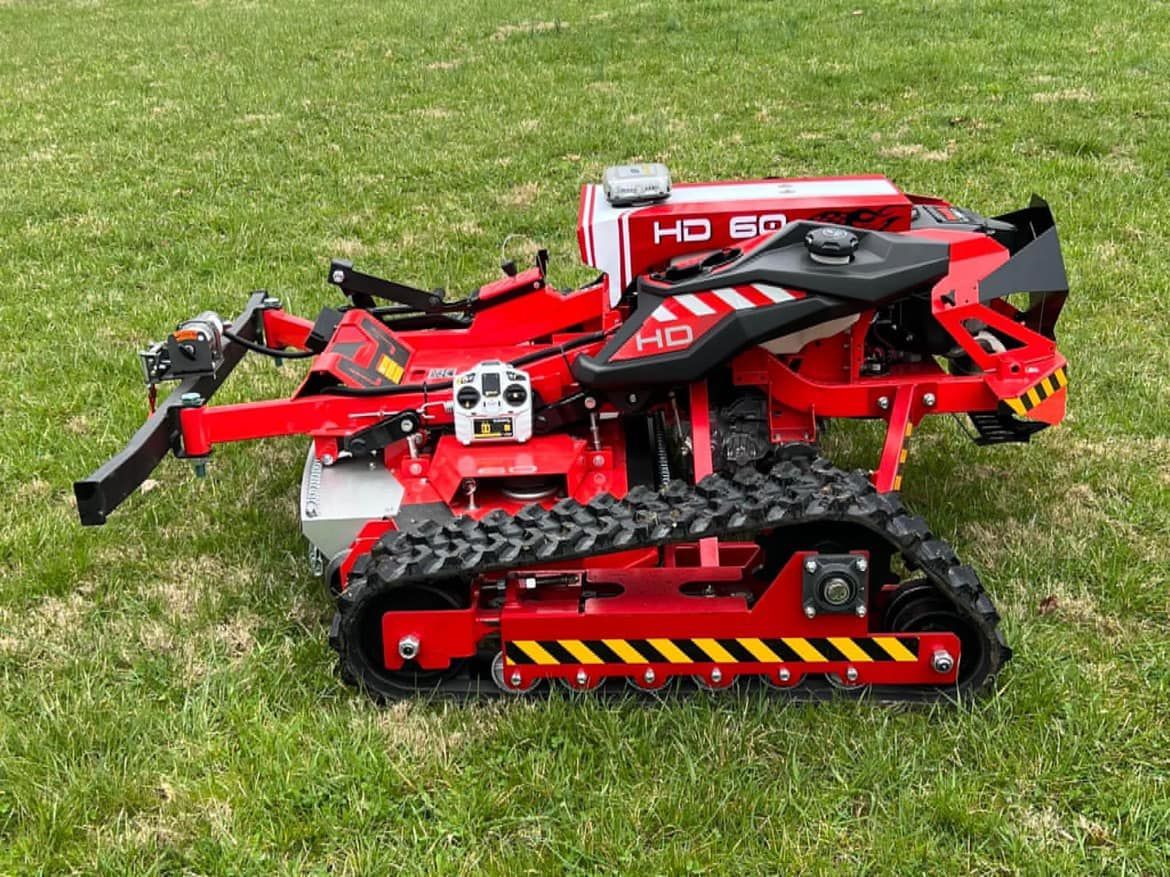
Red tracked Slope Master mower on grass.
By Brandon Keen • October 22, 2026
Plan utility right-of-way mowing around steep terrain, access restrictions, vegetation, infrastructure, and clear work limits before choosing equipment.
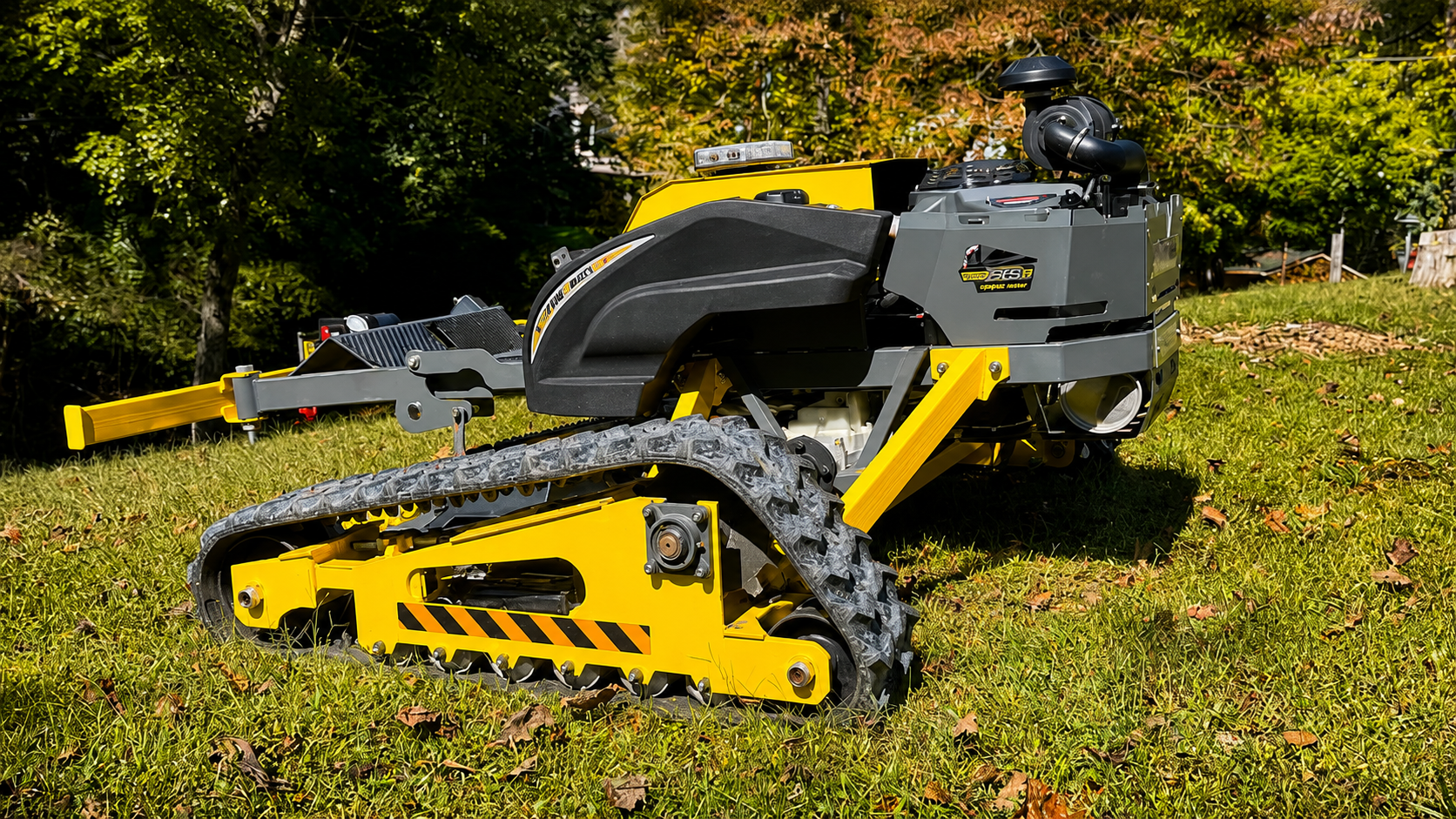
Yellow-and-black tracked mini excavator on grass, with arm extended in a wooded outdoor area
By Brandon Keen • August 14, 2026
Compare 10 specifications that define a commercial-grade slope mower, including construction, traction, engine, safety, parts, warranty, and support.
Red Slope Master Spider riding mower on a grassy roadside with a wooded background
By Brandon Keen • August 14, 2026
Compare remote-controlled and robotic slope mowers. Learn which commercial mowing equipment is built for steep hills, rough terrain, and professional use.
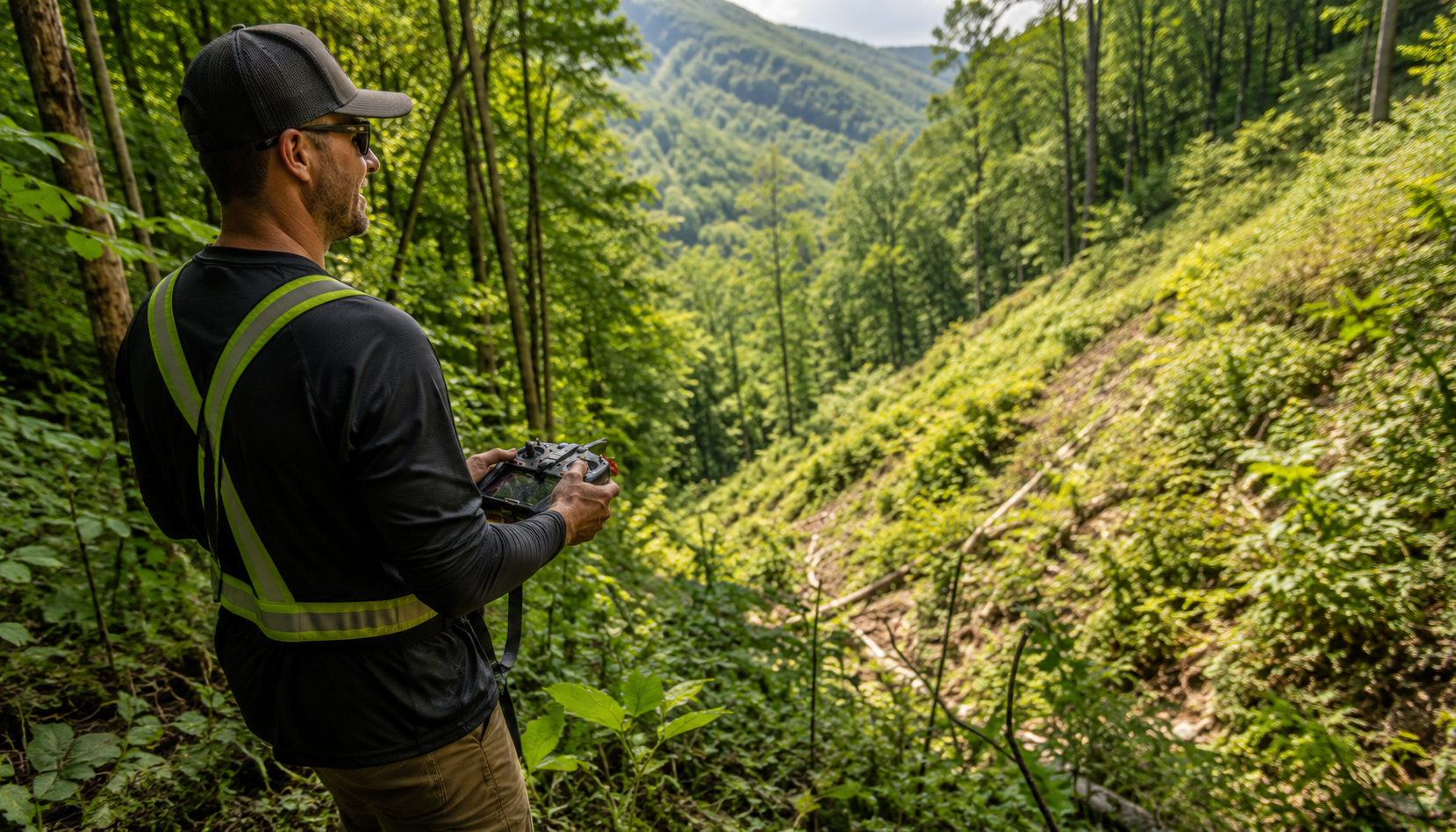
Hiker with drone controller overlooking a lush green mountain valley and forest trail
By Brandon Keen • July 23, 2026
Can you safely mow a 45-degree slope? Learn the 12 questions every commercial slope mower buyer should ask before investing in new equipment.
Red tracked robot on grass with black arms and hazard-striped front attachment
By Brandon Keen • July 1, 2026
Explore potential commercial uses for remote-controlled slope mowers, plus site access, model limits and safety checks to confirm before work.

Show More