
Can You Safely Mow a 45-Degree Slope? A Dozen Questions Every Commercial Slope Mower Buyer Should Ask

Brandon Keen • July 23, 2026

A Complete Buyer's Guide to Commercial Remote-Controlled Slope Mowers for Municipalities, Commercial Landscapers, Utility Contractors, Industrial Facilities & Large Property Owners

Can a 45-degree slope be mowed safely? Yes! But only with the right equipment, proper training, and a thorough understanding of the terrain. Traditional zero-turn and riding mowers quickly reach their safe operating limits on steep embankments, retention ponds, levees, utility easements, and roadside ditches. Commercial remote-controlled slope mowers are specifically engineered for these demanding environments, allowing operators to maintain safe distances while tackling slopes up to 60°. If you're evaluating commercial slope-mowing equipment for municipal, industrial, or commercial applications, this guide outlines the 12 most important questions every buyer should ask before investing in a machine.

Black heart icon on a white background

TABLE OF CONTENTS

  • Can You Really Safely Mow a 45-Degree Slope?
  • Who Should Consider a Commercial Slope Mower?
  • Commercial Slope Mowers vs. Residential Robot Mowers
  • 12 Questions Every Buyer Should Ask
  • What Is the Maximum Safe Operating Slope?
  • How Far Can the Remote Controller Operate?
  • Is the Machine Built for Continuous Commercial Use?
  • What Engine and Fuel System Does It Use?
  • How Easy Is Routine Maintenance?
  • What Cutting Width Best Fits My Operation?
  • Frequently Asked Questions
  • Final Thoughts
Black heart icon on a white background

Can You Really Safely Mow a 45-Degree Slope?

The short answer is yes, provided you're using equipment specifically engineered for steep terrain. A 45-degree slope presents serious challenges that quickly exceed the safe operating limits of conventional riding mowers and many zero-turn mowers. On slopes this steep, traction decreases dramatically, rollover risks increase, and operators are often placed in dangerous positions where even a minor mistake can result in serious injury or costly equipment damage. That's precisely why commercial remote-controlled slope mowers were developed.


Rather than placing the operator directly on the machine, remote-controlled commercial slope mowers allow users to safely control the mower from a distance while maintaining stability on steep grades, difficult embankments, retention ponds, utility easements, solar farms, levees, roadside rights-of-way, and other hazardous terrain.


However, simply purchasing a remote-controlled mower isn't enough. Not all commercial slope mowers are created equal! Just as important, not every buyer has the same needs. A municipality maintaining hundreds of roadside miles has vastly different requirements than a commercial landscaping company specializing in stormwater retention ponds, or an industrial facility maintaining utility corridors.


Choosing the right commercial slope mower means looking beyond the advertised slope rating and understanding how the entire machine will perform in your specific application. This guide will help you evaluate those differences before making one of the larger equipment investments your organization may purchase.

Black heart icon on a white background

Commercial Slope Mowers vs. Residential Robot Mowers

One of the biggest misconceptions we see today is the assumption that all remote-controlled or robotic mowers serve the same purpose. They don't. There is an enormous difference between a residential robotic lawn mower designed for suburban yards and a heavy-duty commercial slope mower built for industrial and municipal operations.

>Long-press & drag left to view full table →

Feature Residential Robot Mower Consumer RC Mower Commercial Slope Master Mower
Intended Use Residential Lawns Large Residential / Light Commercial Commercial, Municipal & Industrial
Terrain Flat to Gentle Slopes Moderate Terrain Extreme Terrain up to 60°
Daily Operation Occasional Moderate Continuous Commercial Operation
Operator Homeowner Property Owner Professional Operators
Durability Consumer Grade Mid-Level Heavy-Duty Commercial Construction
Customization Limited Minimal Extensive Commercial Options
Typical Applications Small Yards Acreage DOT, Municipalities, Solar Farms, Utility Easements, Airports, Industrial Sites

If your goal is simply maintaining a residential backyard, a commercial remote-controlled slope mower is likely unnecessary.


However, if you're responsible for maintaining steep slopes where operator safety, productivity, reliability, and long-term durability matter, investing in commercial-grade equipment becomes an entirely different conversation.

Black heart icon on a white background

Who Should Consider a Commercial Remote-Controlled Slope Mower?

Commercial slope mowers aren't designed for everyone, and that's intentional. These machines solve very specific problems faced by organizations responsible for maintaining challenging terrain where conventional mowing equipment becomes unsafe or inefficient.


Commercial remote-controlled slope mowers are often an excellent solution for:


Conversely, if you're shopping for a mower to maintain a small residential yard or replace a traditional riding mower, a commercial slope mower may not be the right investment. Understanding where these machines excel helps buyers focus on equipment that matches both their operational requirements and long-term goals.

1. What Is the Maximum Safe Operating Slope?

This is often the very first question buyers ask, and for good reason. Slope ratings are one of the primary reasons organizations begin researching remote-controlled mowing equipment in the first place.


However, there's an important distinction between maximum capability and safe operating capability.

Manufacturers often advertise the steepest incline a machine can physically climb. That number doesn't necessarily represent the safest or most productive working environment under real-world conditions.


Numerous variables affect safe operation, including:


  • Grass height
  • Soil moisture
  • Loose gravel
  • Mud
  • Wet vegetation
  • Surface irregularities
  • Operator experience
  • Tire traction
  • Weight distribution
  • Weather conditions


Commercial buyers should evaluate slope ratings alongside real-world operating conditions rather than relying solely on marketing specifications. For organizations regularly maintaining steep embankments, drainage channels, levees, retention ponds, or highway rights-of-way, choosing equipment engineered specifically for extreme terrain can dramatically improve both productivity and operator safety.


Bottom Line

Don't simply ask "How steep can it climb?"

Ask "How safely can it work all day under real operating conditions?"


2. How Far Can the Remote Controller Operate?

Operator safety is one of the greatest advantages of remote-controlled commercial mowing equipment. The ability to maintain a safe working distance allows operators to avoid many of the hazards associated with riding directly on steep slopes.


Remote range becomes especially important when maintaining:


  • Large embankments
  • Roadside ditches
  • Utility easements
  • Solar installations
  • Retention ponds
  • Industrial facilities
  • Flood control structures


A quality commercial remote-control system should provide dependable communication between operator and machine while remaining responsive in varying terrain conditions. Buyers should also evaluate controller ergonomics, visibility, emergency stop functionality, and ease of operation, particularly when equipment will be used by multiple operators.


Bottom Line

A remote-controlled mower isn't just about convenience—it's about allowing operators to work more safely while maintaining full control in difficult environments.


3. Is the Machine Built for Continuous Commercial Operation?

Not every remote-controlled mower is designed to withstand daily commercial use. Professional landscaping companies, municipalities, and industrial maintenance crews often operate equipment for hours each day, week after week, throughout the mowing season.


Commercial buyers should evaluate:


  • Frame construction
  • Hydraulic components
  • Drive systems
  • Cooling capacity
  • Component accessibility
  • Heavy-duty drivetrains
  • Commercial-grade engines
  • Long-term reliability


Machines built for occasional property maintenance may perform adequately for light-duty work but often struggle under continuous commercial workloads. When evaluating equipment, think beyond today's job and consider how the machine will perform after several years of demanding commercial service.


Bottom Line

The least expensive machine isn't always the most economical over its lifetime. Durability often determines true long-term value.


4. What Engine and Fuel System Does It Use?

Power matters! Commercial slope mowing frequently involves dense vegetation, tall grass, brush, uneven terrain, and extended operating hours. Choosing the appropriate engine platform directly impacts productivity, maintenance requirements, and operating costs.


Questions buyers should consider include:


  • Is the engine commercial grade?
  • Is it designed for continuous heavy-duty operation?
  • Is service readily available?
  • Are replacement components easy to obtain?
  • Does the fuel system match your fleet?


Many organizations also prefer equipment compatible with existing maintenance programs, allowing technicians to service multiple pieces of equipment using familiar parts and procedures.


Bottom Line

The engine isn't simply what powers the mower—it influences long-term reliability, serviceability, and overall ownership costs.


5. How Easy Is Routine Maintenance?

Every commercial machine requires maintenance. The difference lies in how quickly technicians can complete it. Downtime costs money.


Commercial buyers should evaluate how easily routine service items can be accessed, including:


  • Engine oil
  • Hydraulic components
  • Air filters
  • Fuel filters
  • Belts
  • Blades
  • Grease points
  • Electrical systems


Well-designed equipment minimizes unnecessary disassembly and helps crews return machines to service faster. For organizations managing multiple machines, even small maintenance efficiencies can result in significant labor savings over time.


Bottom Line

Simple maintenance procedures help maximize uptime and reduce long-term operating expenses.


6. What Cutting Width Best Fits My Operation?

Bigger isn't always better. Choosing the right cutting width depends largely on the types of properties you'll maintain. Wide decks improve productivity on large, open areas but may reduce maneuverability in confined spaces. Narrower decks often provide greater flexibility around obstacles, drainage structures, retaining walls, guardrails, utility infrastructure, and landscaped areas.


Commercial buyers should evaluate:


  • Average property size
  • Accessibility
  • Obstacles
  • Transportation limitations
  • Desired productivity
  • Crew size
  • Daily mowing volume


Selecting the proper deck width can significantly improve both efficiency and overall job quality.


Bottom Line

The most productive mower isn't necessarily the largest—it's the one best matched to the work your crews perform every day.

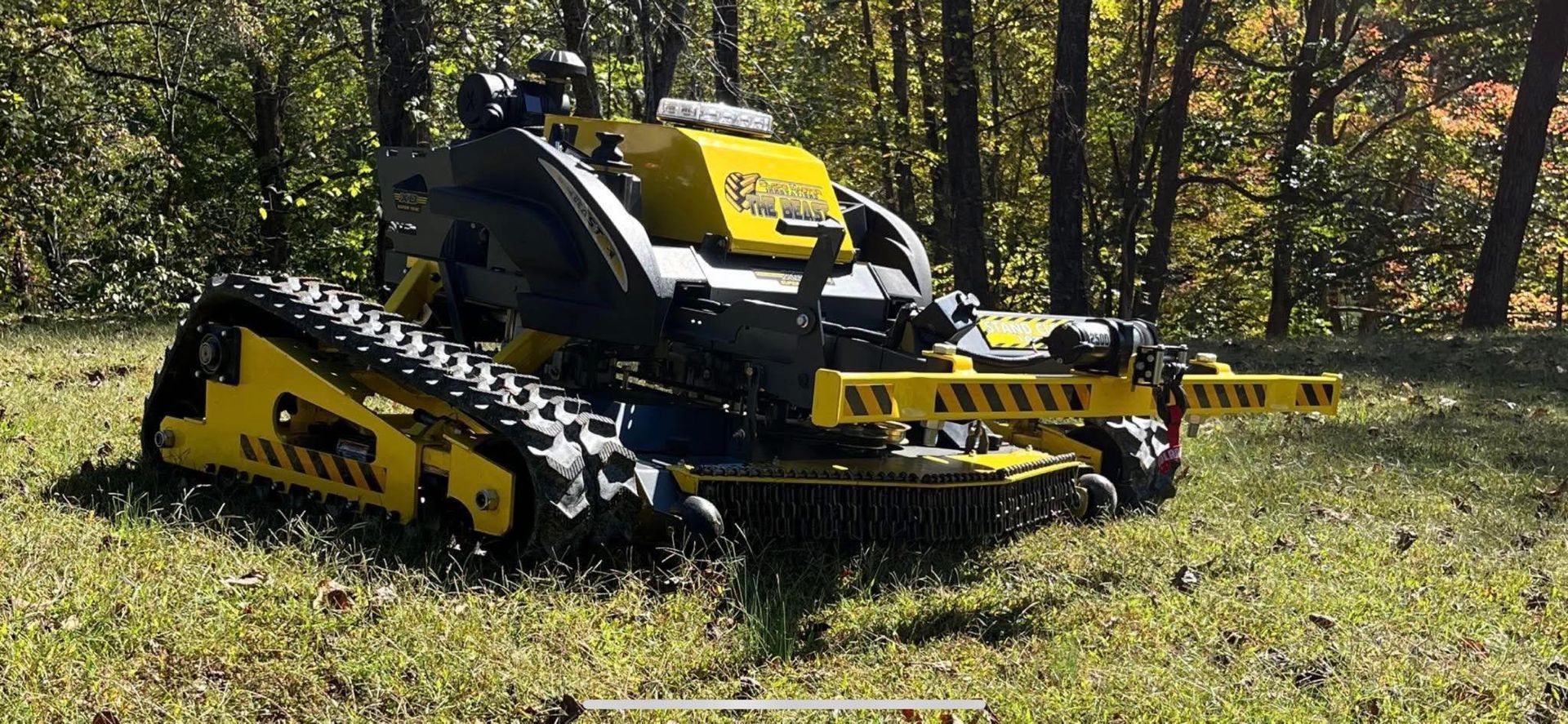
A yellow-and-gray tracked remote-controlled slope mower called The Beast by Slope Master Innovations, sitting on a grassy slope outdoors.

7. Can the Machine Be Customized for My Specific Operation?

No two commercial mowing operations are exactly alike. A municipality maintaining interstate rights-of-way has very different requirements than a utility contractor clearing transmission corridors or a commercial landscaping company maintaining dozens of retention ponds. Because of these differences, customization can be one of the most important factors when evaluating a commercial slope mower.


Rather than asking whether a mower comes with every available feature, buyers should ask whether the machine can be configured to meet their operational needs both today and several years from now.


Consider questions such as:


  • Can different cutting decks be installed?
  • Are multiple tire or track options available?
  • Can hydraulic attachments be added later?
  • Is the machine designed for future upgrades?
  • Can it be configured for unique vegetation or terrain?


The right equipment should grow alongside your business rather than becoming obsolete as your workload evolves.


Bottom Line

A commercial slope mower should fit your operation—not force your operation to fit the machine.


8. What Safety Features Protect Operators?

Safety should never be treated as an optional feature. For many organizations, operator safety is the primary reason they begin researching remote-controlled commercial mowing equipment in the first place. Steep embankments, retention ponds, levees, utility easements, and roadside ditches present hazards that simply don't exist on flat ground. Wet grass, unstable soil, hidden obstacles, and changing weather conditions can quickly create dangerous working environments. When evaluating commercial slope mowers, look beyond maximum slope ratings and consider the machine's overall safety design.


Important features may include:


  • Emergency stop controls
  • Reliable remote communication
  • Stable low-center-of-gravity design
  • Commercial-grade traction systems
  • Operator visibility
  • Intuitive controls
  • Fail-safe shutdown features
  • Protective shielding around moving components


Organizations should also consider employee training, maintenance procedures, and safe operating practices as part of their overall equipment evaluation. No machine can eliminate every hazard, but choosing equipment specifically engineered for steep terrain can significantly reduce operator exposure compared to conventional riding mowers.


Bottom Line

The safest machine isn't necessarily the one with the highest advertised slope rating... It's the one engineered to help operators work confidently and responsibly in real-world conditions.


9. How Easy Is Transportation Between Job Sites?

For many commercial contractors, the workday doesn't happen in one location. Crews may service multiple municipalities, industrial facilities, utility corridors, parks, campuses, or commercial properties before returning to the shop. Because of this, transportation efficiency becomes an important part of ownership costs.


Consider:


  • Overall machine dimensions
  • Weight
  • Trailer compatibility
  • Loading procedures
  • Tie-down locations
  • Transport safety
  • Loading angle requirements


A mower that's cumbersome to transport may reduce daily productivity, even if it performs exceptionally well once it reaches the jobsite. Efficient transportation also minimizes crew fatigue and shortens transition times between properties.


Bottom Line

Every minute spent loading equipment is time not spent mowing. Transportation should be part of every buying decision.


10. What Training, Service, and Dealer Support Are Available?

Commercial mowing equipment represents a significant investment, and ongoing support can be just as valuable as the machine itself. Before purchasing any commercial slope mower, ask what happens after delivery.


Questions to consider include:


  • Is operator training available?
  • How quickly can replacement parts be shipped?
  • Is technical support readily accessible?
  • Are service technicians available?
  • Is preventive maintenance guidance provided?
  • How are warranty repairs handled?


Even the best-built commercial equipment occasionally requires maintenance or replacement parts. Working with an experienced manufacturer and knowledgeable dealer network helps minimize downtime and keeps operations running smoothly throughout the mowing season.


Bottom Line

Outstanding customer support often becomes one of the most valuable features you never considered during the buying process.


11. What Warranty and Parts Availability Should I Expect?

Every commercial buyer should understand what is—and isn't—covered before making a purchasing decision. Warranty coverage varies considerably between manufacturers, making it important to review more than just the length of coverage.


Consider asking:


  • What components are covered?
  • Are wear items included?
  • How quickly are replacement parts available?
  • Are parts stocked domestically?
  • Is technical support included?
  • What maintenance is required to maintain warranty coverage?


Reliable parts availability also plays a major role in minimizing downtime. A machine sitting idle while waiting weeks for replacement components can quickly erase any savings from purchasing lower-cost equipment.


Bottom Line

Warranty isn't simply about repairs. It's about keeping your crews productive.


12. Will This Machine Actually Save My Organization Money?

This is ultimately the question every commercial buyer should ask. The purchase price represents only one portion of the total cost of ownership.


Organizations should also evaluate:


  • Labor savings
  • Increased productivity
  • Reduced operator fatigue
  • Lower accident exposure
  • Reduced workers' compensation risk
  • Faster project completion
  • Longer equipment lifespan
  • Reduced subcontracting costs
  • Increased job opportunities


For organizations regularly maintaining steep terrain, investing in commercial-grade equipment often creates efficiencies that extend well beyond the machine itself. One machine capable of safely maintaining areas previously requiring multiple workers with handheld equipment can dramatically improve operational efficiency over time. Rather than asking, "How much does this mower cost?" many organizations eventually begin asking a different question:

"How much does it cost to continue doing things the old way?"


Bottom Line

The right commercial slope mower isn't simply an expense. It's an investment in safety, productivity, and long-term operational performance.

Black heart icon on a white background

How Much Does a Commercial Remote-Controlled Slope Mower Cost?

One of the most common questions buyers ask is also one of the most difficult to answer. Commercial remote-controlled slope mowers are highly specialized pieces of equipment designed for professional use, and pricing varies considerably depending on the machine's size, capabilities, attachments, and level of customization.


As a general guideline:

  • Entry-level commercial remote-controlled slope mowers often begin around $20,000.
  • Mid-range commercial systems typically fall between $35,000 and $50,000.
  • Large municipal and industrial-grade machines with custom configurations may exceed $85,000.


While these numbers provide a helpful starting point, every application is different. Organizations maintaining retention ponds have different needs than Departments of Transportation, utility contractors, solar farms, airports, or industrial facilities. Because of these differences, many commercial manufacturers work directly with customers to configure equipment based on terrain, vegetation, productivity goals, and long-term operational requirements.


The result is a machine designed specifically for the work it will perform... Not simply the least expensive option available.

Black heart icon on a white background

Choosing the Right Commercial Slope Mower Is About More Than Price

Price matters. But experienced commercial buyers understand that the lowest purchase price rarely represents the lowest long-term ownership cost.


When evaluating commercial mowing equipment, organizations should consider:


  • Employee safety
  • Productivity gains
  • Machine reliability
  • Service support
  • Maintenance requirements
  • Equipment lifespan
  • Fuel efficiency
  • Parts availability
  • Operator satisfaction
  • Overall return on investment


A commercial slope mower that safely performs demanding work year after year often delivers far greater value than equipment requiring frequent repairs, excessive downtime, or additional labor. For many municipalities, commercial contractors, and industrial facilities, investing in the right machine becomes one of the easiest equipment decisions they make once the long-term value is fully understood.

Black heart icon on a white background

Final Thoughts

Commercial slope mowing presents unique challenges that demand specialized equipment, experienced operators, and thoughtful planning.


Whether you're maintaining highway embankments, retention ponds, utility easements, solar farms, levees, industrial facilities, or commercial properties, selecting the right commercial slope mower can improve safety, increase productivity, and reduce long-term operating costs.


By asking the twelve questions outlined in this guide, buyers can make informed equipment decisions based on real operational needs rather than marketing claims alone.


The goal isn't simply to purchase a mower.


It's to invest in equipment capable of helping your crews work more safely, efficiently, and confidently for years to come.

Black heart icon on a white background

Ready to Discuss Your Application?

Every property is different, and so is every commercial mowing operation. If you're evaluating a commercial remote-controlled slope mower for municipal, industrial, utility, or commercial landscaping applications, we'd be happy to discuss your terrain, operational goals, and equipment needs.


Contact Slope Master Innovations today to speak with our team about finding the right solution for your operation.

Frequently-Asked-Questions

FAQ

  • 1. Can a commercial mower safely mow a 45-degree slope?
    Vintage-style “Made in America” text with a distressed American flag on a black background

    Yes. Commercial remote-controlled slope mowers are specifically engineered for steep terrain and can safely operate on slopes that exceed the capabilities of traditional riding mowers when used according to manufacturer guidelines and proper operating procedures. Proudly made in the USA, Slope Master Innovations' commercial-grade slope mowers are built to rigorous quality standards and engineered for the demanding conditions faced by municipalities, utility contractors, commercial landscapers, and industrial operators. Our machines are capable of safely operating on slopes up to 60 degrees and are purpose-built with a low center of gravity and heavy-duty track system that delivers exceptional traction and stability. Much like a military tank confidently traverses challenging terrain, a Slope Master is engineered to tackle some of the steepest, toughest mowing applications with confidence, control, and reliability.


    Learn More
  • 2. What is the steepest slope a commercial slope mower can mow?
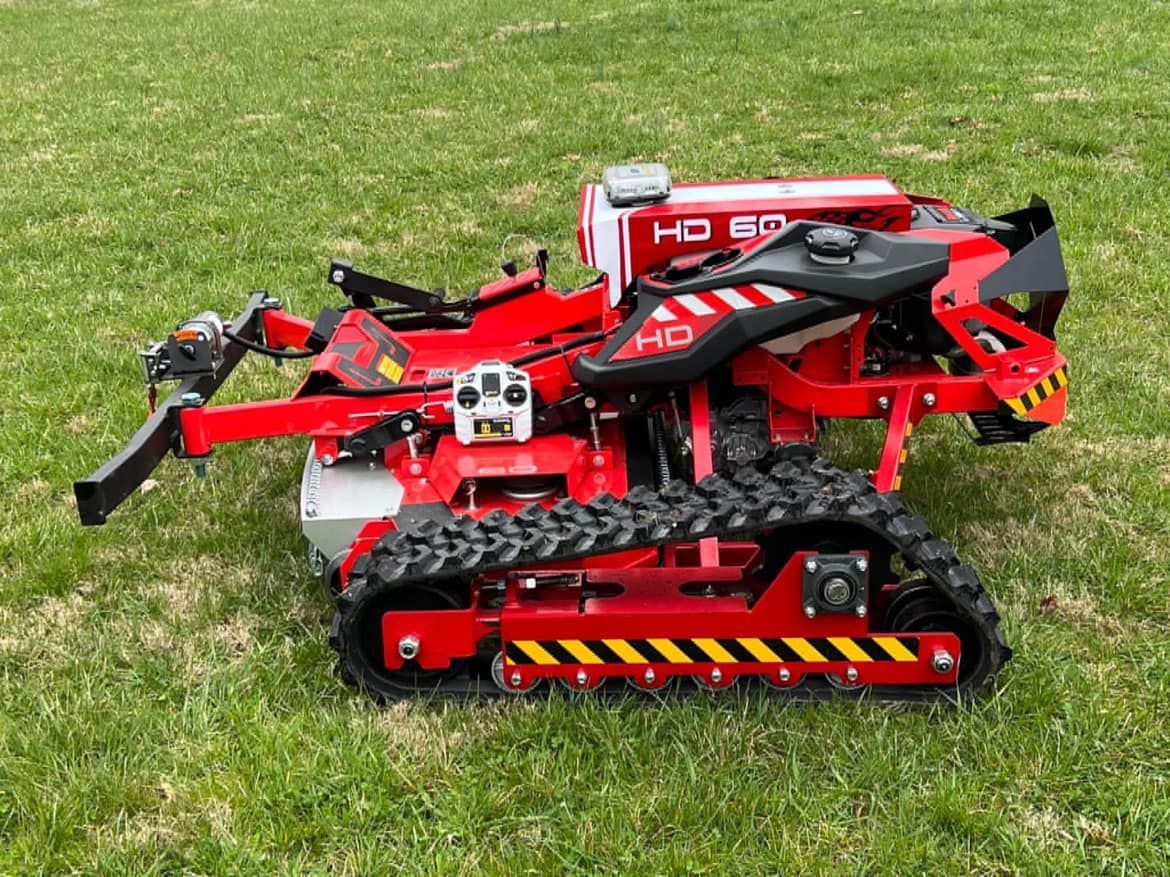
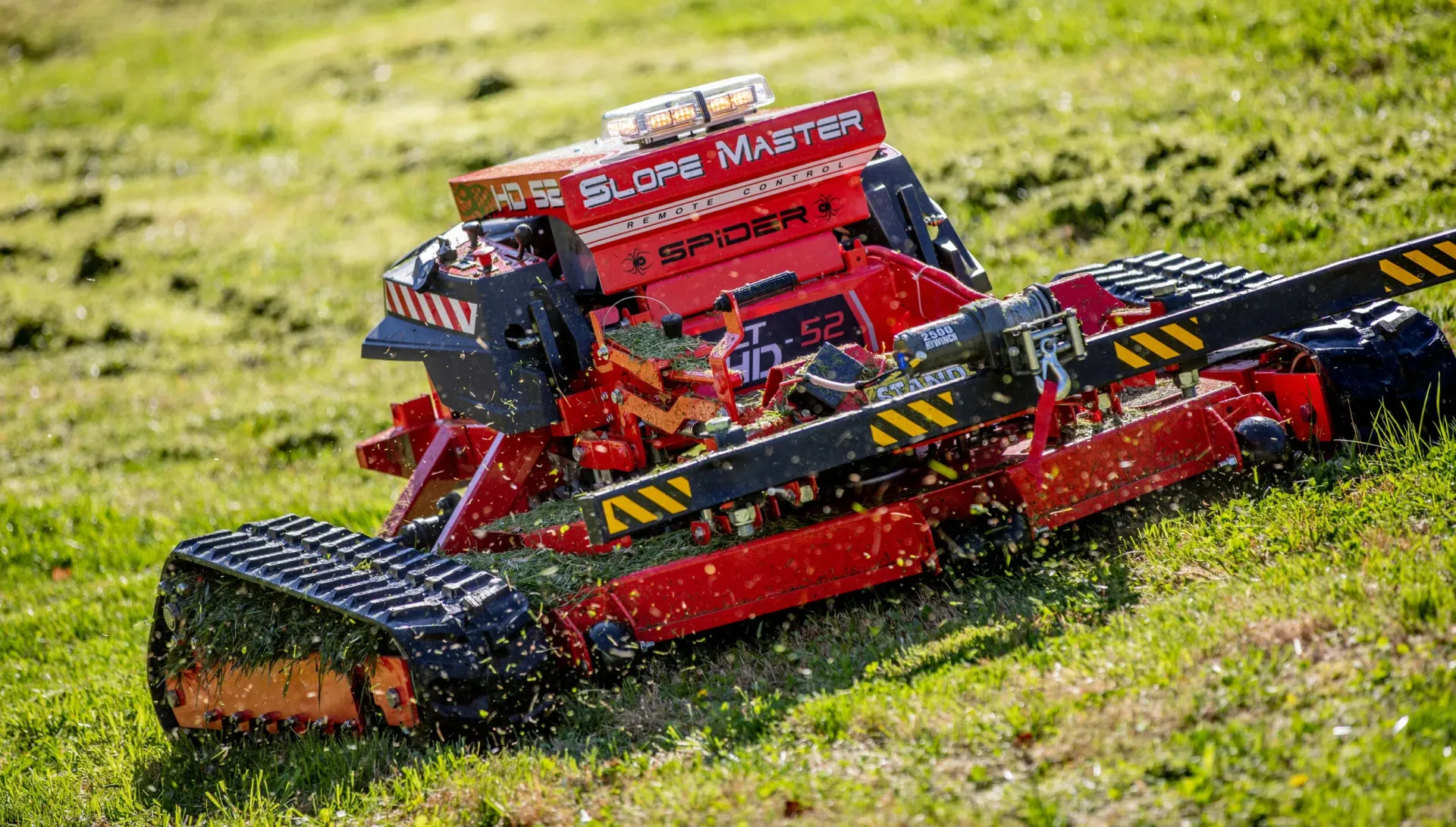
    The SPiDER Remote-Controlled Commercial Slope Mower Model by Slope Master Innvoations in red sitting on green grass that was freshly mowed.

    Capabilities vary by manufacturer, but some commercial remote-controlled slope mowers are engineered to operate on slopes up to 60 degrees under appropriate conditions. Slope Master Innovations' Slope Mower Line does handle slopes as steep as 60 degrees, for example. 


    View Our Line
  • 3. Are remote-controlled slope mowers safer than riding mowers?
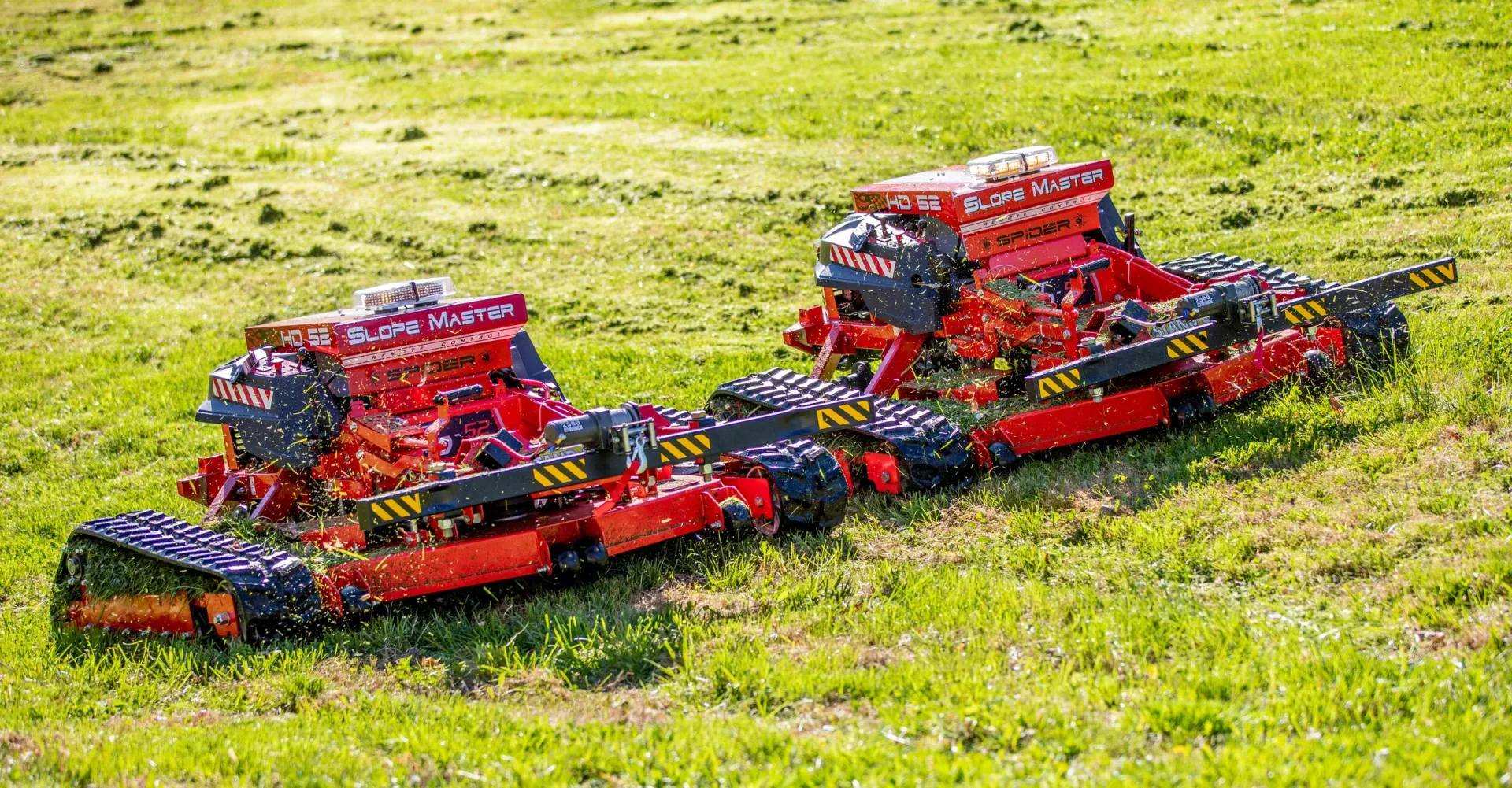
    Two red mowing machines on a grassy field, moving in tandem.

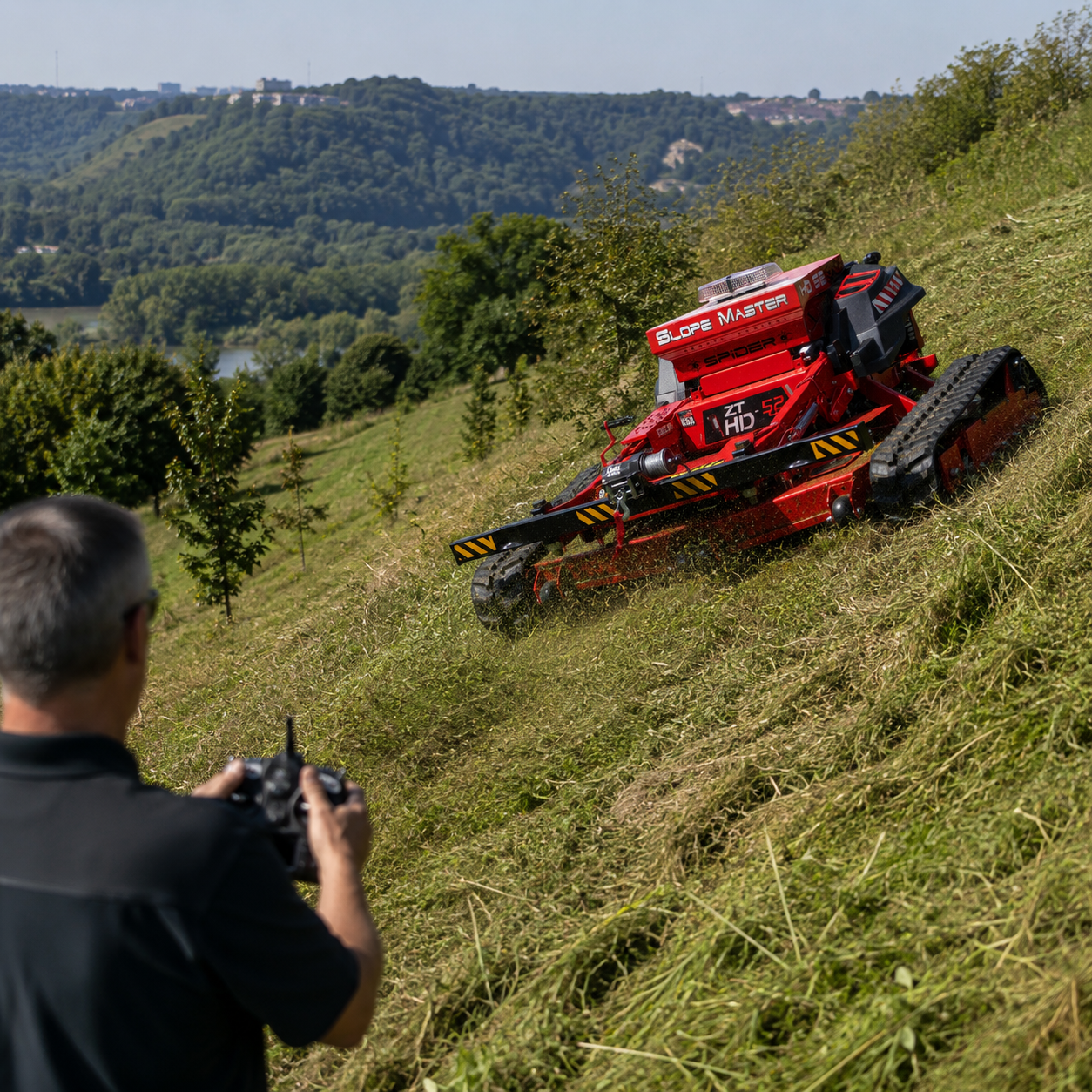
    Yes. Remote-controlled slope mowing can significantly reduce operator exposure to rollover hazards because the operator controls the machine from a safe distance rather than riding directly on steep terrain. Compared to conventional riding mowers and labor-intensive line trimming on dangerous embankments, remote-controlled slope mowers provide a much safer and more efficient solution for maintaining steep slopes. By keeping operators out of harm's way, they help reduce the risk of slips, falls, serious injury, and even fatalities associated with manually maintaining challenging terrain. Click below to view RC slope mowers in action! 


    See It In Action
  • 4. Who uses commercial slope mowers?

    Common users include municipalities, Departments of Transportation, commercial landscaping companies, utility contractors, industrial facilities, airports, solar farms, railroads, and large property owners.


    Who We Serve
  • 5. How much does a commercial remote-controlled slope mower cost?

    Commercial machines generally range from approximately $20,000 to more than $85,000, depending on capabilities, size, attachments, and customization. Explore the options with Slope Master Innovations

  • 6. Does Slope Master Innovations offer different RC slope mower models?
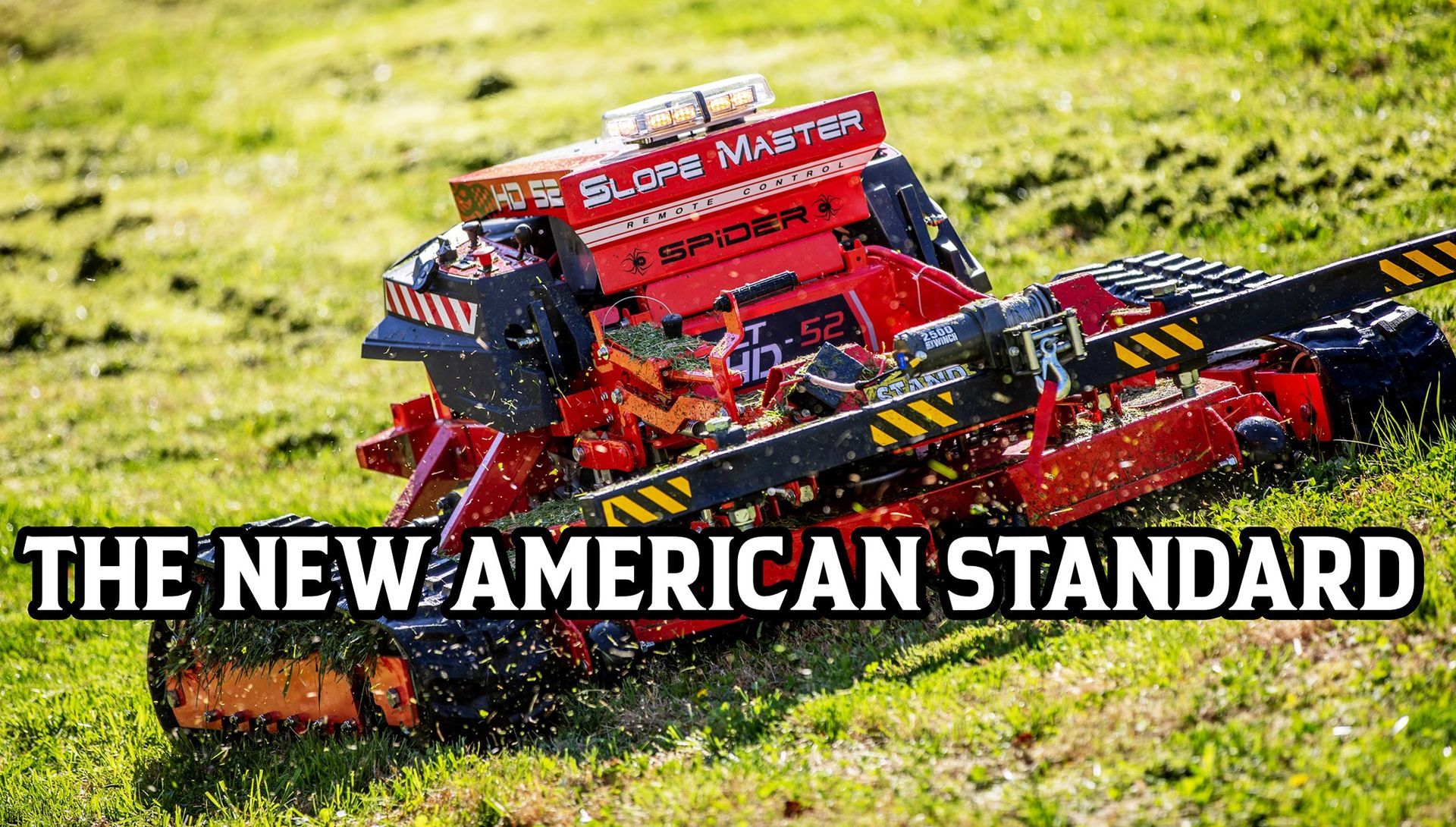
    Red agricultural machine in a grassy field with text: “THE NEW AMERICAN STANDARD”

    Yes! We offer 3 RC slope mower models, each tailored to specific use cases. From nimble models like the SPiDER that are great for commercial landscapers to The Beast, our largest RC slope mower on the market... Slope Master has solutions for any slope! Explore the whole line below. 


    Our Models
  • 7. Are commercial slope mowers worth the investment?
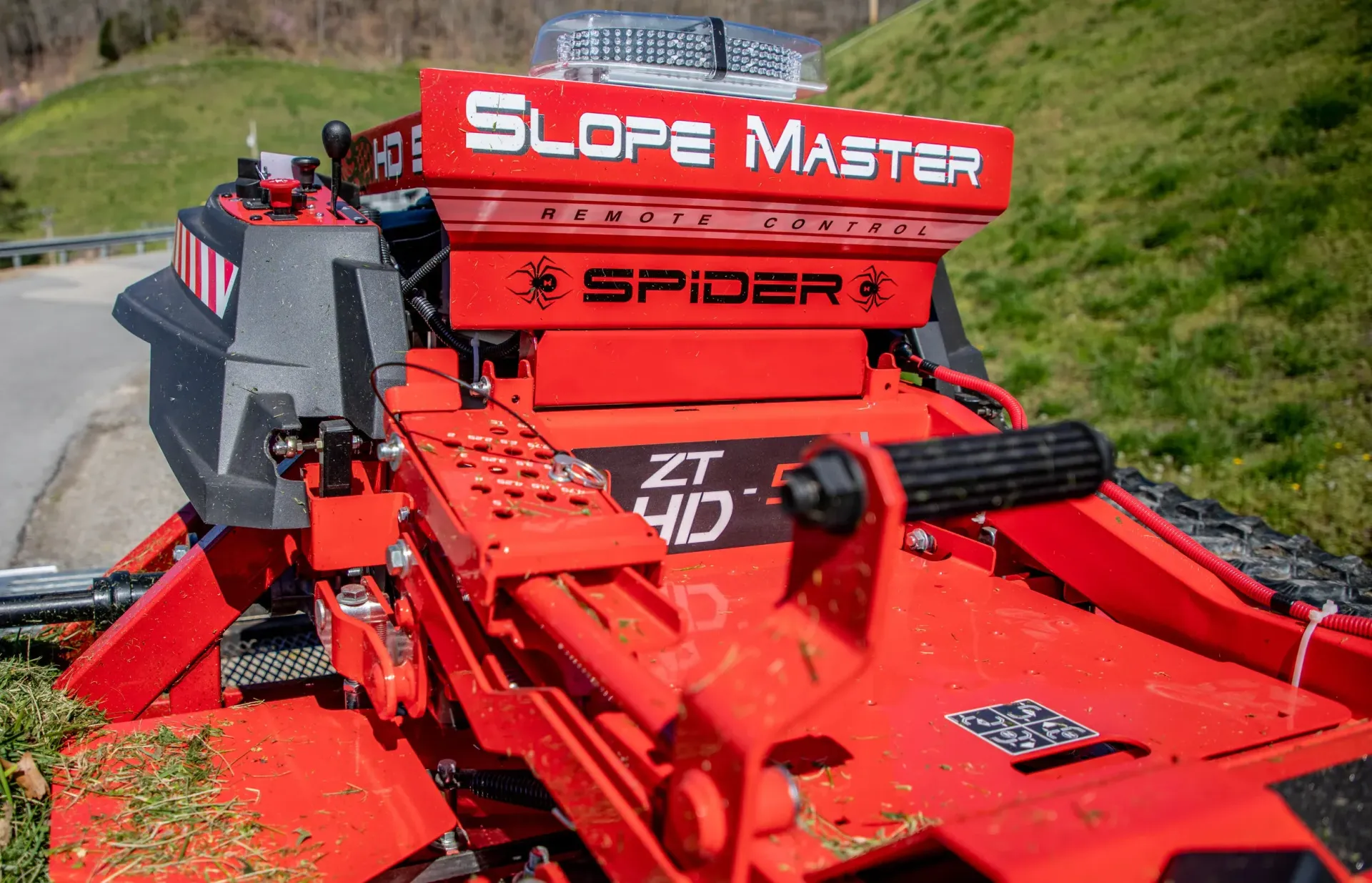
    Red Slope Master Spider mower on a roadside, bright red with black tracks in a grassy hillside setting

    For organizations regularly maintaining steep terrain, improved productivity, enhanced safety, and reduced labor requirements often provide substantial long-term value. RC slope mowing services have become profit centers for commercial landscapers managing steep, dense terrain, lending credence to the investment opportunity. The productivity & efficiency boost, coupled with safer operation and lower costs to operate, are quickly making slope mowing an excellent long-term value for municipalities, commerical facilities, and industrial orgainzations as well. Learn more at our blog page. ~ "Beyond the Slope Blog"


    Beyond the Slope Blog
  • 8. What types of terrain are commercial slope mowers designed to handle?
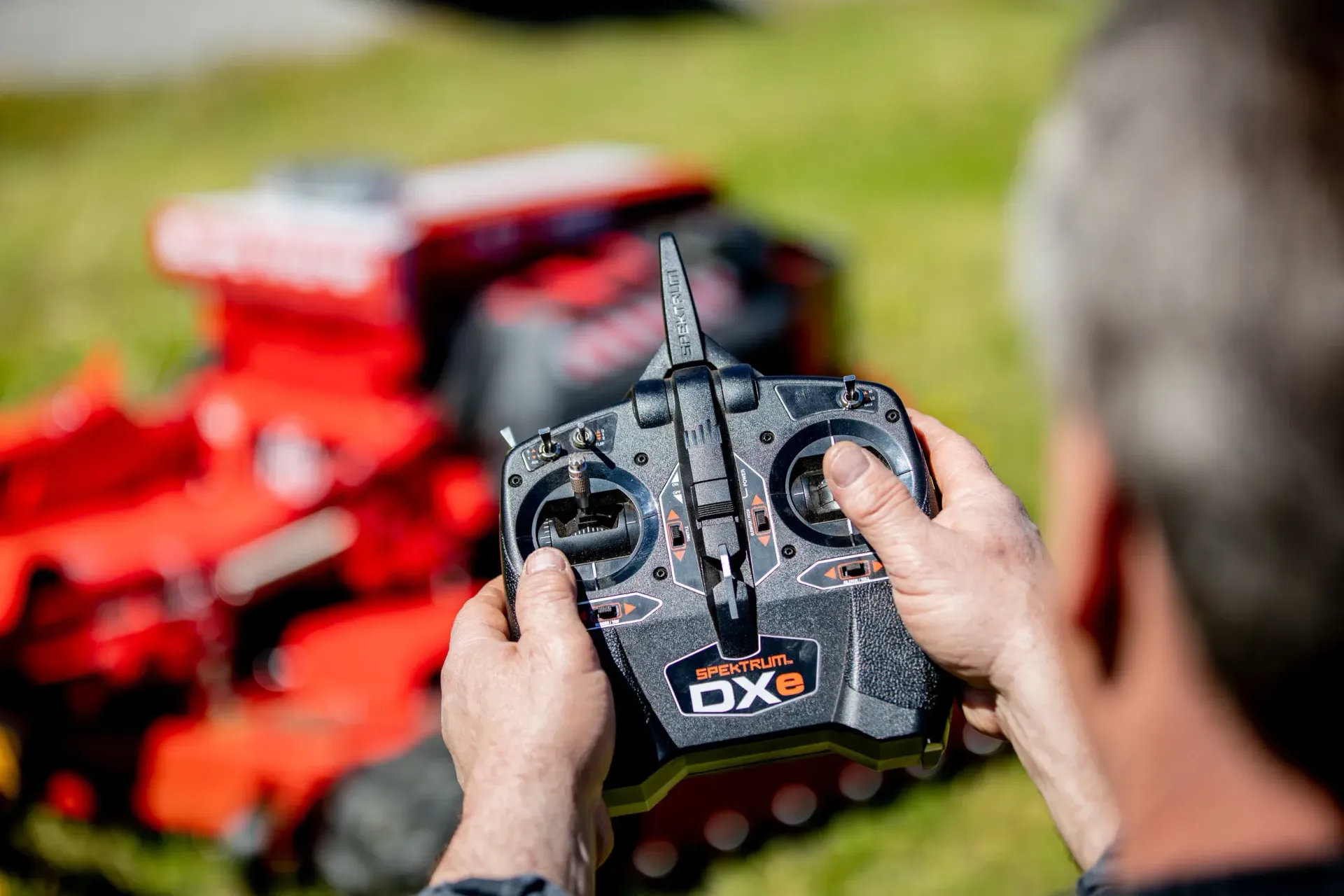
    Person holding a black DX6 remote control with red model aircraft blurred in the background

    Retention ponds, levees, roadside embankments, utility easements, solar farms, drainage channels, industrial properties, and other steep or hazardous terrain.


    Learn More
  • 9. How far away can operators control a remote slope mower?

    Operating range varies by manufacturer and operating conditions. Buyers should review the specifications of each model when evaluating equipment. 


    Slope Master Innovations is known for customizing our slope mowers to our clients' needs. Contact us to discuss your slope mowing range needs.  


    Contact Us
  • 10. Can commercial slope mowers be customized?
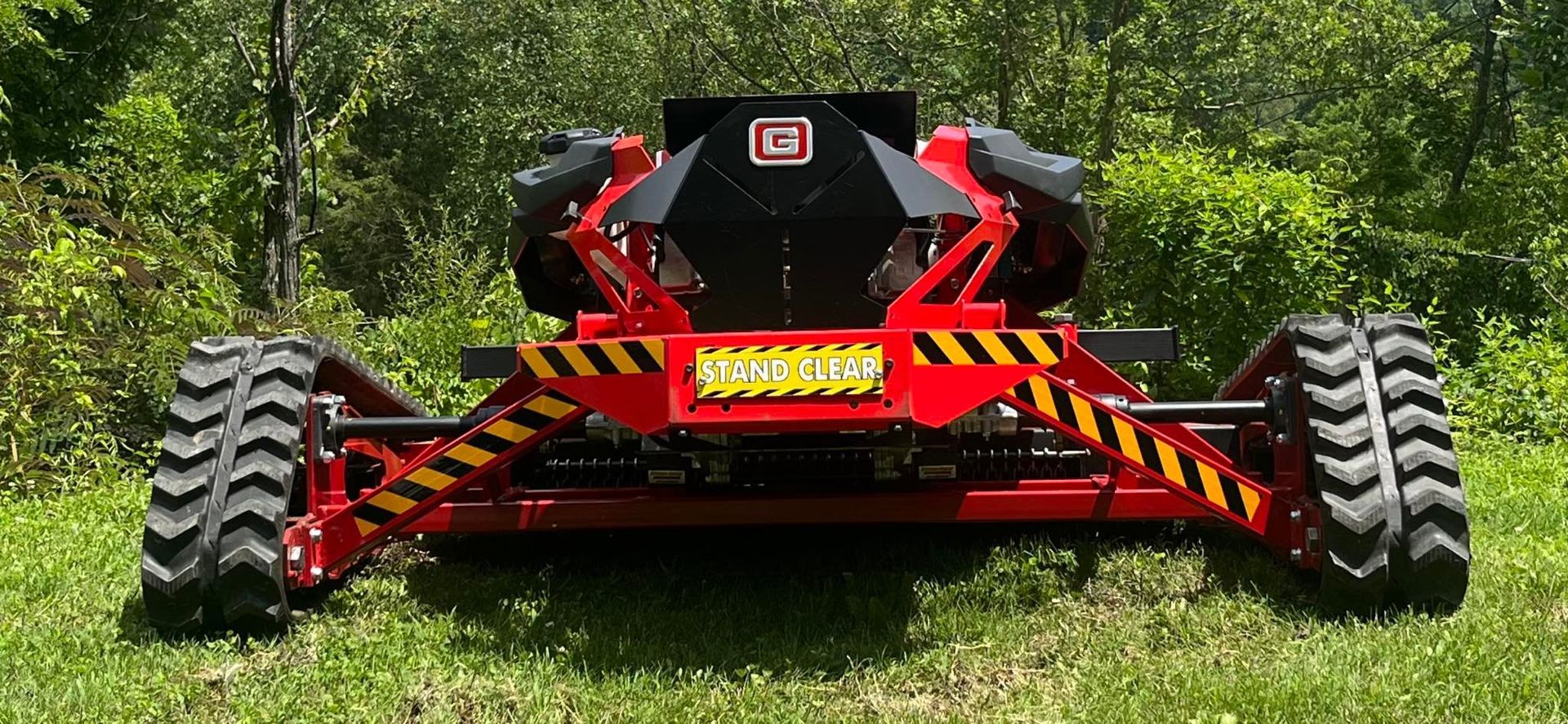
    Red off-road buggy with oversized tires parked on grass in a wooded area

    Many manufacturers offer customization options to better match specific operational requirements, attachments, and terrain conditions.


    (606) 226-1004
  • 11. How long do commercial slope mowers typically last?
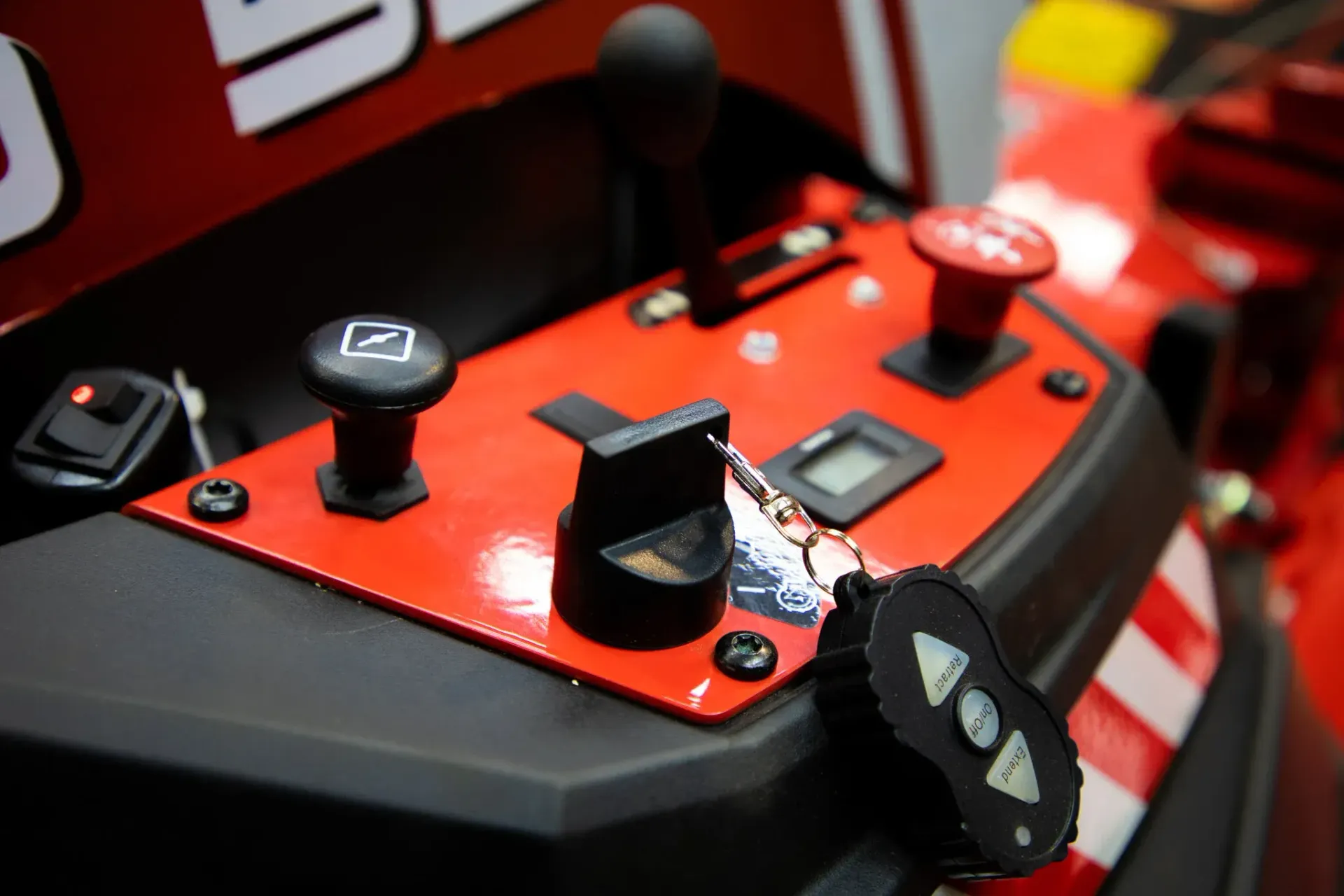
    Close-up of a red arcade control panel with black joystick and buttons

    With proper maintenance, commercial-grade equipment is designed to provide many years of dependable service under demanding operating conditions. To discuss battery life and customization options, contact us

    Contact Us
  • 12. What maintenance does a commercial slope mower require?
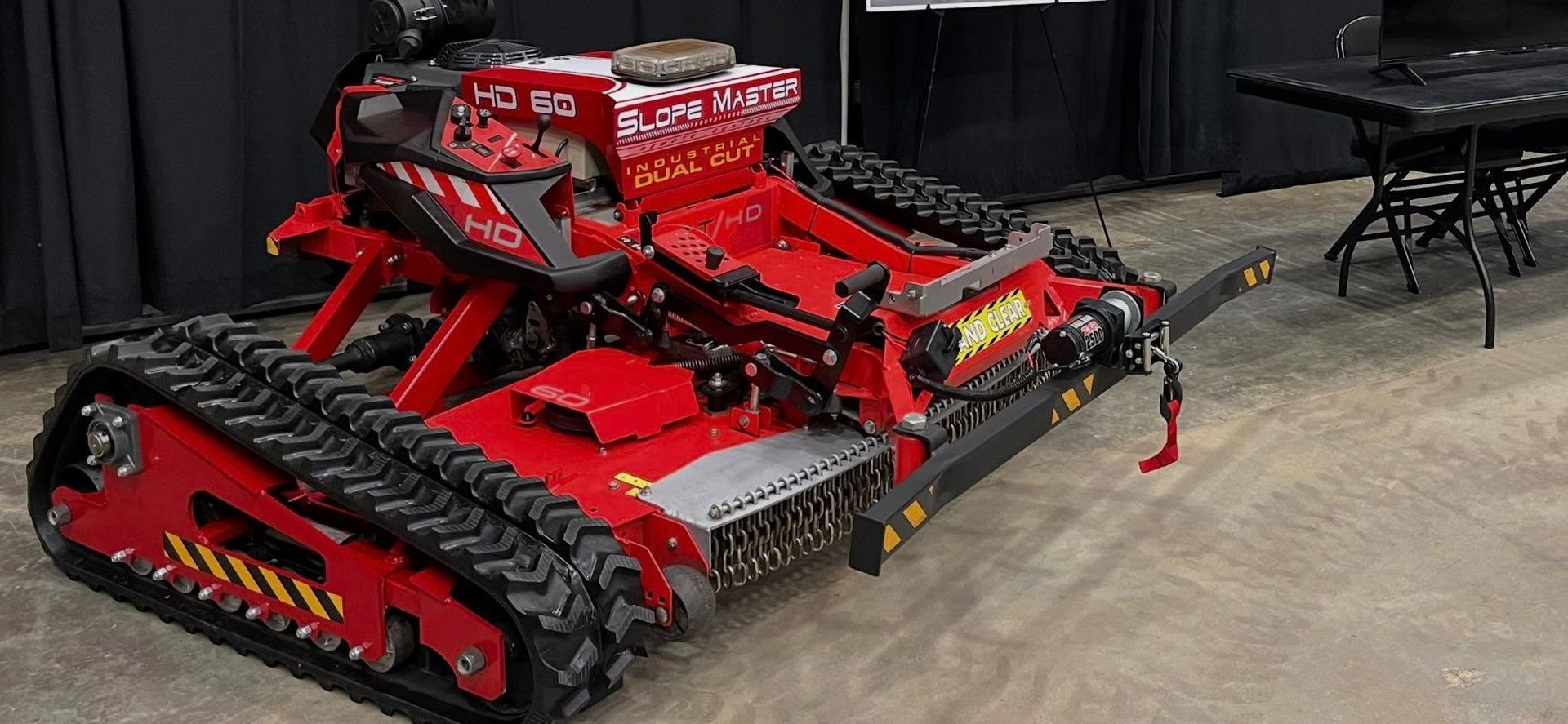
    Industrial Dual-Cut RC Slopwer Mower Model in Red by Slope Master Innovations

    Routine maintenance typically includes engine service, hydraulic inspections, blade replacement, lubrication, filter changes, and scheduled preventive maintenance according to the manufacturer's recommendations. 


    Contact Slope Master Innovations if your machines need standard maintenance. 

    Contact Us
  • 13. Can commercial slope mowers replace handheld brush-cutting crews?
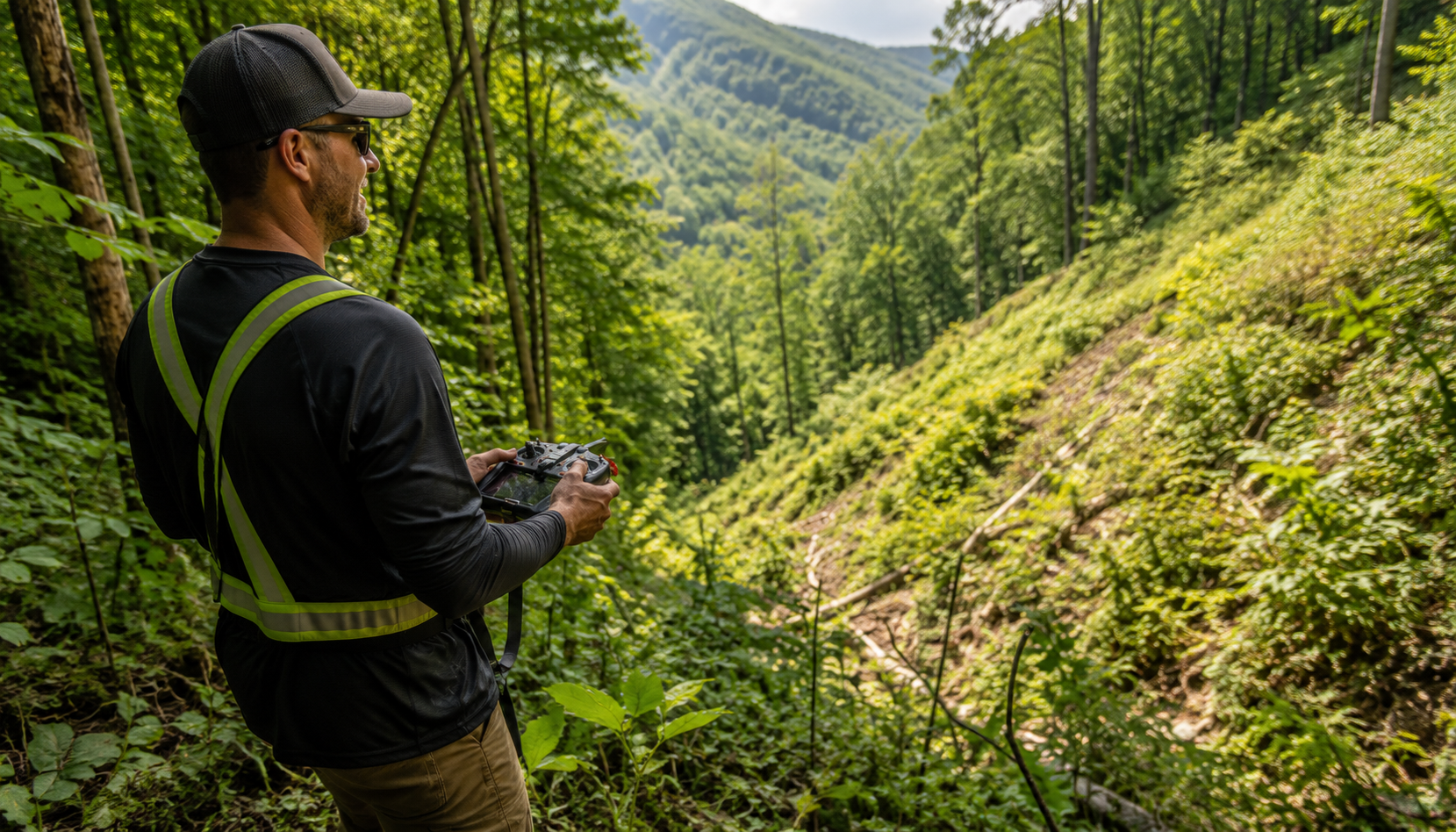
    Hiker in black and neon vest overlooking a lush green mountain valley from a forest trail

    In many applications, yes. They can significantly reduce manual labor on steep terrain while improving productivity and reducing operator exposure to hazardous conditions. Professional landscapers still need to weed-eat, but the risk from line trimming steep slopes is virtually eliminated. Using a Commercial RC Slope Mower even rivals a traditional commercial riding mower in speed and efficiency on flat ground! These capabilities only add value to investing in a commercial-grade remote-controlled slope mower. 


    Explore Slope Mowers
  • 14. Are commercial slope mowers used by municipalities?

    U.S. Capitol dome against a blue sky with white clouds

    Yes. Municipal governments, counties, state agencies, and Departments of Transportation frequently use commercial slope mowers to maintain public infrastructure and difficult terrain.


    Slope Mower Applications
  • 14. What features should buyers compare before purchasing?

    Calculator, coins, and green growth arrow over a city park restoration scene with a worker in safety vest.

    Slope capability, safety systems, remote-control technology, durability, cutting width, service support, warranty, maintenance requirements, and total cost of ownership. 


    Explore Slope Master Models to find a machine with the perfect specs for you! 


    Slope Mower Models
  • 15. Where can I learn more about choosing the right commercial slope mower?
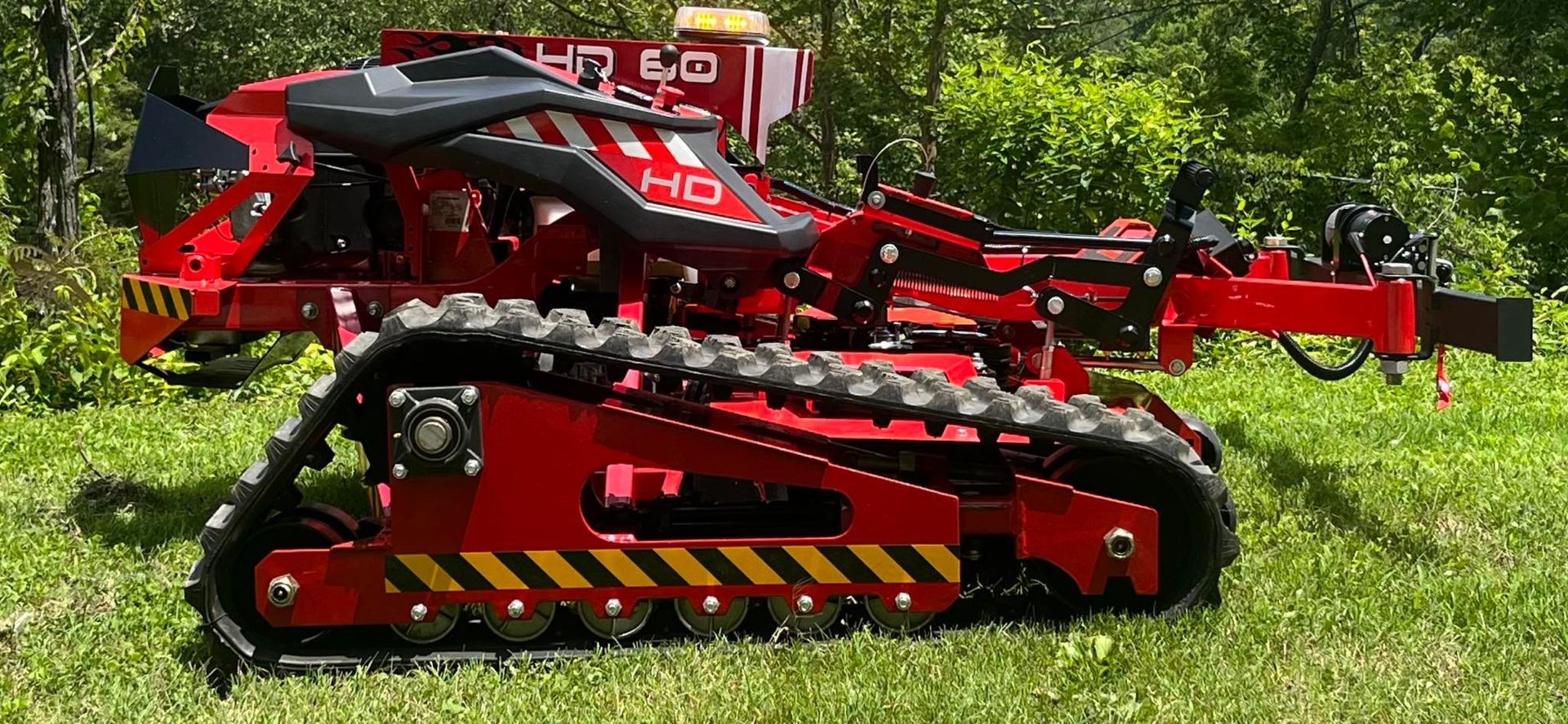
    Red compact tracked utility machine with boom arm on grass, seen in profile.

    Explore Slope Master's product pages, browse additional educational articles on the Beyond the Slope Blog, or contact our team to discuss your specific application and equipment requirements.
    Explore Products
Black heart icon on a white background

Quick Answer

Share this article:

Recent Posts

Red tracked robot on grass with black arms and hazard-striped front attachment
By Brandon Keen July 1, 2026
Discover 12 profitable commercial applications for remote-controlled slope mowers and learn how they improve safety, productivity, and business growth.
Commercial remote-controlled slope mower working on a steep green hill.
By Brandon Keen May 22, 2026
Discover how a commercial remote-controlled slope mower replaces 12-18 workers, ensuring maximum safety and efficiency on steep terrain and highway embankments.
A collage showing construction management, remote-controlled slope mowers, and groundskeeping crews at sunset.
By Brandon Keen April 16, 2026
Win more contracts with slope mowing services. Target municipalities, landowners, and government jobs with safer, faster, high-margin mowing solutions.
Split view: workers manually clearing a grassy slope next to a modern scene of remote-controlled mowers and rising profit.
By Brandon Keen April 16, 2026
Maximize ROI with remote-controlled slope mowers. Cut labor costs, boost efficiency, reduce risk, and unlock new revenue with high-performance mowing equipment.
A yellow, remote-controlled track-driven brush mower parked on a residential lawn.
By Brandon Keen April 16, 2026
Boost city landscaping efficiency with remote-controlled mowing. Safer roadside maintenance, reduced liability, & fewer crews needed for municipal mowing solutions.
Close-up frontal picture of the Slope Master Innovations Spyder Model.
By Brandon Keen March 10, 2026
Learn about the applications of Slope Mowers best lawn robots in the Kentucky area. From solar farms, to mountain and steep slope mowing.
Two red and black robotic-looking vehicles on grassy field.
By Brandon Keen March 10, 2026
Slope Master in Kentucky offers the best remote lawn mower options. Find out about cost-saving landscape mowing machines.