RIGHT-OF-WAY
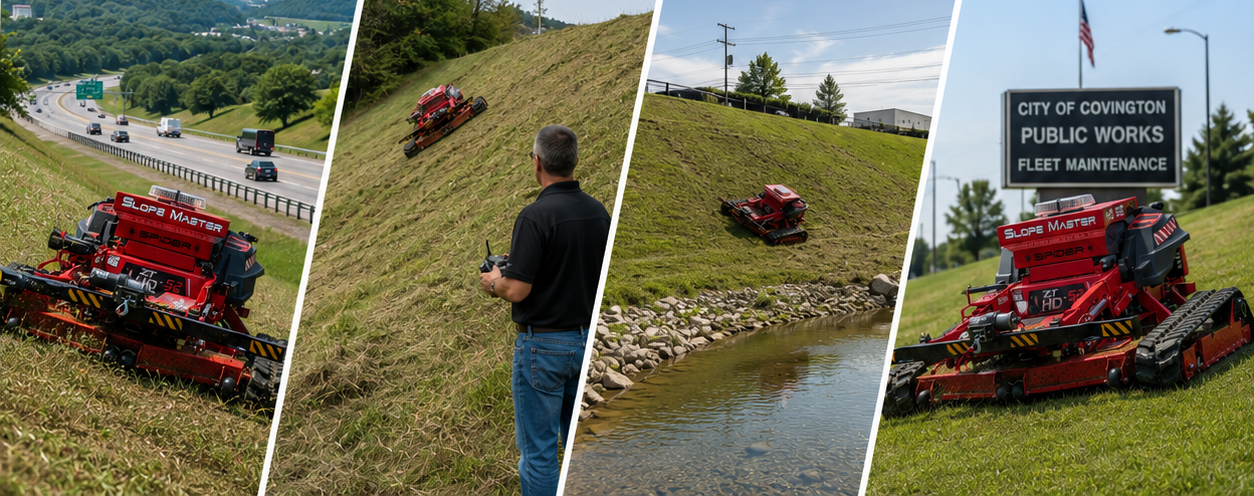
Medians and roadside banks may need vegetation control. Coordinate with the road authority, confirm traffic-control requirements and access limits, and select equipment rated for the terrain and vegetation.
2. UTILITY CORRIDORS
Utility easements may include overhead or underground infrastructure. Obtain utility-owner approval, locate buried services, maintain required clearances, and follow site-specific work procedures.
3. SOLAR FARMS
Solar sites can include panel rows, drainage routes, and restricted areas. Confirm access with the operator, protect cables and equipment, and check turning space, ground conditions, and the mower’s dimensions before work.
4. RAILROAD RIGHT-OF-WAY
Rail property work requires permission and coordination with the railroad. Follow its access, track-protection and scheduling procedures; do not enter railway property without authorization.
5. RETENTION PONDS AND STORMWATER AREAS
Pond banks and drainage features can have soft ground, water hazards, and engineered limits. Confirm property rules, erosion controls, access and equipment limits; avoid saturated or unstable ground.
6. INDUSTRIAL FACILITIES
Industrial grounds may have vehicle routes, process equipment and restricted zones. Coordinate with the facility manager, follow site safety rules, and check for underground services and other hazards.
7. FLOOD-CONTROL INFRASTRUCTURE
Levees, spillways and drainage channels may require vegetation management for inspection and access. Confirm the asset owner’s work plan, soil and embankment restrictions, equipment limits and recovery procedures.
8. AIRPORTS
Airport grounds work requires advance coordination with operations and compliance with site access, airside, wildlife-management and security rules. Do not enter restricted areas without explicit authorization and required controls.
9. PIPELINE EASEMENTS
Coordinate with the pipeline operator. Confirm utility markings, access permissions, inspection schedules, slope and surface limits, and restrictions on equipment or ground disturbance.
10. LANDFILLS AND ENVIRONMENTAL SITES
Closed landfills and remediation sites can have caps, settlement areas, monitoring equipment, and restricted zones. Obtain site-manager approval and confirm allowable equipment, ground-pressure limits, and environmental controls.
11. WIND ENERGY FACILITIES
Wind sites may include steep access roads, drainage features, and restricted turbine areas. Coordinate with the operator, follow traffic and lockout rules, and verify the mower and route are permitted for the task.
12. LARGE COMMERCIAL LANDSCAPES
Campuses and business parks may include berms and difficult-to-access turf. Evaluate each area separately, follow property rules, and compare model limits and cutting requirements with site conditions. Staffing and productivity depend on the job.
WHY CONTRACTORS MAY ADD SLOPE-MOWING SERVICES
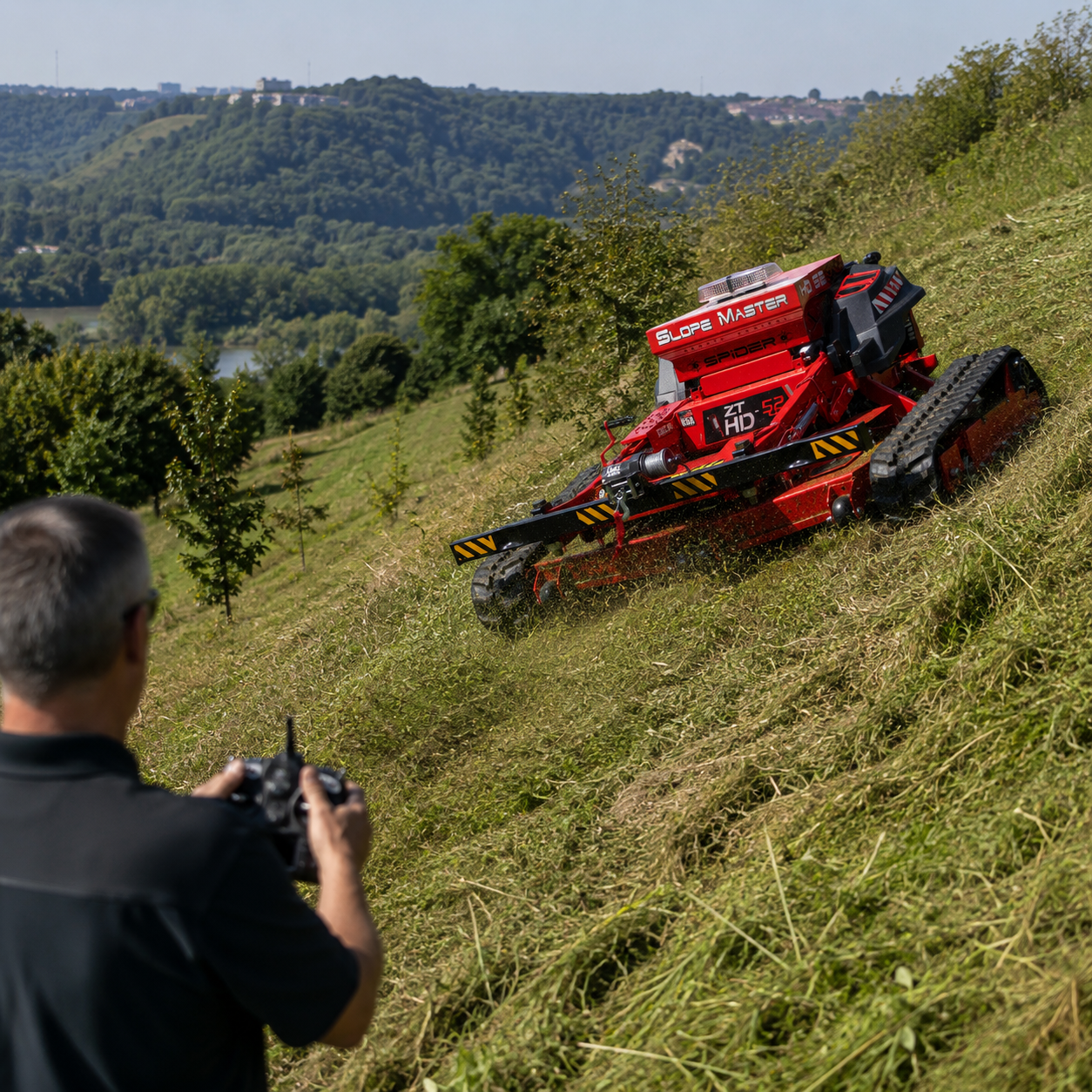
A remote-controlled mower may help contractors evaluate work that is difficult to reach with conventional equipment. Whether it creates a viable service depends on local demand, transport, training, insurance, maintenance, utilization, and job costs. Assess these factors before adding a service or promising savings.
CHOOSING A COMMERCIAL REMOTE-CONTROLLED MOWER
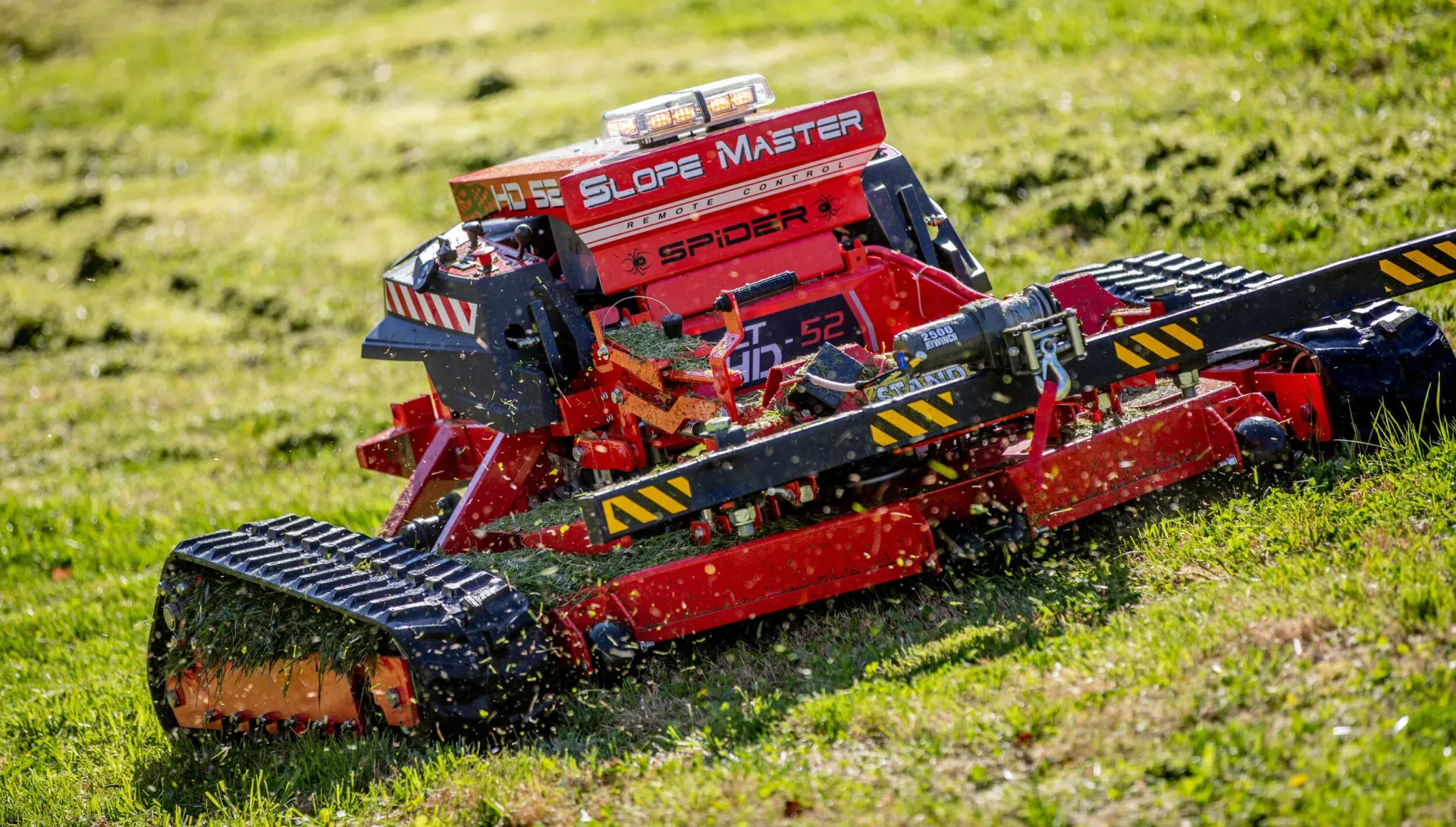
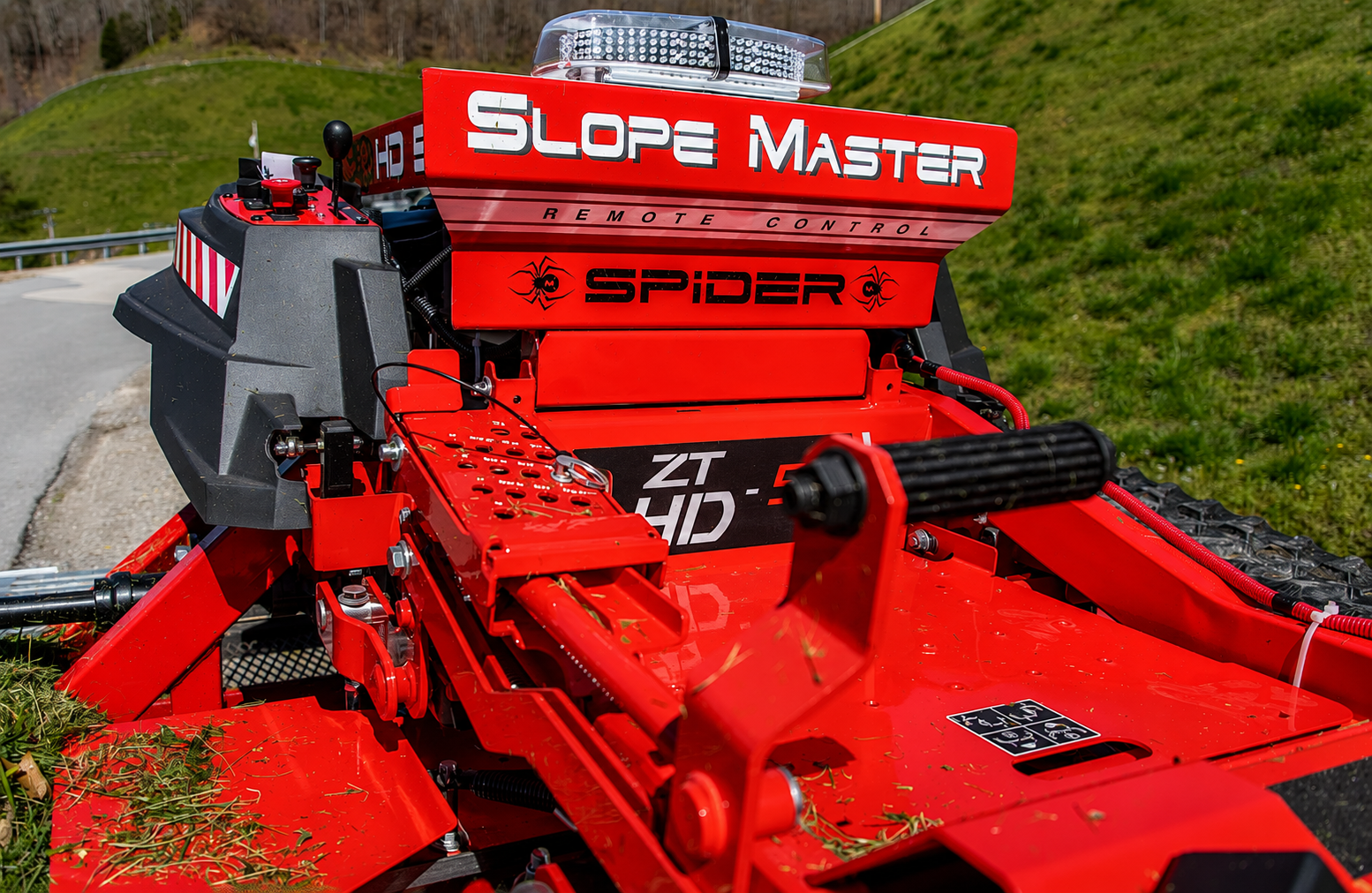
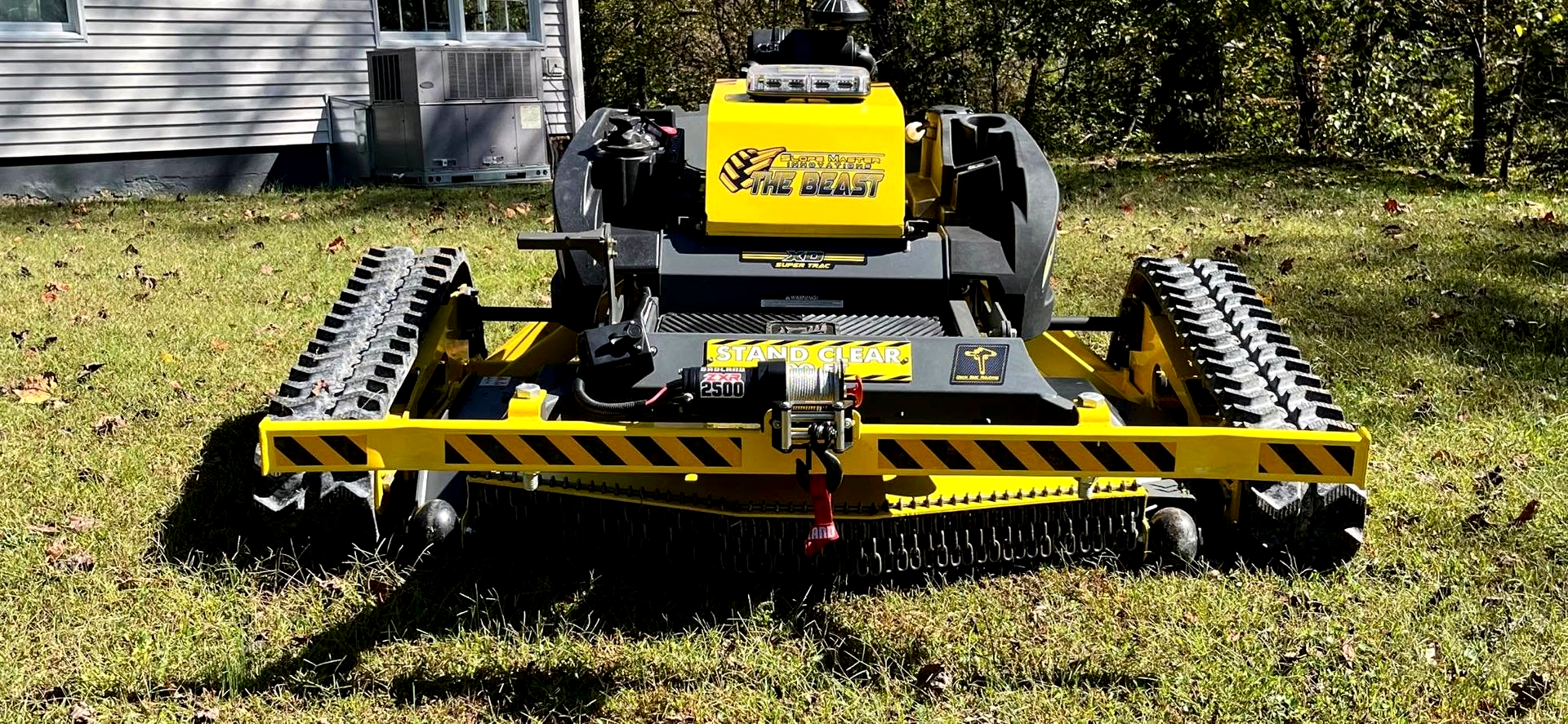
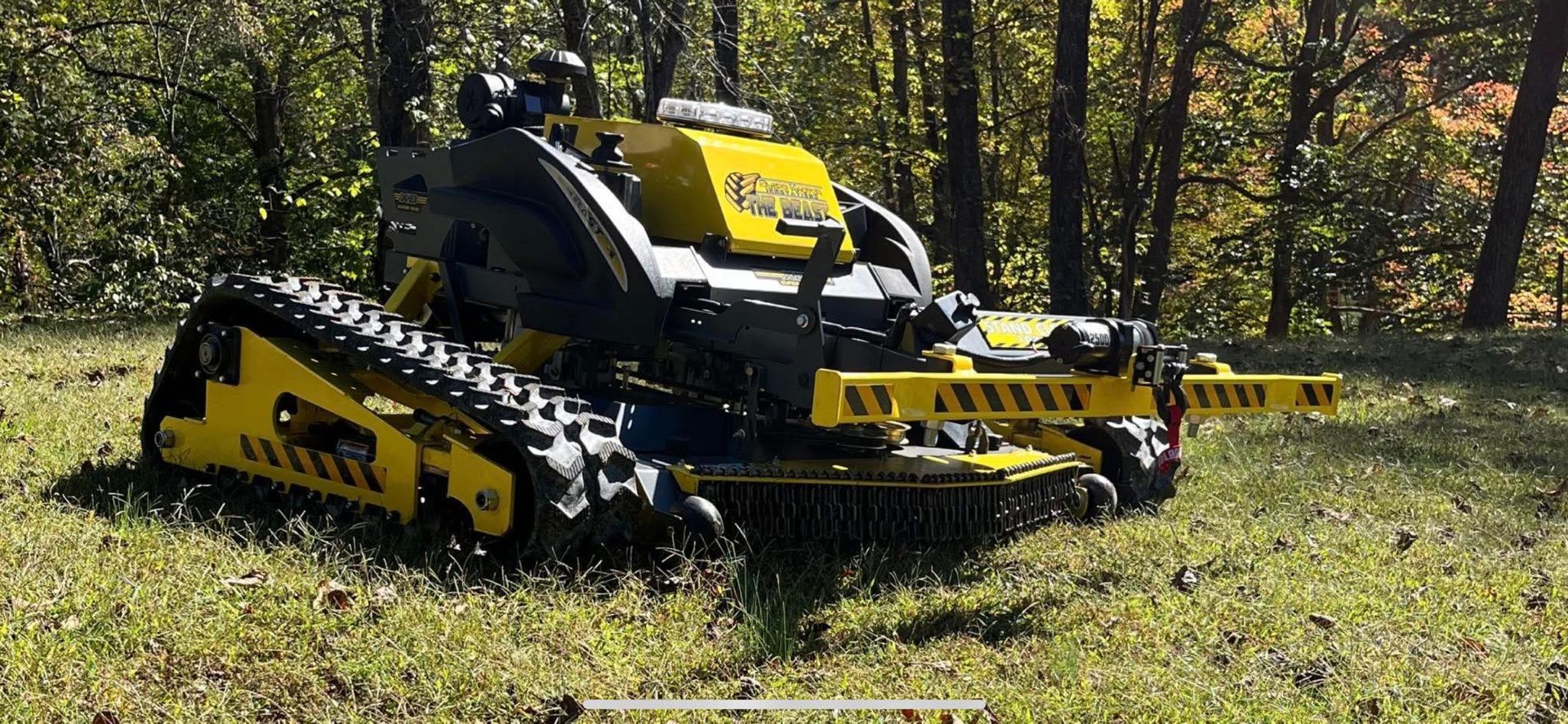
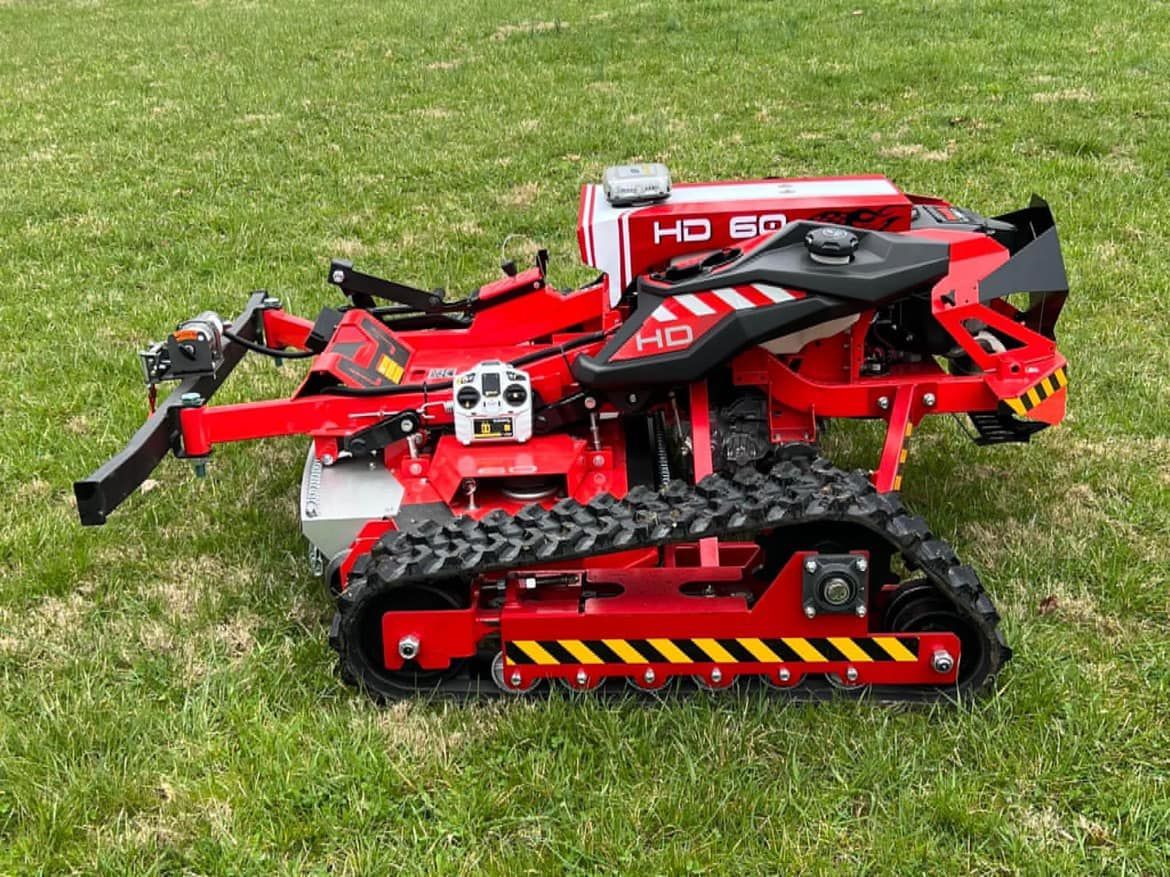
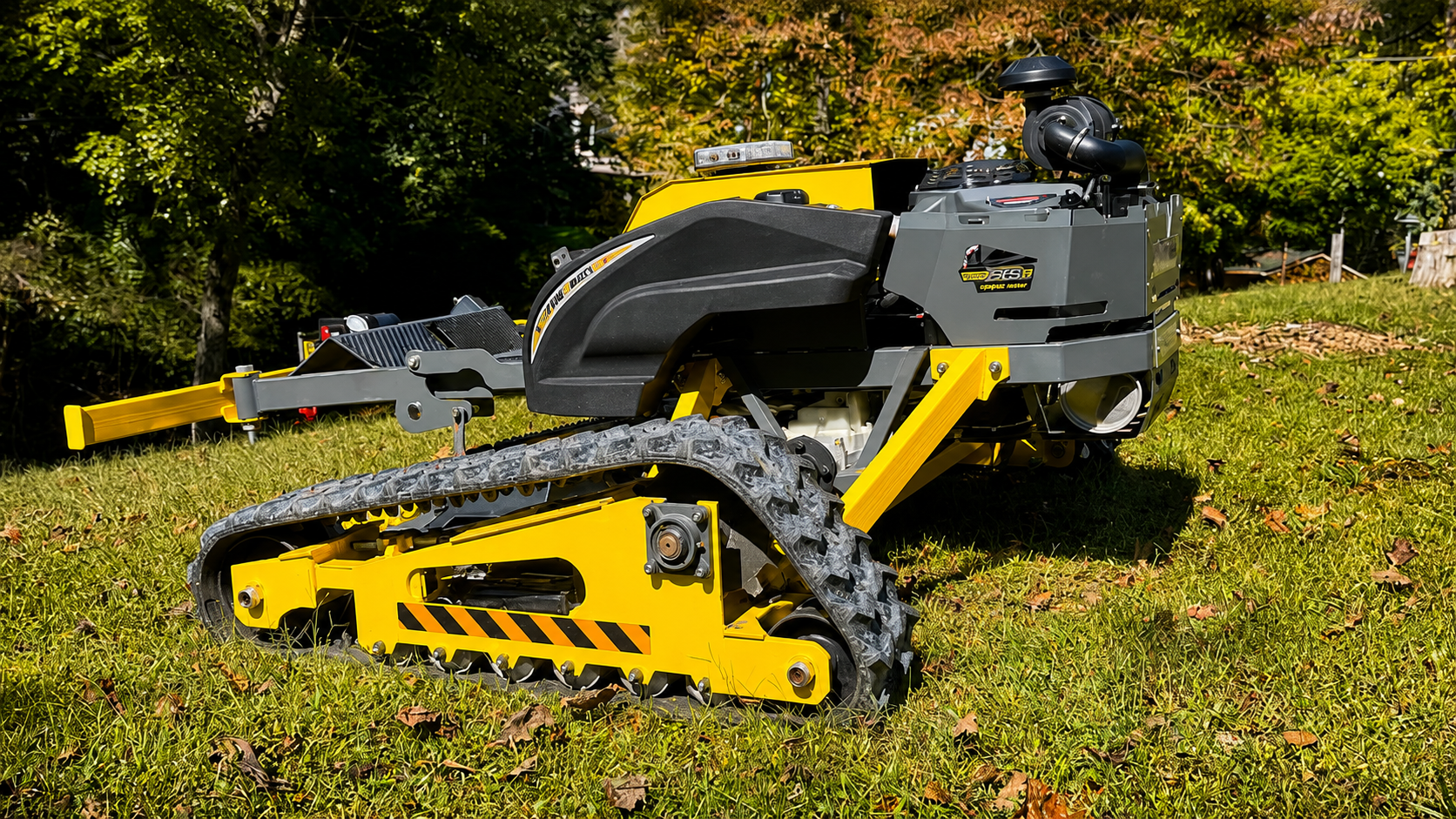
Compare the exact model’s published slope limits, permitted slope direction, cutting width and height, vegetation type, dimensions, operating range, recovery method, service support, and warranty. Review the current manual and arrange a site-specific demonstration where available. Do not infer features or suitability from a product category alone.
THE BOTTOM LINE
Remote-controlled mowers may be suitable for some commercial vegetation work. Every site needs permission, a hazard assessment, and a match between ground conditions and the selected model’s published limits. Productivity, cost and cut quality vary; measure them on a representative job before making a business decision on the job.