Remote-Controlled vs. Robotic Slope Mowers: What Commercial Buyers Need to Know
Understanding the difference between operator-controlled commercial equipment and autonomous lawn robots can help you choose the right technology for steep, hazardous, and demanding terrain.
Quick Answer: What Is the Difference Between a Remote-Controlled and a Robotic Mower?
A remote-controlled slope mower is actively operated by a person using a handheld controller. The operator controls its direction, speed, cutting path, and response to changing terrain in real time.
A robotic or autonomous mower is programmed to mow with limited human control. It typically relies on sensors, boundary wires, GPS, cameras, or mapping software to move through a defined area independently.
Slope Master Innovations manufactures commercial-grade remote-controlled slope mowers... not autonomous residential lawn robots. Our equipment is designed for professional operators maintaining steep slopes, highway embankments, retention ponds, industrial properties, mountainous land, and other demanding terrain.
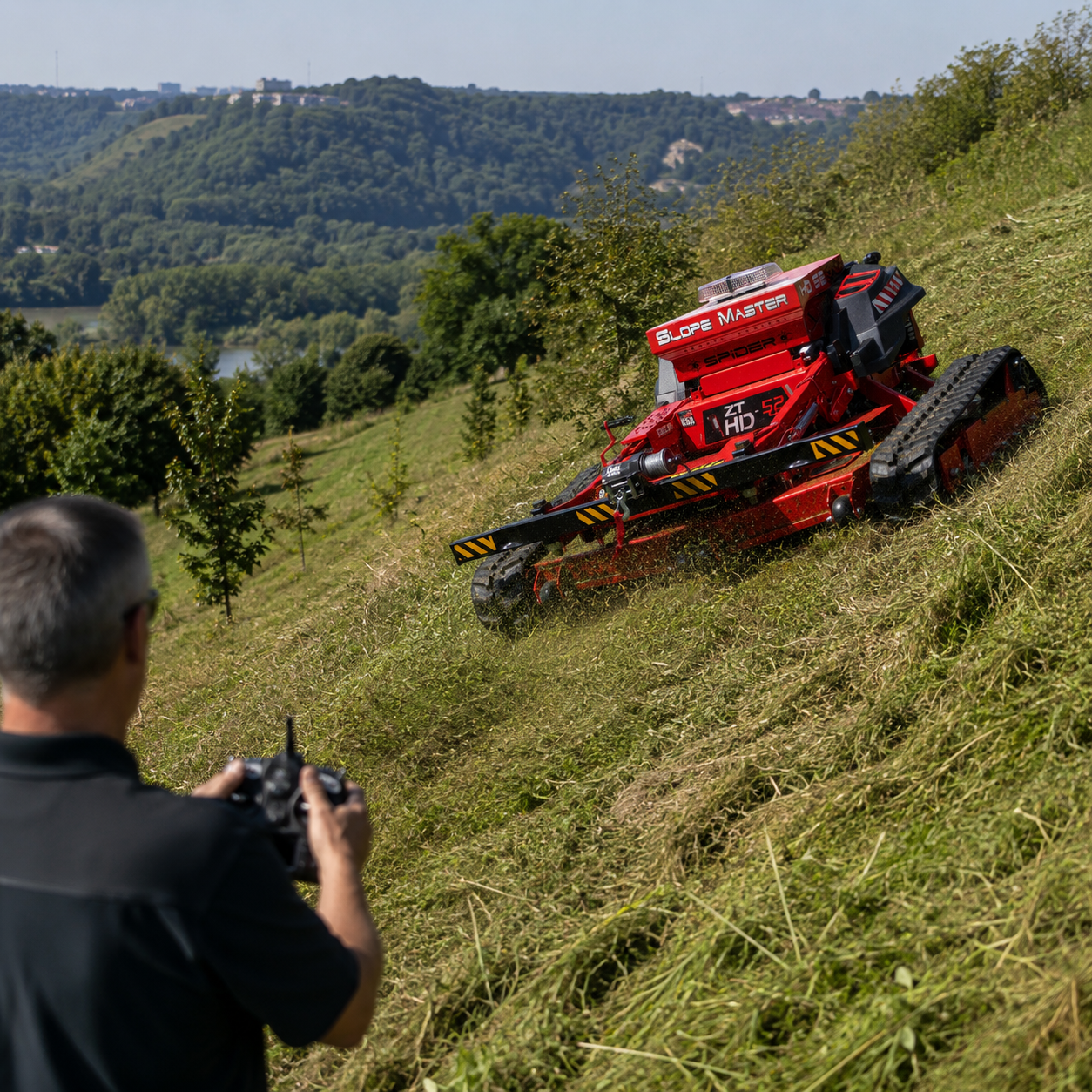
That distinction matters. A mower intended to maintain a relatively smooth residential lawn is not the same type of machine as heavy-duty commercial slope mowing equipment engineered for rugged terrain and inclines up to 60 degrees under appropriate operating conditions.
Why “Remote-Controlled,” “Robotic,” and “Autonomous” Are Not Interchangeable
These terms are often used interchangeably online, but they describe different types of mowing technology.
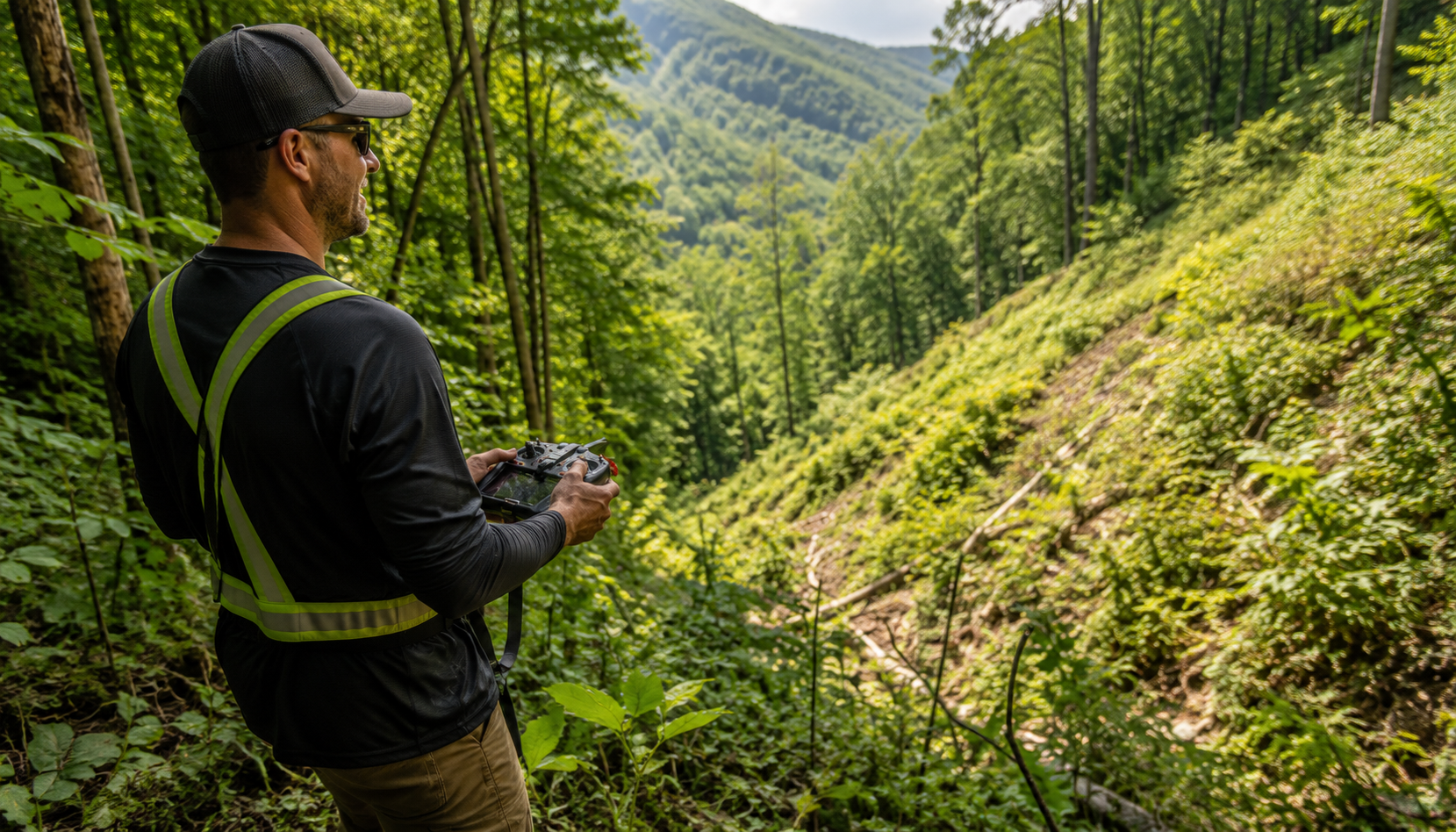
A remote-controlled mower requires continuous input from a trained operator. The operator remains at a safe working distance while maintaining direct control over the machine.
A robotic mower follows programmed instructions. Many residential models travel within a boundary, return to a charging station, and maintain a lawn on a recurring schedule with minimal involvement from the property owner.
An autonomous mower takes that concept further by using sensors, mapping technology, GPS, or artificial intelligence to navigate and make certain operational decisions without constant human control.
Some commercial robotic mowing equipment does exist. However, buyers should never assume that equipment described as “robotic” is automatically suitable for commercial slope mowing. The machine’s intended application, construction, traction, slope rating, cutting capacity, control system, and safety features matter far more than the marketing label.
What Is a Commercial Remote-Controlled Slope Mower?
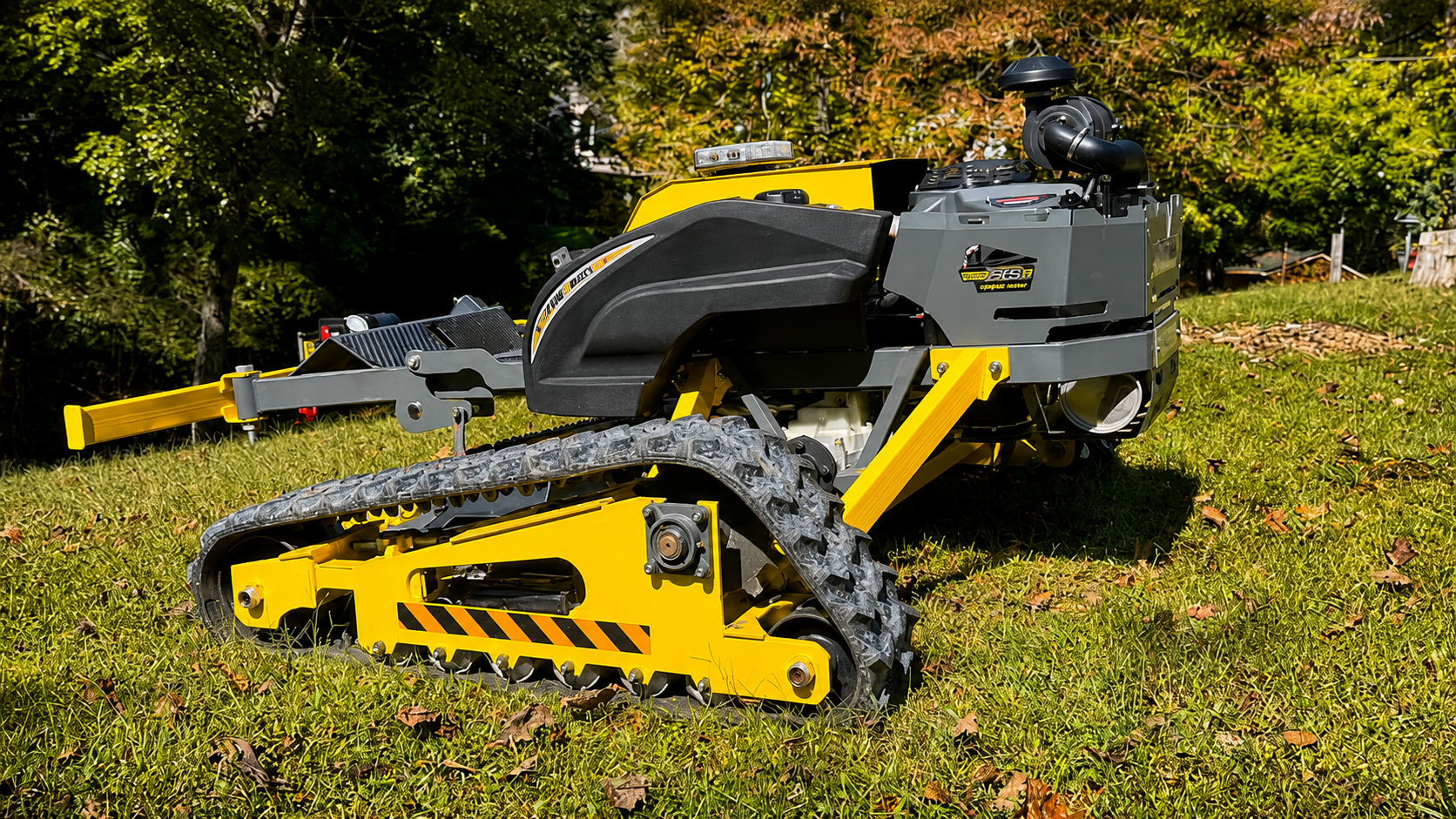
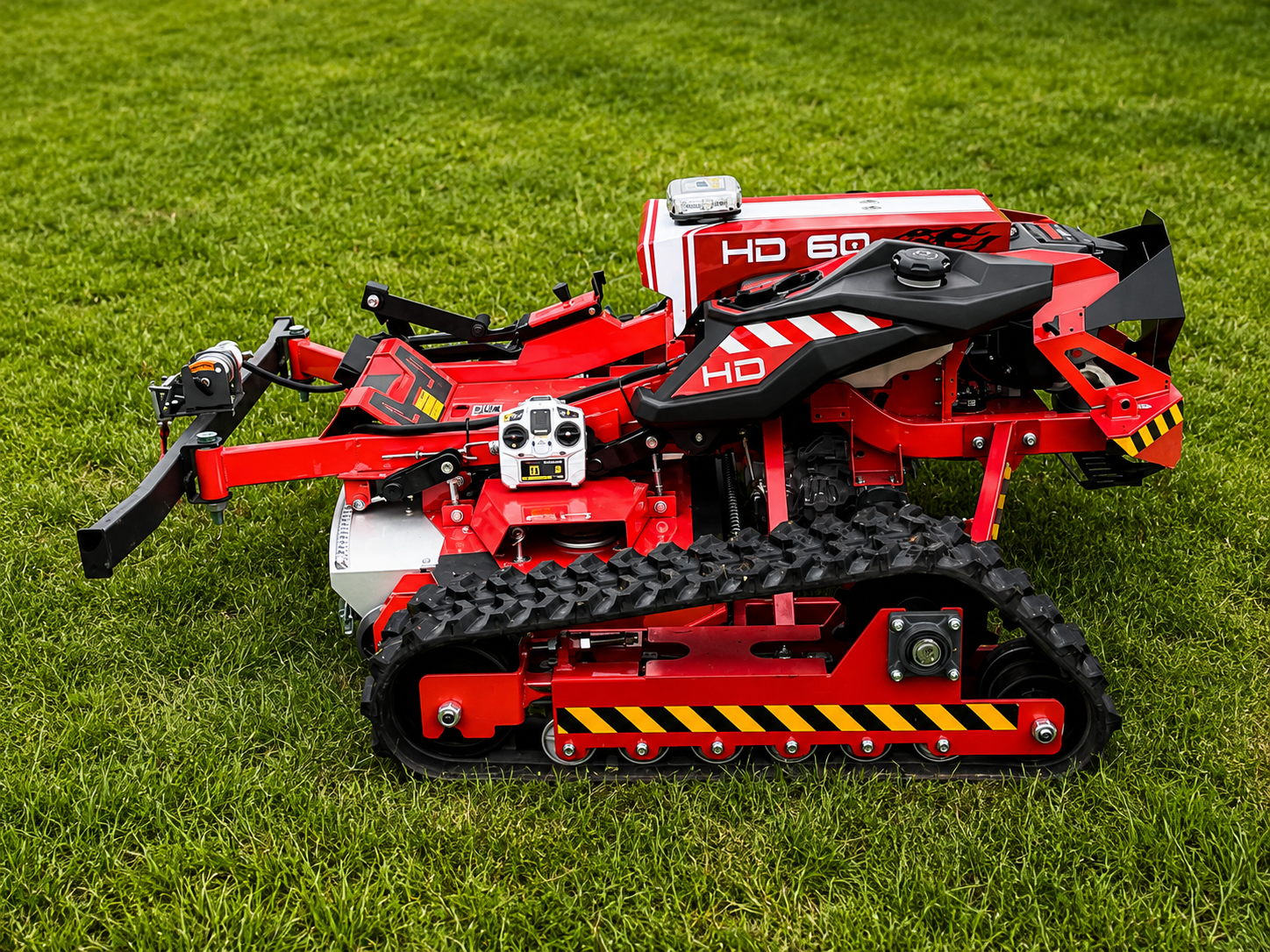
A commercial remote-controlled slope mower is a heavy-duty mowing machine operated from a safe distance with a handheld radio controller. It is designed to help professionals maintain terrain that may be too steep, rough, hazardous, or difficult to access with conventional riding equipment.
Instead of placing an operator directly on the machine, remote operation allows the user to choose a safer vantage point while maintaining control over:
- Forward and reverse movement
- Turning and positioning
- Travel speed
- Cutting path
- Obstacle avoidance
- Emergency stopping
- Movement across changing terrain
Commercial remote-controlled mowers are commonly used by municipalities, public works departments, highway contractors, commercial landscapers, utility companies, industrial facilities, and large property owners.
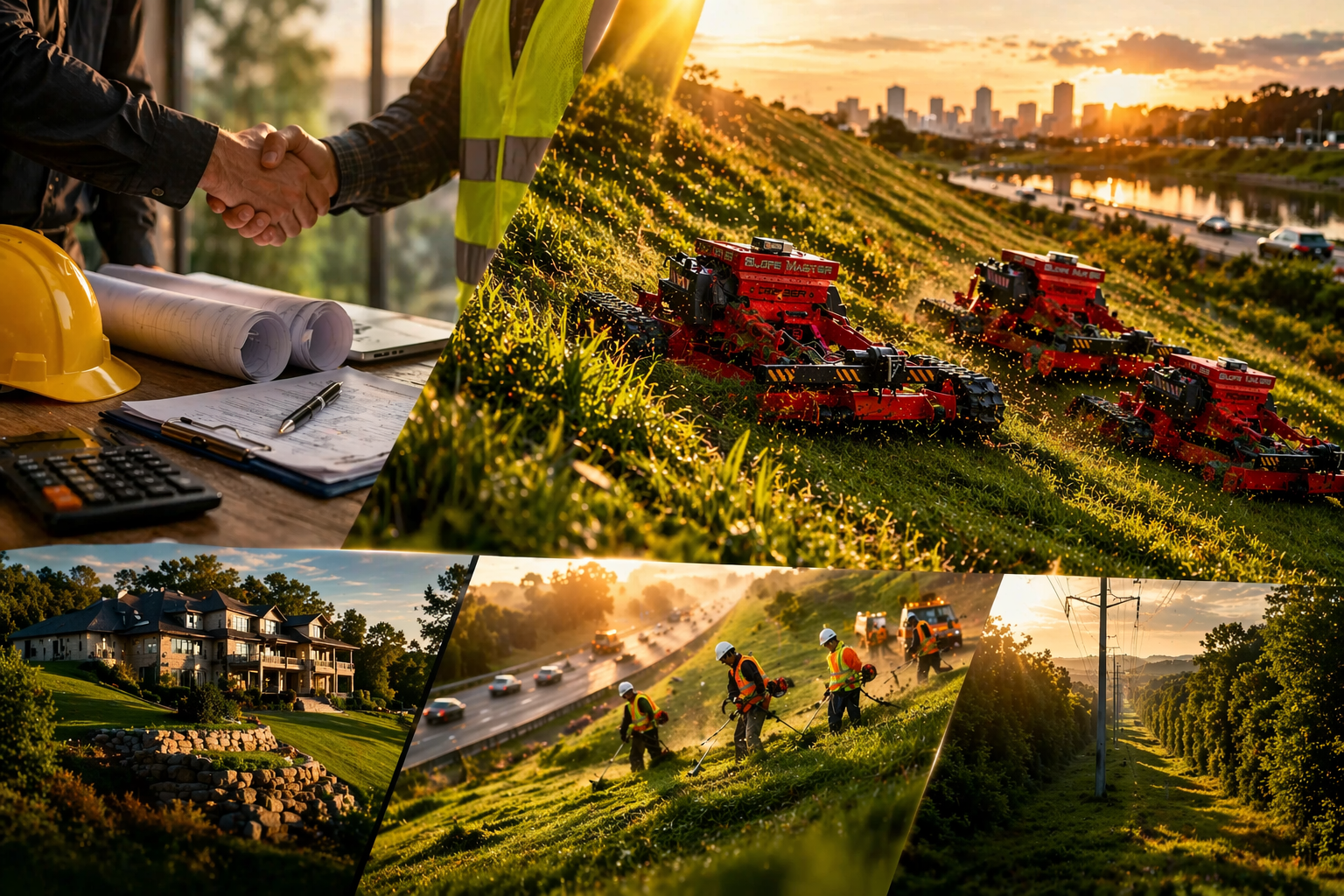
Typical applications include roadside embankments, retention ponds, drainage basins, utility corridors, commercial developments, overgrown hillsides, mountain properties, and other areas where conventional equipment may be inefficient or unsafe.
Are Remote-Controlled Slope Mowers Autonomous?
No. A remote-controlled slope mower is not autonomous.
The mower does not independently choose its route, evaluate the entire jobsite, or complete the project without an operator. A person remains responsible for directing the machine and monitoring conditions throughout operation.
This human control is an advantage in demanding commercial environments. Real job sites may contain rocks, stumps, washouts, drop-offs, loose soil, wet grass, thick vegetation, drainage channels, fencing, debris, and sudden changes in grade.
A trained operator can observe those conditions and adjust the mower’s direction, speed, and cutting approach immediately. Fully autonomous equipment may work well in predictable, mapped environments, but steep and rugged terrain frequently demands human judgment.
Remote operation combines the decision-making ability of an experienced operator with the safety benefit of keeping that operator off the mower and away from the most hazardous portion of the slope.
How Are Residential Robotic Mowers Different?
Residential robotic mowers are primarily designed to maintain lawns with predictable boundaries and relatively consistent conditions. They are commonly used for frequent, light mowing rather than heavy vegetation removal or demanding commercial land management.
Depending on the model, a residential robotic mower may use:
- Underground boundary wires
- GPS-guided boundaries
- Cameras or proximity sensors
- Automated mowing schedules
- Battery power and charging stations
- App-based programming
- Obstacle-detection technology
These features can be convenient for homeowners who want routine lawn maintenance. However, convenience should not be confused with commercial capability.
A lightweight robotic mower designed for a maintained residential yard is generally not built to manage rough mountain terrain, large highway embankments, deep drainage areas, thick brush, unstable surfaces, or daily professional workloads.
It may also lack the cutting width, weight distribution, track system, engine power, emergency controls, recovery equipment, and structural durability expected from a commercial remote-controlled slope mower.
Can Robotic Lawn Mowers Handle 60-Degree Slopes?
Most residential robotic lawn mowers are not designed to mow 60-degree slopes.
Maximum incline ratings vary considerably by manufacturer and model. Buyers should carefully examine how a manufacturer expresses its rating because degrees, percentage grade, and slope ratios are not the same measurement.
Ground conditions also affect real-world performance. Wet grass, loose soil, rocks, hidden holes, thick vegetation, and abrupt grade changes can make a slope more challenging than its measured angle suggests.
Slope Master equipment is purpose-built for demanding terrain and designed to handle inclines up to 60 degrees under suitable operating conditions. Its tracked construction, low center of gravity, heavy-duty chassis, remote operation, and commercial components provide an entirely different level of capability than a residential lawn robot.
Every job site should still be evaluated before operation. Published slope capability does not replace proper training, inspection, sound judgment, or adherence to manufacturer guidelines.
Why Human Control Matters on Steep and Unpredictable Terrain
Autonomous operation is most effective when the environment is consistent and predictable. Commercial slope mowing is often neither.
An operator may need to reposition a mower around a drainage outlet, slow down near a washout, approach thick vegetation from a different direction, avoid a concealed obstacle, or stop immediately when conditions change.
Continuous remote control gives the operator the ability to:
- Inspect the terrain from multiple angles
- Select the safest mowing direction
- Adjust speed for vegetation and ground conditions
- Respond to slipping or changing traction
- Avoid obstacles and sensitive infrastructure
- Stop the mower immediately when necessary
- Reposition the machine for better stability and cutting performance
The goal is not to remove the operator from the process. It is to remove the operator from the seat and place them at a safer working distance while preserving their control over the equipment.
What Makes a Remote-Controlled Mower Commercial-Grade?
The remote control itself does not make a mower commercial-grade. Buyers should evaluate the entire machine and how it was engineered.
Important factors include:
- Heavy-duty frame and chassis construction
- Track design and ground contact
- Center of gravity and weight distribution
- Commercial engine power
- Cutting width and deck construction
- Emergency shutoff systems
- Recovery winches
- Serviceability and parts availability
- Transport dimensions and equipment weight
- Manufacturer support and training
- Customization for specific applications
- Suitability for repeated professional use
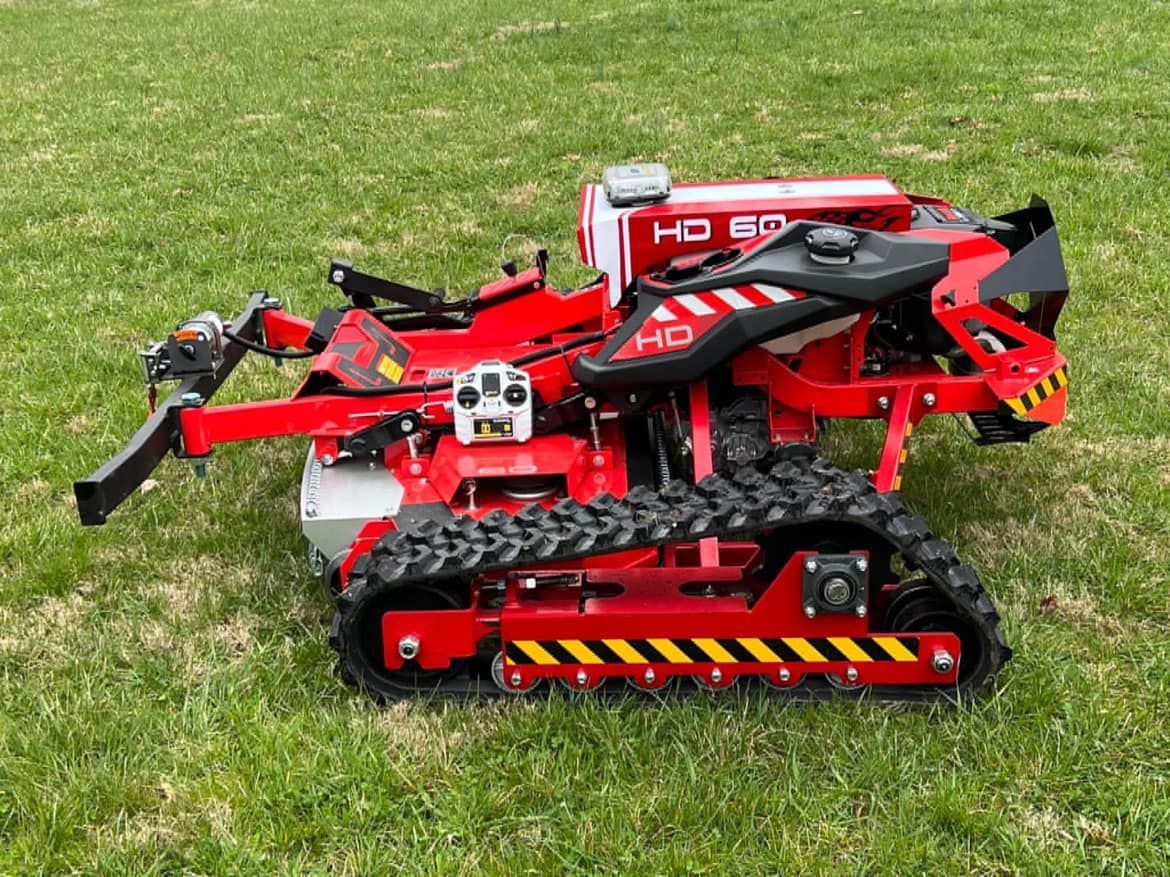
Slope Master Innovations fabricates its machines in the USA using commercial Kawasaki engines, tracked designs, integrated safety features, and heavy-duty components. Models can also be customized to accommodate different cutting, transport, weight, and performance requirements.
This is equipment built for cities, contractors, facilities, and landowners who need to complete serious mowing work—not simply automate routine lawn maintenance.
Which Type of Mower Is Best for Commercial Slopes?
A commercial remote-controlled slope mower is usually the more appropriate option when the work involves steep grades, rough terrain, unpredictable obstacles, large areas, hazardous access, or professional production requirements.
A residential robotic mower may be appropriate when:
- The property is a maintained residential lawn
- Terrain is relatively smooth and predictable
- Vegetation is cut frequently
- The primary goal is automated lawn maintenance
- The mower can remain inside a defined operating area
A commercial remote-controlled slope mower may be appropriate when:
- Slopes exceed the capabilities of conventional equipment
- The operator should remain off the machine
- Terrain includes rocks, ruts, brush, or loose soil
- The property contains embankments or drainage infrastructure
- The mower will be used for municipal or commercial work
- High productivity and cutting capacity are required
- Conditions require continuous human judgment
- The equipment must withstand repeated professional use
The right choice depends on the terrain, vegetation, acreage, operating environment, and type of work being completed. Buyers should choose equipment based on the actual application, not simply because a product is described as robotic, remote, smart, or autonomous.
Choosing the Right Slope Master Model
Slope Master Innovations offers three commercial remote-controlled slope mower models for different professional applications.
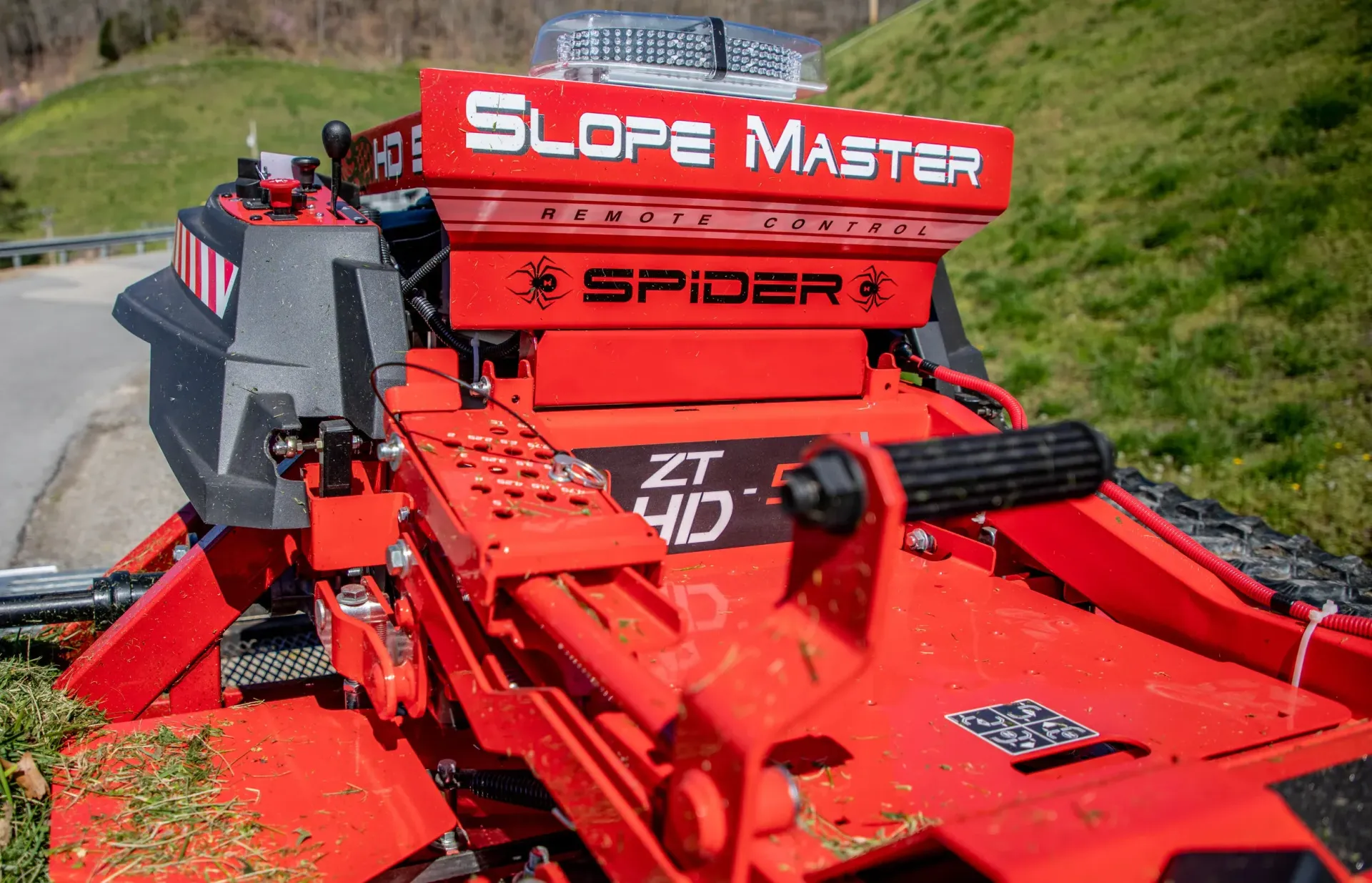
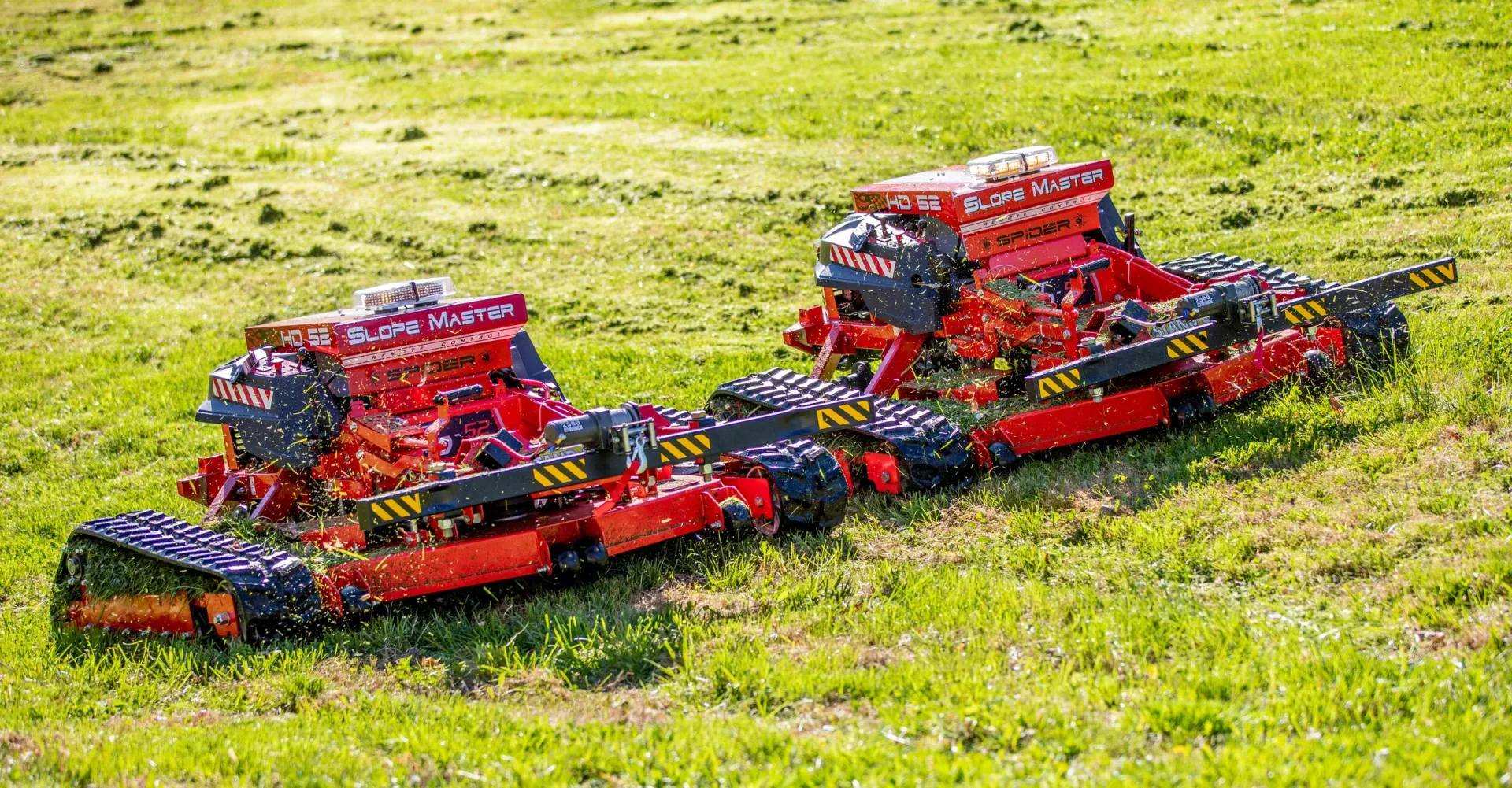
The SPiDER combines a compact footprint with a 52-inch finish-cut deck. It is designed for operators who need commercial slope capability with the maneuverability to work in tighter areas.
The Industrial Dual Cut offers a 60-inch finish cut and is designed for larger municipal, commercial, and industrial mowing projects where increased cutting coverage can improve production.
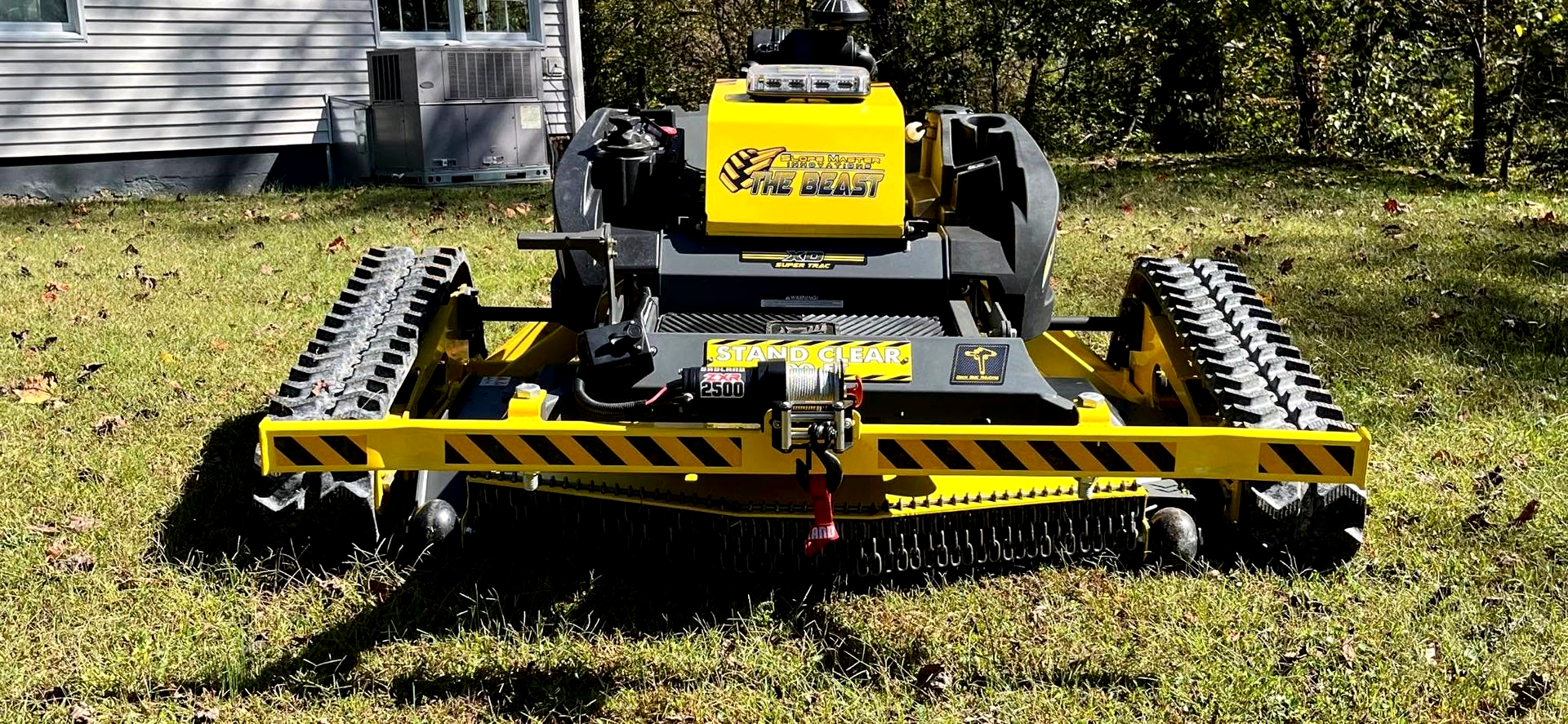
The Beast is Slope Master’s largest and most powerful model, featuring a 61-inch finish cut and heavy-duty construction for demanding large-scale applications.
All three models use commercial Kawasaki engines and are built for remote-controlled operation. Slope Master can also discuss customizations based on transportation needs, terrain, cutting requirements, and the type of work your organization performs.
Who Benefits From Commercial Remote-Controlled Slope Mowing Equipment?
Commercial remote-controlled slope mowers are particularly valuable for organizations responsible for maintaining difficult terrain on a recurring basis.
Common buyers and operators include:
- Cities, towns, counties, and municipalities
- Public works and parks departments
- State and local highway departments
- Government mowing contractors
- Commercial landscaping companies
- Utility providers and infrastructure contractors
- Manufacturing and industrial facilities
- Solar farms and energy properties
- Commercial property managers
- Large landowners and private estates
For commercial landscaping contractors, this equipment can open the door to specialized work that competitors may not be equipped to perform. For municipalities and facilities, it can reduce the need to place workers directly on dangerous slopes. For large property owners, it can make previously difficult or neglected terrain more manageable.
Commercial Slope Mowers Built for Demanding Terrain
Slope Master Innovations manufactures remote-controlled commercial slope mowers for professionals who need more capability than residential robotic equipment can provide.
Our machines are made in the USA and built for steep slopes, rugged terrain, heavy commercial use, and hands-on control from a safer working distance. Slope Master serves municipalities, contractors, businesses, and property owners across the continental United States, including mountainous regions throughout Kentucky, East Tennessee, Southwest Virginia, Appalachia, and beyond.
If you are comparing commercial slope mowing equipment, contact Slope Master Innovations to discuss your terrain, application, transportation requirements, and productivity goals. We will help you identify the model and available customizations that best fit your operation.
Call or text (606) 226-1004 to start the conversation.
FAQ
Frequently-asked-questions
What is the difference between a remote-controlled and robotic mower?
A remote-controlled mower is actively operated by a person using a handheld controller. A robotic mower generally uses programming, sensors, GPS, or boundary systems to mow with limited direct control.
Are remote-controlled slope mowers autonomous?
No. Remote-controlled slope mowers require an operator to control their speed, direction, positioning, and cutting path. The operator remains actively involved throughout the job.
Which mower is better for steep commercial slopes?
A purpose-built commercial remote-controlled slope mower is generally better suited for steep, rough, or unpredictable commercial terrain because it combines heavy-duty construction with continuous operator control.
Can a robotic lawn mower handle a 60-degree slope?
Most residential robotic lawn mowers are not designed for 60-degree slopes. Slope capability varies by machine, and buyers should verify whether ratings are expressed in degrees or percentage grade. Slope Master equipment is designed for inclines up to 60 degrees under appropriate operating conditions.
Is an RC mower the same as a robot mower?
No. “RC” means remote-controlled. The machine responds to commands from a human operator. A robot mower is generally programmed to navigate and mow with greater independence.
Does a remote-controlled slope mower still require an operator?
Yes. A trained operator directs the mower from a safe working distance and remains responsible for evaluating the terrain, choosing the mowing path, monitoring conditions, and stopping the equipment when necessary.
Can commercial remote-controlled mowers work on flat ground?
Yes. Slope Master equipment can be used on flat and mixed terrain in addition to steep slopes. This versatility allows contractors and organizations to use one machine across multiple commercial applications.
Where does Slope Master Innovations provide commercial slope mowers?
Slope Master Innovations serves customers across the continental United States. Its remote-controlled slope mowers are especially valuable in mountainous and hilly regions such as Kentucky, East Tennessee, Southwest Virginia, Appalachia, the Blue Ridge Mountains, and the Great Smoky Mountains.
Recent Posts