
Retention Pond Bank Mowing: What Commercial Property Managers Should Evaluate
A practical equipment and planning guide for commercial pond banks and drainage slopes.
Quick Answers
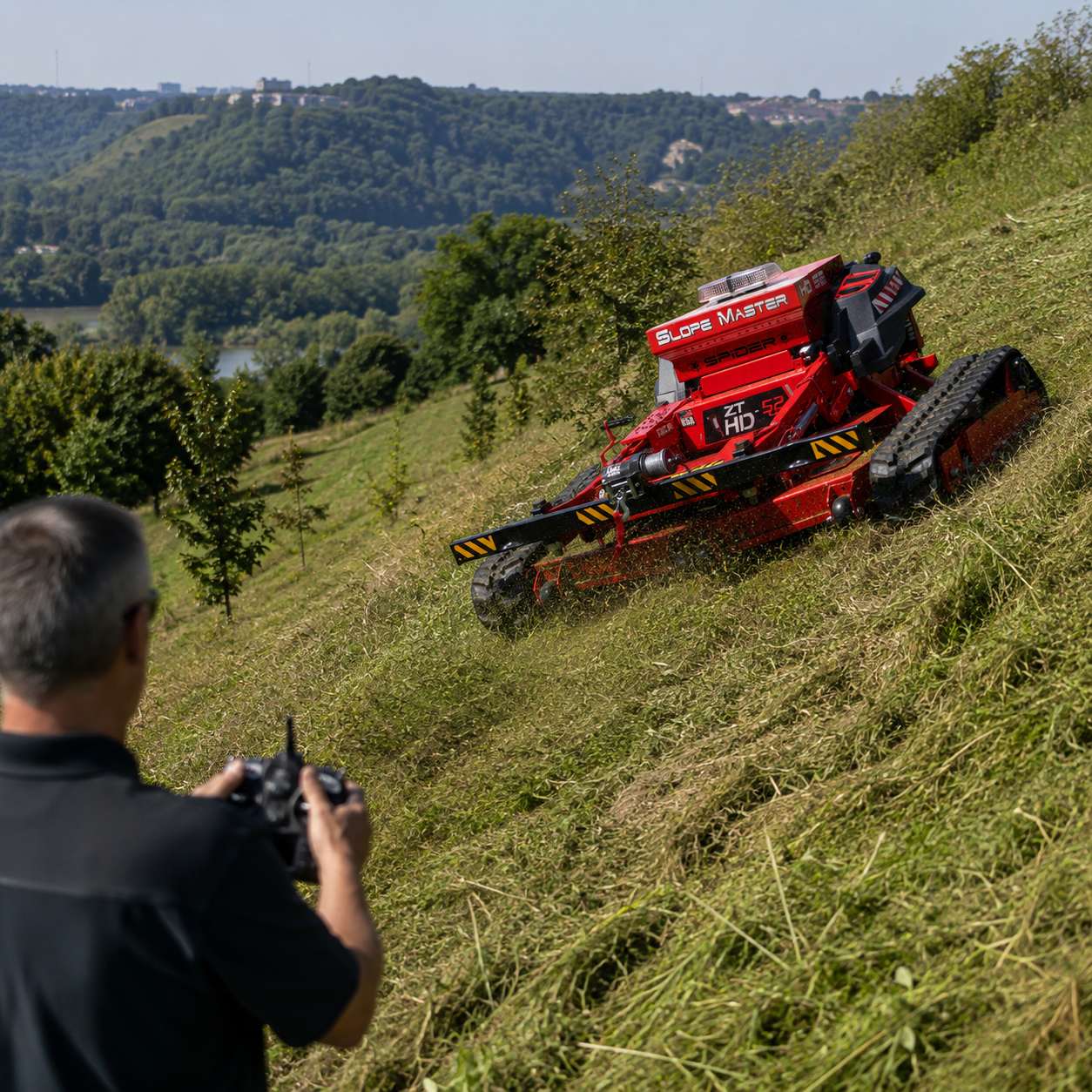
- Can a remote-controlled mower maintain pond banks? It can be an option for suitable bank areas when the machine, vegetation, access, and ground conditions match the manufacturer's operating requirements.
- Does a steep-slope rating mean a mower can work at the waterline? No. Water, soft ground, undercut edges, and changing bank conditions require separate assessment.
- What should the property manager provide? A maintenance plan, site map, access information, vegetation expectations, and clearly identified areas that must be protected or excluded.
A retention pond may occupy a small part of a commercial property while creating a disproportionate maintenance challenge. The broad lawn is straightforward. The steep bank, drainage inlet, fence corner, and narrow access gate are where the plan becomes more complicated.
For industrial facilities, commercial campuses, and homeowners associations, effective pond-bank mowing starts with a clear scope. Appearance matters, but the vegetation plan must also respect the pond's intended function and the condition of its banks.
Start With the Site's Maintenance Requirements
Review the property's stormwater maintenance documents and any instructions supplied by its designer, owner, or responsible authority. Establish which areas require regular mowing and which vegetation should remain. Different facilities may have different requirements, even when they look similar.
Identify planted buffers, designated vegetation zones, drainage structures, and access points on a simple site map. The mowing contractor or equipment operator should receive that information before work begins. Do not assume every strip of vegetation around a pond should be cut to the same height.
Mowing is one part of maintenance. It does not replace inspection of drainage structures, repair of erosion, sediment management, or other work the facility may require.
Assess Bank Conditions Separately From Slope Angle
A bank within a mower's advertised angle range can still be unsuitable because of soil conditions or an unstable edge. Inspecting the site also helps reveal places where tall vegetation conceals a drainage channel, washout, debris, or another obstruction.
Document areas needing further assessment:
- Soft or saturated ground and places that remain wet after surrounding areas dry.
- Erosion, slumping, undercut edges, or unexpected changes in the bank profile.
- Inlets, outlets, culverts, pipes, exposed liners, and other structures.
- Hidden obstacles, discarded materials, and steep transitions.
- Public paths, parking areas, buildings, and places where people could enter the work area.
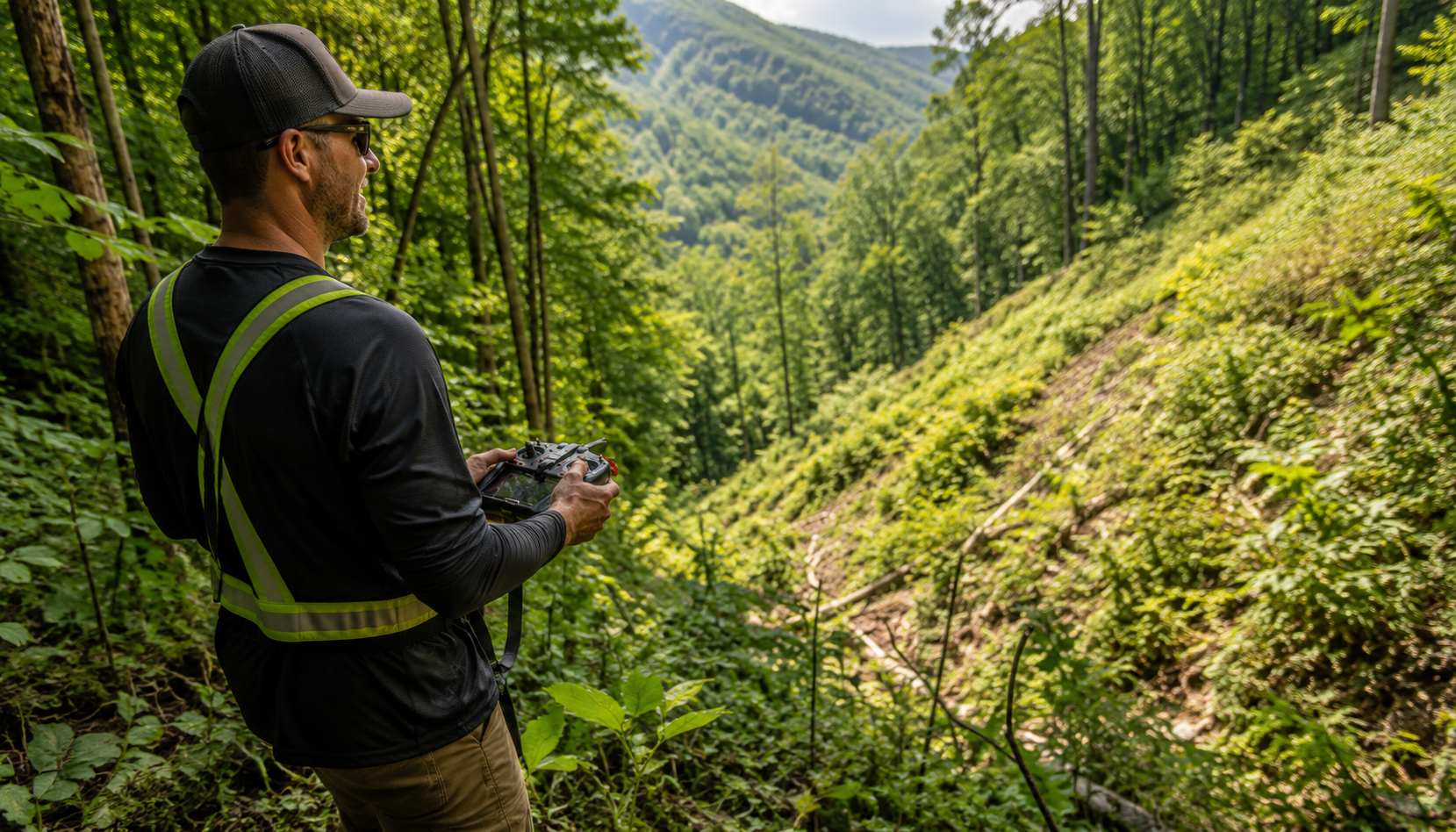
Keep unstable or uncertain sections out of the mowing scope until the responsible professional has evaluated them. Remote control changes where the operator stands; it does not remove the need to establish suitable operating conditions.
Check Access Before Choosing a Mower
A productive machine must fit the property. Measure the usable gate opening, assess the unloading location, and account for the approach to the bank. Include room for approved maneuvering and a practical plan for accessing the equipment if a problem occurs.
Compare the complete machine dimensions with the available route. Cutting width alone will not tell you whether a mower can pass between a fence and a drainage structure. Transport weight, trailer capacity, and storage also belong in the purchase discussion.
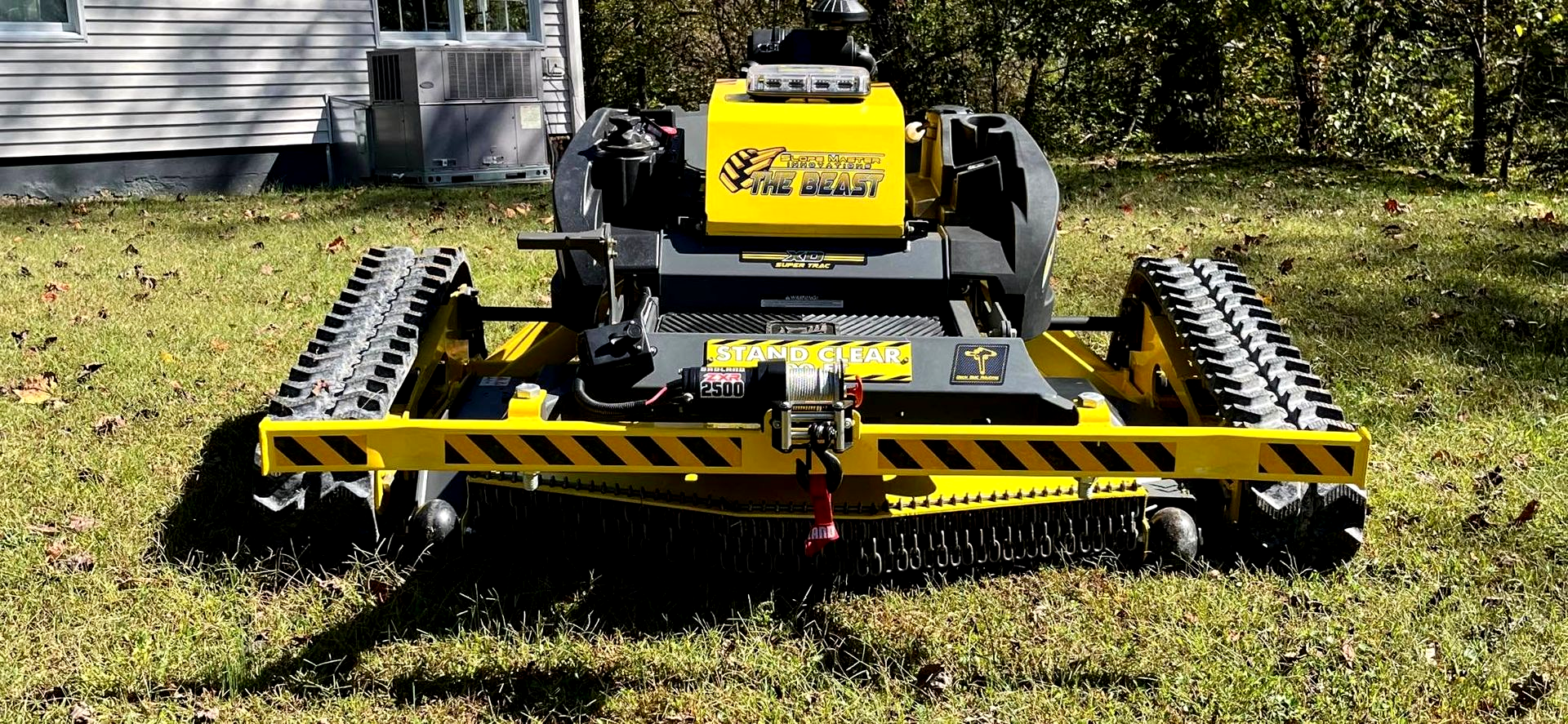
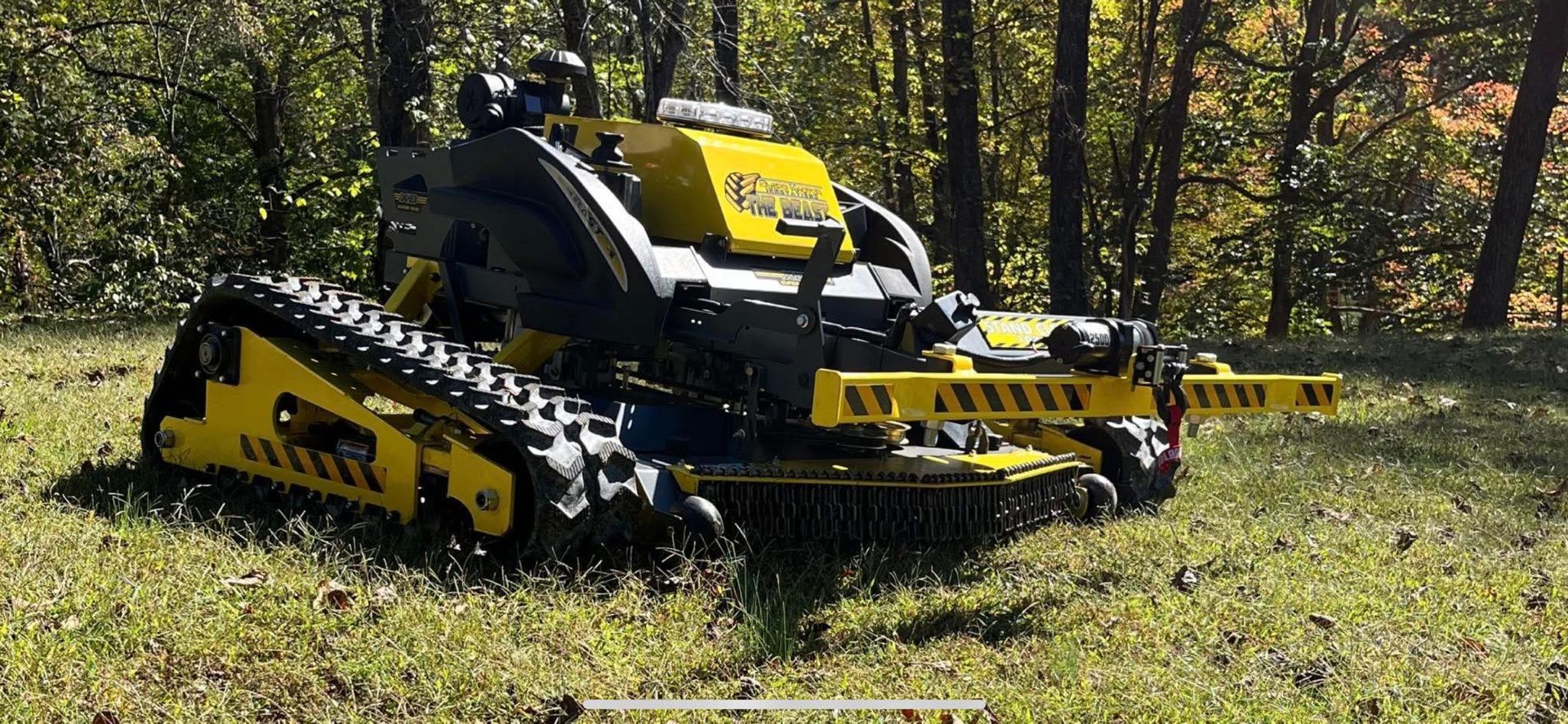
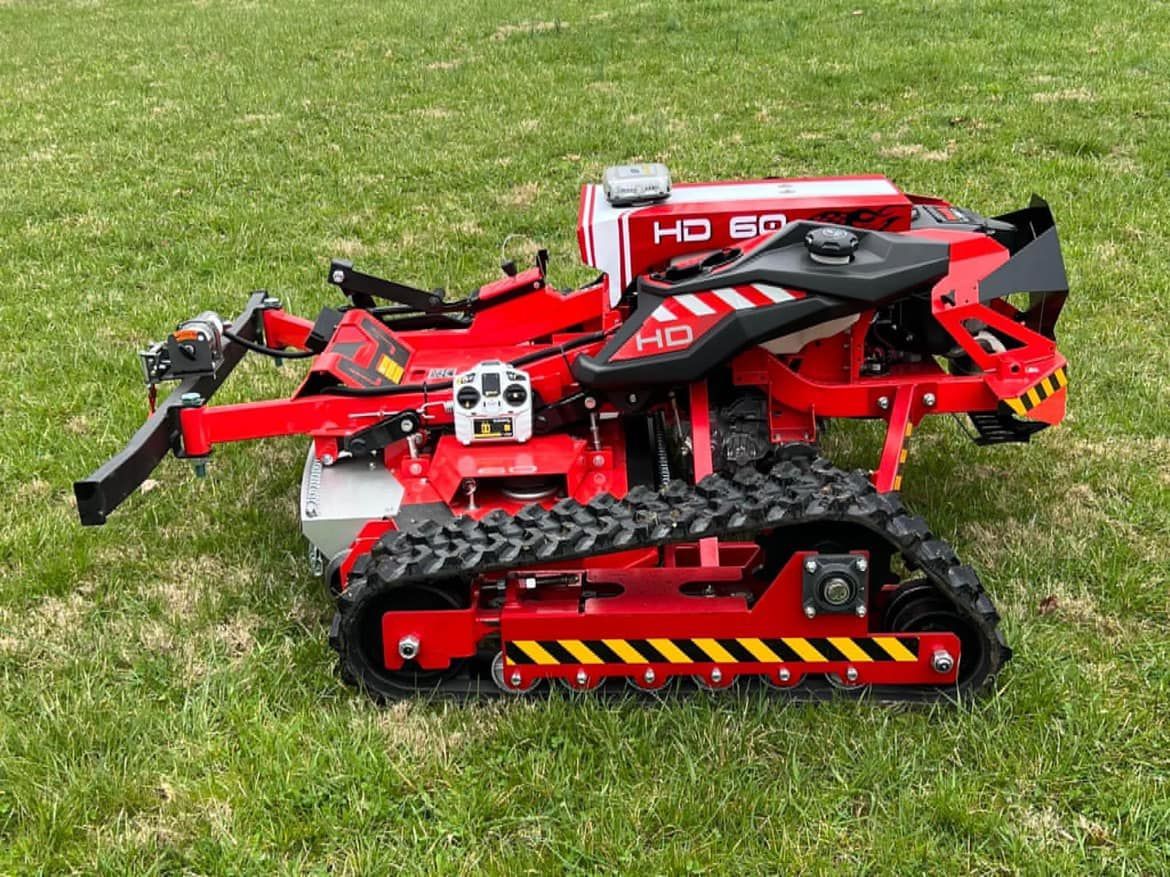
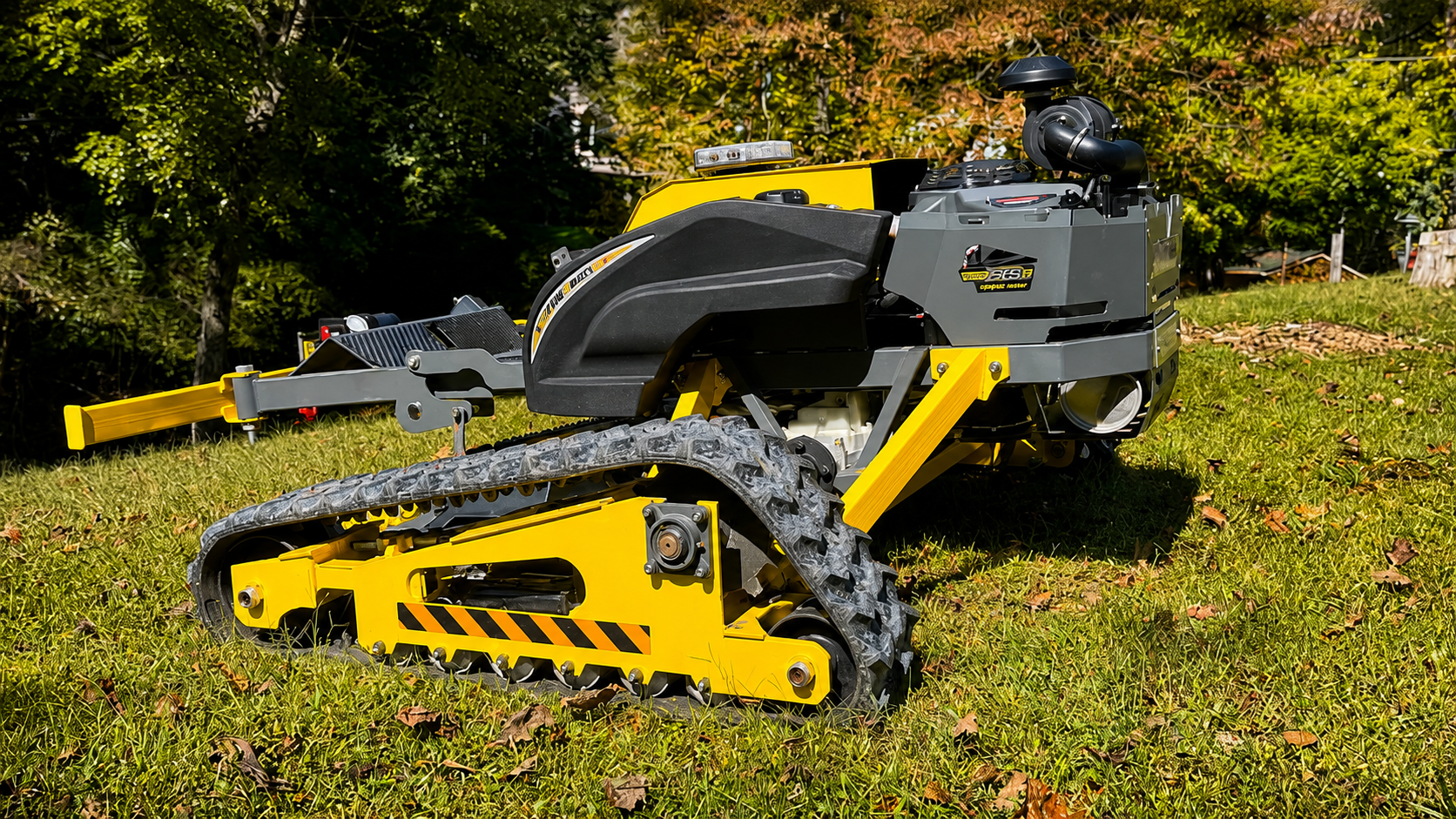
Our Slope Master model lineup includes different sizes and cutting configurations. Share the actual access constraints when requesting a recommendation.
Match the Cutting System to the Vegetation
Regularly maintained grass and a bank covered in woody growth present different tasks. Explain the current growth, how long the area has been unattended, and the finish expected after mowing. Confirm the proposed machine's cutting limits instead of assuming that tracked construction makes it a brush-clearing machine.
An overgrown property may need an initial rehabilitation scope before recurring mowing begins. Separate that work in the proposal so the customer understands what the maintenance price includes. Preserve any vegetation designated for the pond's management plan.
Build a Repeatable Maintenance Scope
A useful scope gives each visit a clear purpose. Include the mapped work area, required finish, protected zones, access arrangements, cleanup responsibilities, and a process for reporting new site conditions.
Specify who decides whether conditions require postponement and how that decision is communicated. Set the maintenance frequency according to growth and the property's requirements. A fixed interval should not become an instruction to mow unsuitable ground after heavy rainfall.
Ask for completion photos and notes on inaccessible sections. These records help explain an unfinished area, track changes, and plan follow-up work without confusing a mowing visit with a full stormwater inspection.
Compare Ownership With Contract Maintenance
For a portfolio of properties, consider annual workload, travel time, available operators, training, storage, maintenance, and backup arrangements. For an individual site, outside maintenance may be the practical option. Base the comparison on the actual bank area and frequency, not the total property acreage.
Slope Master serves commercial properties, municipalities, and landscape contractors evaluating difficult terrain. Remote-controlled equipment can be part of a more practical maintenance program when its capabilities match the approved work.
Plan Your Pond-Bank Equipment With Slope Master
Share your site map, access dimensions, vegetation photos, and maintenance expectations with our team. We can discuss suitable equipment and the questions that need to be resolved before selecting a model.
Request a quote, or call or text (606) 226-1004 to explore commercial slope mowing equipment for your property.