
Finish Mowing vs. Brush Cutting: Which Slope Mower Does Your Property Need?
Choose the cutting system for the growth on your property and the result you need.
Quick Answers
- What is finish mowing? Mowing intended to create a relatively even, maintained appearance in suitable grass and vegetation.
- What is brush cutting? Cutting rougher growth, potentially including woody stems, with equipment specifically approved for that material.
- Does a slope rating establish brush capacity? No. Terrain capability and cutting capability are separate specifications.
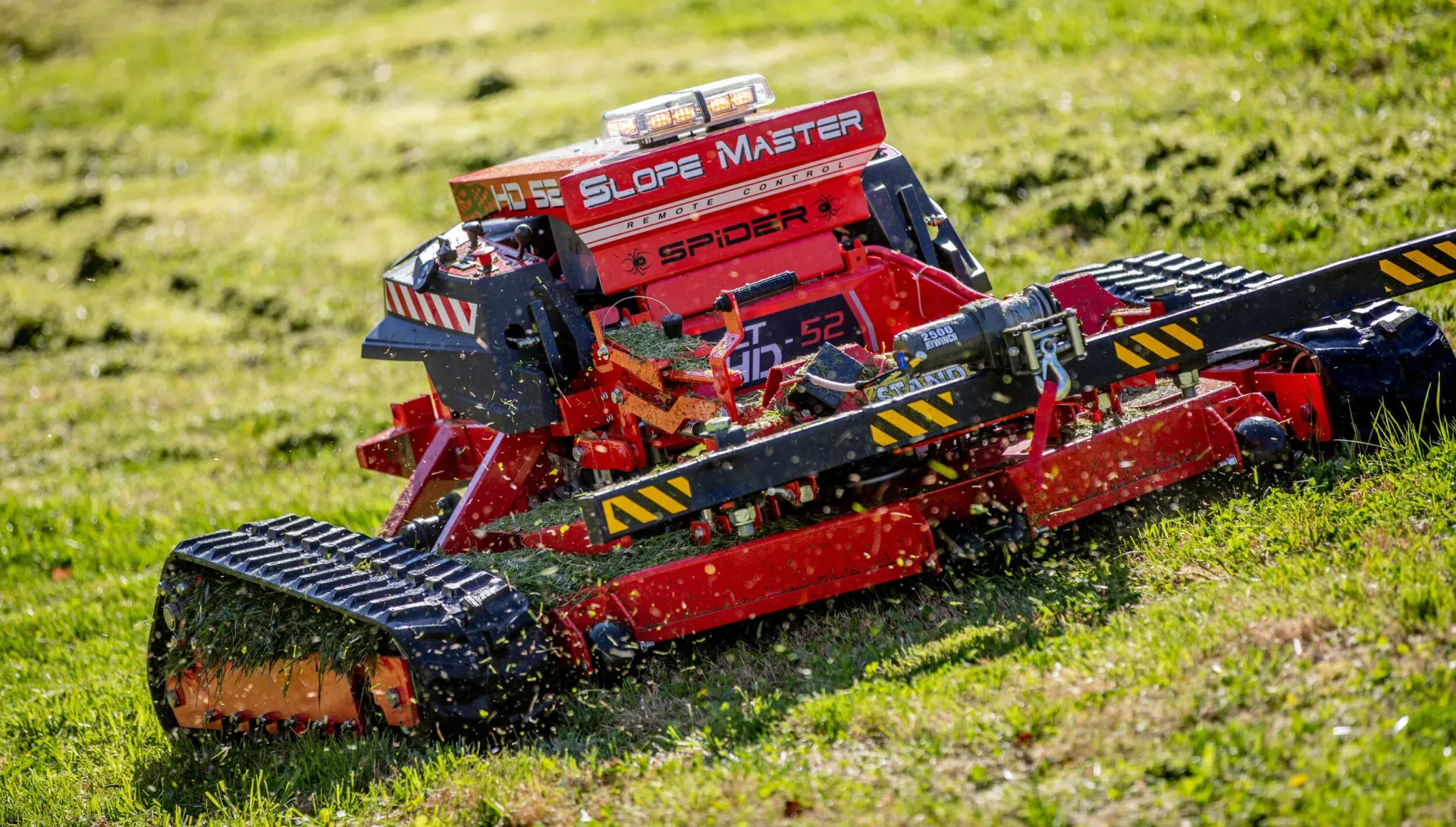
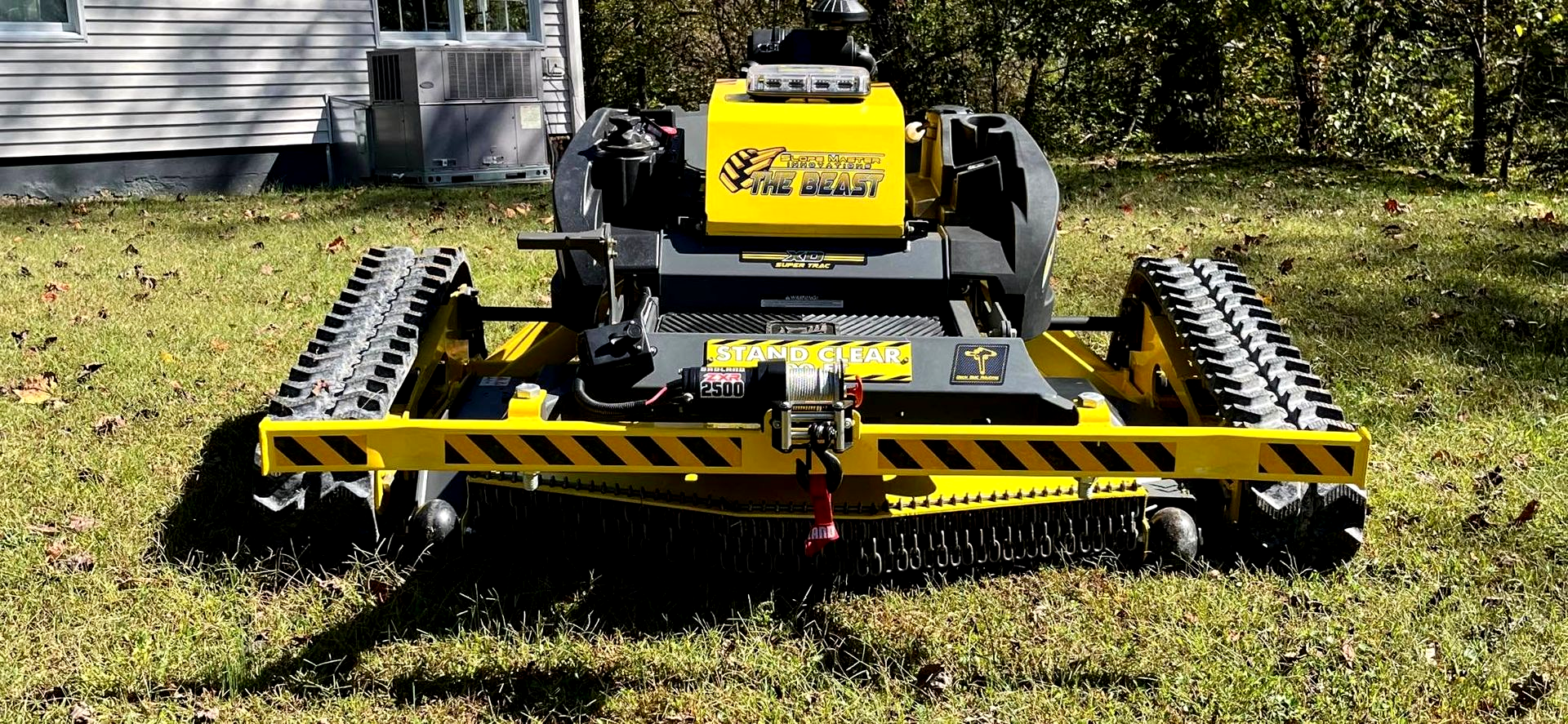
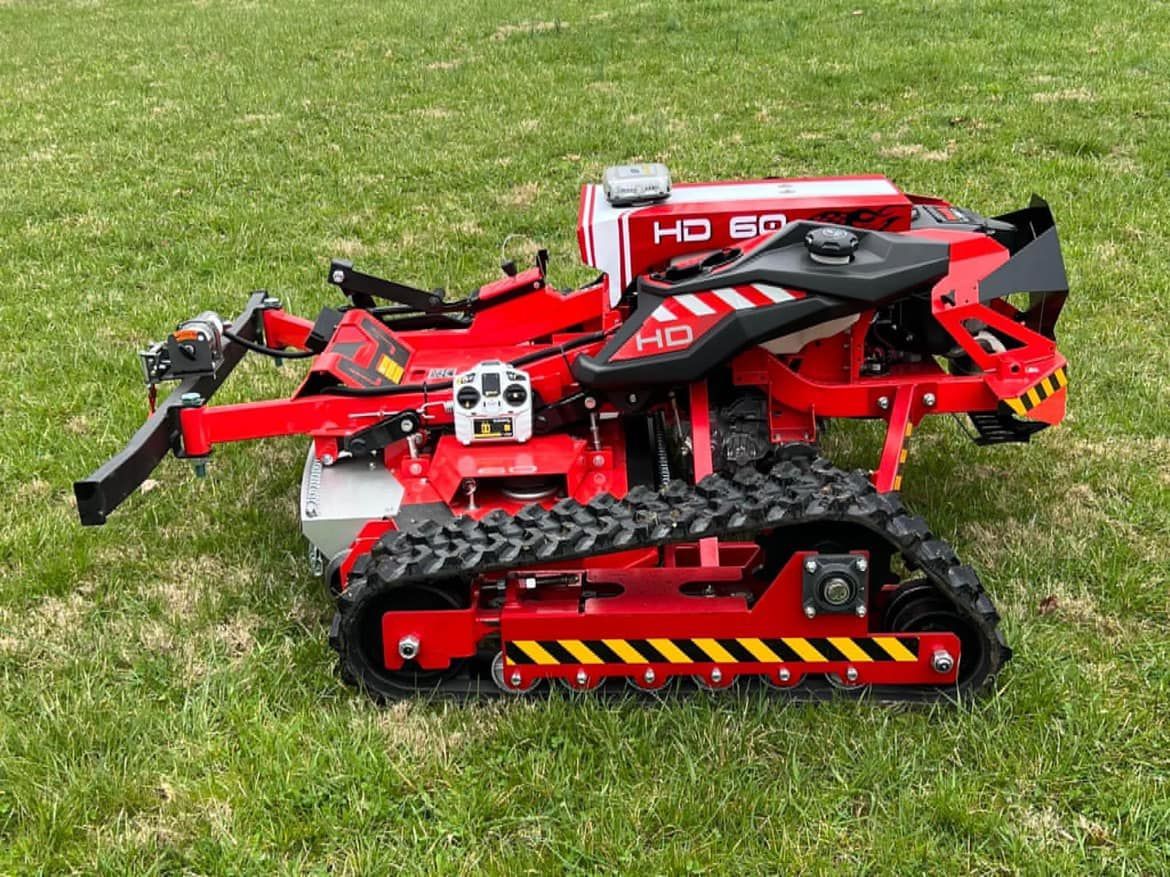
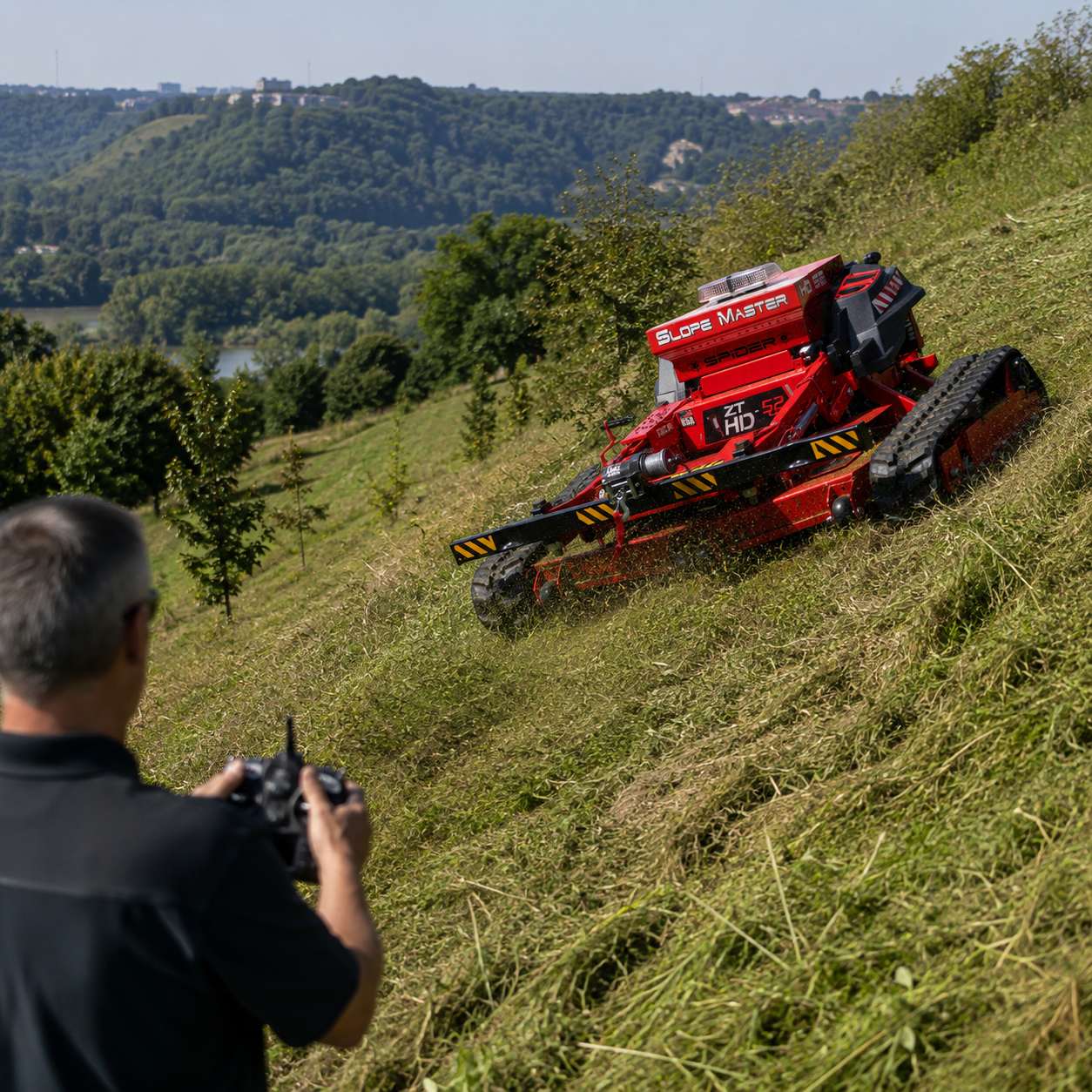
- What do Slope Master's current model pages list? Finish-cut widths of 52 inches for The Spider, 60 inches for The Industrial Dual Cut, and 61 inches for The Beast.
Two properties can have the same hillside angle and need very different equipment. One has regularly maintained grass beside a commercial building. The other has dense vegetation after several missed seasons. Describing both as “steep-slope mowing” leaves out the detail that determines the cutting system.
Start with the vegetation and the finished result. Then evaluate the machine's suitability for the terrain, access, and expected workload.
What Finish Mowing Is Intended to Accomplish
Finish mowing focuses on the appearance and consistency of maintained areas. A commercial property manager may want a neat bank beside a facility, an orderly roadside approach, or grass maintained to a specified height.
The quality of that result depends on the appropriate cutting system, blade condition, growth, ground contour, and operating setup. A wider deck does not automatically produce a better finish or complete every site faster. Obstacles and narrow access can change the practical choice.
Describe the required appearance when requesting equipment information. “Maintain this grass bank every few weeks” provides a clearer starting point than “cut whatever grows here.”
When Rough Growth Requires a Different Assessment
Brush cutting can involve coarse vegetation or woody material that requires a specifically rated cutting system. Grass height alone does not describe the challenge. A dense patch may contain vines, saplings, stumps, wire, or debris that is difficult to see before assessment.
Ask the manufacturer to confirm the approved vegetation type, maximum material dimensions where applicable, blade or deck configuration, and operating restrictions. Do not transfer one manufacturer's brush-cutting claim to another machine or assume every model within a lineup has identical cutting capability.
If a property needs substantial initial clearing, establish that as its own scope. Recurring finish mowing may become appropriate only after the initial work has been completed and the site reassessed.
What Slope Master's Published Model Specifications Show
Our current product pages identify the following finish-cut configurations:
- The Spider: 52-inch finish cut and a listed cutting-height range of 1.5–5 inches.
- The Industrial Dual Cut: 60-inch finish cut and a listed cutting-height range of 1.5–5 inches.
- The Beast: 61-inch finish cut and a listed cutting-height range of 1.5–5 inches.
Those specifications describe the published configurations reviewed in October 2026. They do not establish a woody-stem diameter rating. If your work includes brush or a mixed vegetation problem, speak with our team about the exact material and proposed configuration before selecting equipment.
Our model and customization options provide a starting point for matching the machine to your workload.
Keep Slope Capability Separate From Cutting Capability
A machine can be designed for steep terrain while using a cutting system intended for a particular finish. Conversely, a machine marketed for heavy brush may have operating limits that do not suit your bank.
Evaluate both questions independently: can this configuration operate within the site's assessed conditions, and can its cutting system handle the identified material? Obtain a clear answer to each.
Also consider the operator's visibility, protected structures, nearby people, and the manufacturer's required work-area controls. Remote operation does not eliminate thrown-object hazards or make unknown debris acceptable to cut.
Prepare a Vegetation Profile Before Requesting a Quote
A useful profile can be brief. Include wide photos of the area and close views taken from a safe location. Describe the maintenance history and identify known vegetation. If you are unsure what is growing there, say so rather than estimating a cutting limit.
- Is the job routine grass maintenance, initial reclamation, or a combination?
- What material is present, and where does it change across the property?
- What appearance and cutting height does the customer expect?
- How much area needs each type of work?
- Which access restrictions, obstacles, or structures affect equipment selection?
- How often will the area be maintained after the first visit?
This information helps avoid buying for the easiest part of the property while overlooking the sections that need a different plan.
Evaluate the Result on Representative Ground
When arranging an equipment evaluation, ask the manufacturer to select a suitable area that represents the approved work. Review the finished cut, maneuverability, material left behind, and the remaining detail work. Record the configuration and conditions so your purchasing decision has a useful reference.
For contractors, the required result also belongs in the customer proposal. Separating initial clearing, recurring mowing, and cleanup helps prevent disputes over what the price includes.
Find the Right Fit for Your Property
Slope Master Innovations can discuss your vegetation, terrain, access, and expected finish before recommending equipment. Bring those details to the conversation so the model selection reflects the work you actually need to perform.
Request a recommendation and quote, or call or text (606) 226-1004.