
Remote-Controlled Mowing for Municipal Crews
Evaluate remote mowing for your public works team
Quick Answers
Why consider remote-controlled mowing for public works? It can reduce the time crews spend walking or riding on steep banks while keeping a trained operator in direct control. The benefit depends on the site, vegetation, access and work plan.
Does it replace an entire crew? Not automatically. Traffic control, debris removal, spotting, transport and detail trimming may still require additional people.
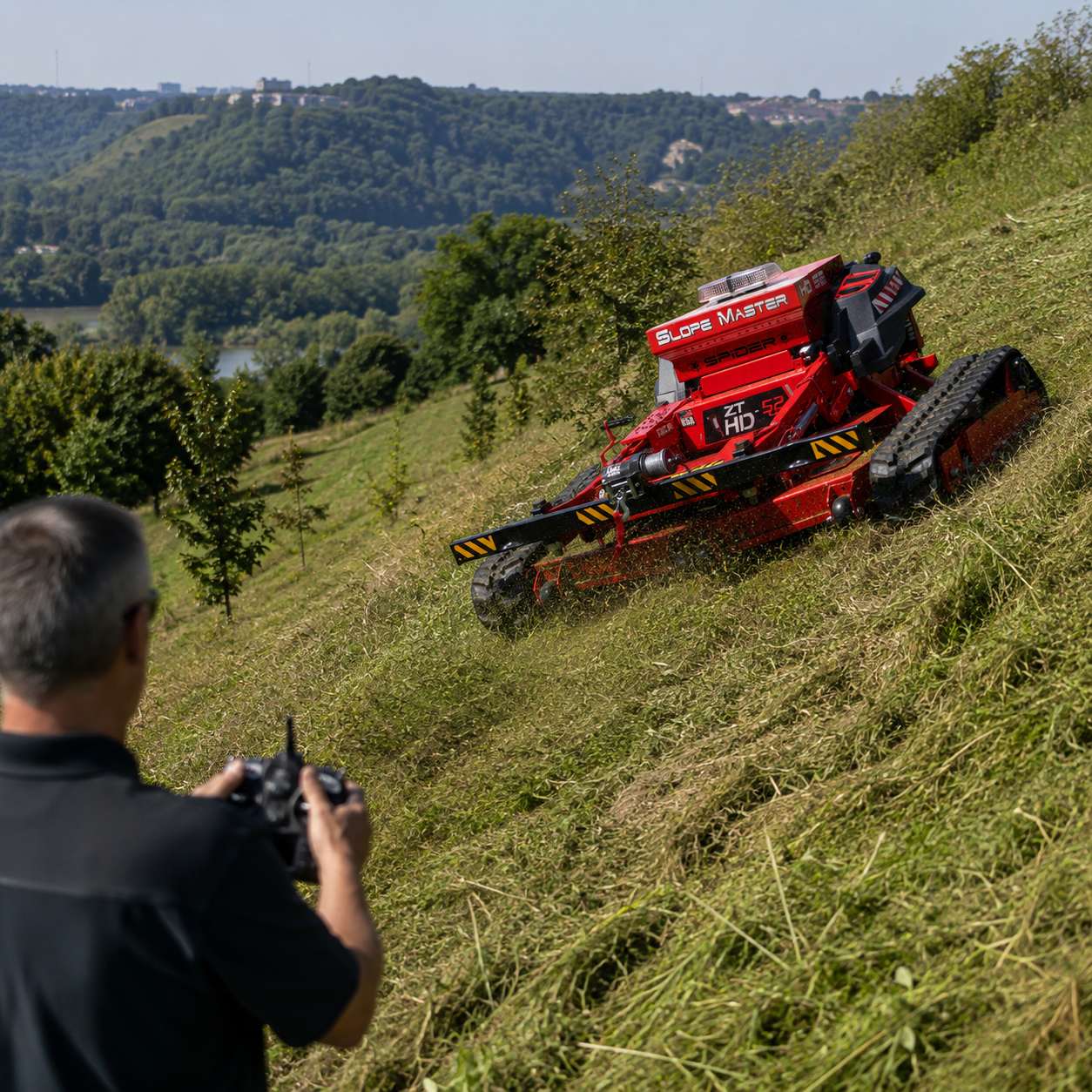
How steep can a Slope Master mow? Slope Master advertises capability up to 60 degrees. The approved operating limits for the specific machine, soil conditions and manufacturer’s instructions determine whether a particular slope is suitable.
Reviewed and updated October 22, 2026.
What Changes When the Operator Steps Off the Machine?
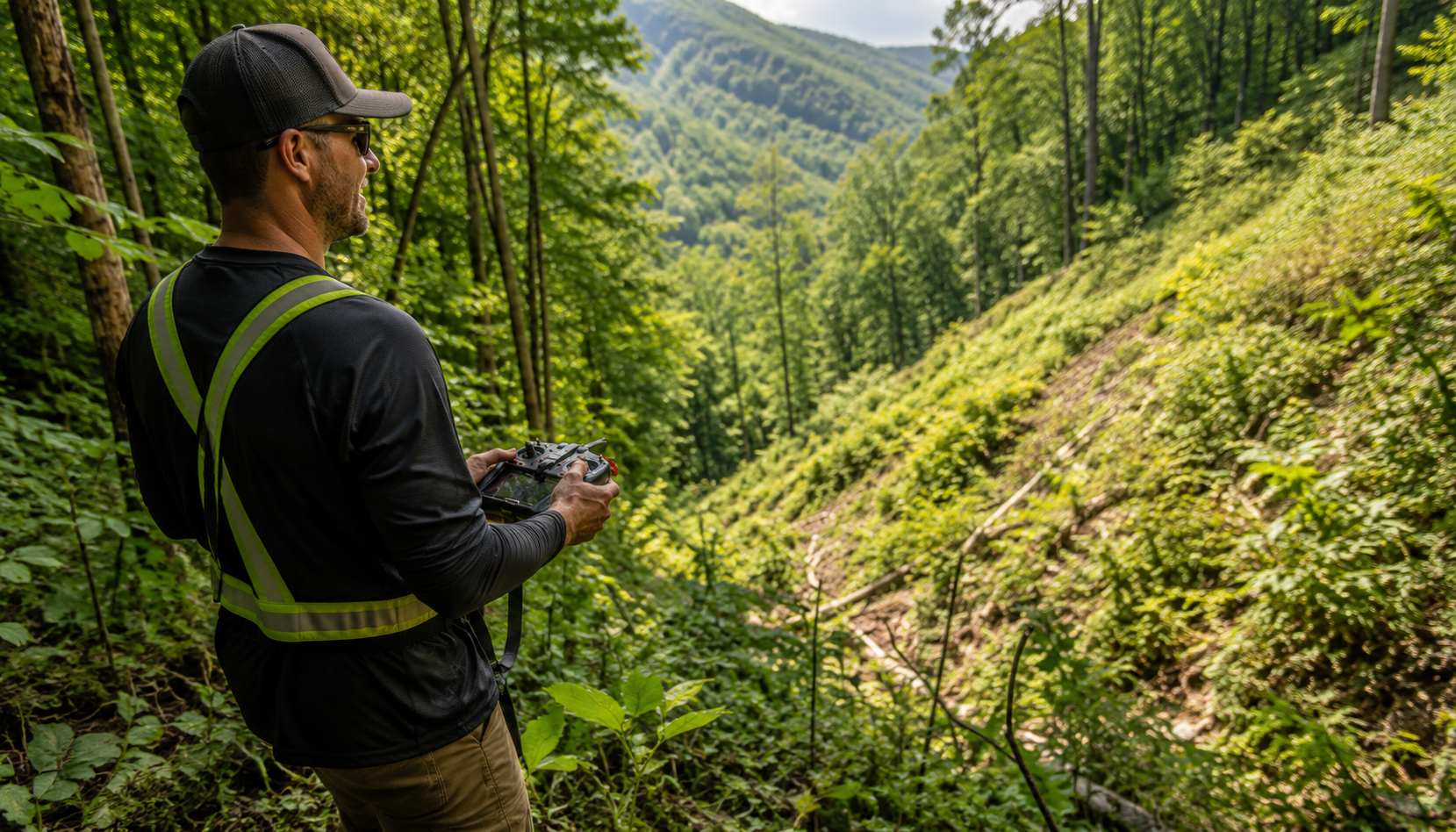
A remote-controlled mower lets an operator choose a suitable observation position instead of riding the equipment across an embankment. That changes exposure to a rollover, but it does not prevent the machine from slipping, rolling or throwing debris. People must remain outside the machine’s travel, discharge and potential slide paths.
Remote control also differs from autonomy: an operator actively steers and supervises the mower. Do not assume GPS navigation, unattended operation or automated obstacle avoidance unless those features are confirmed for the model being purchased.
Match the Machine to the Maintenance Route
Start with a route inventory. Record the mowable area, steepest sections, access width, obstacles, vegetation and required cut height. Separate routine grass maintenance from woody vegetation removal. A finish-cut deck is not automatically a brush cutter.
- Roadside embankments: plan vehicle access, debris inspection and traffic control before scheduling mowing.
- Pond banks and drainage areas: identify water edges, soft ground, culverts and erosion. Postpone work when conditions undermine traction or bearing capacity.
- Parks and trails: establish public exclusion areas and choose working hours that allow them to be maintained.
- Utility corridors: confirm access permission, overhead and ground-level hazards, and the asset owner’s requirements.
Measure the Full Job, Not Just Cutting Time
Run a demonstration on representative terrain and record total crew-hours, travel, unloading, setup, mowing, trimming, cleanup and loading. Compare the same acreage, finish standard and vegetation conditions with the current method.
For example, three people working four hours use 12 crew-hours. Two people working three hours use six crew-hours. This is an illustration of the calculation, not a promised Slope Master result. Count support labor and any work left for other equipment.
Use your own records to assess slope mower return on investment. Insurance savings, lower injury rates and staffing reductions should not be assumed without supporting evidence.
Compare the Current Slope Master Models
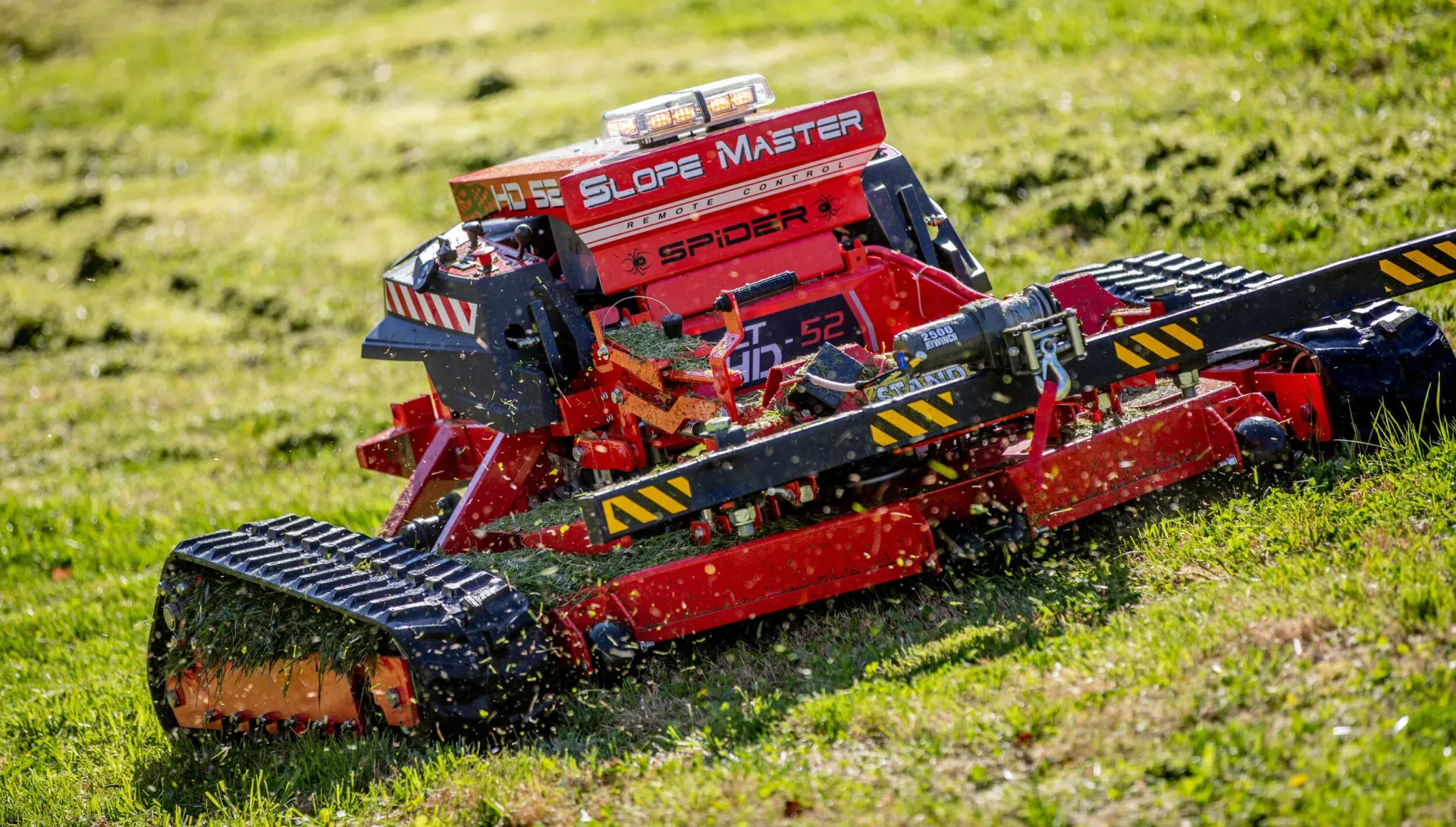
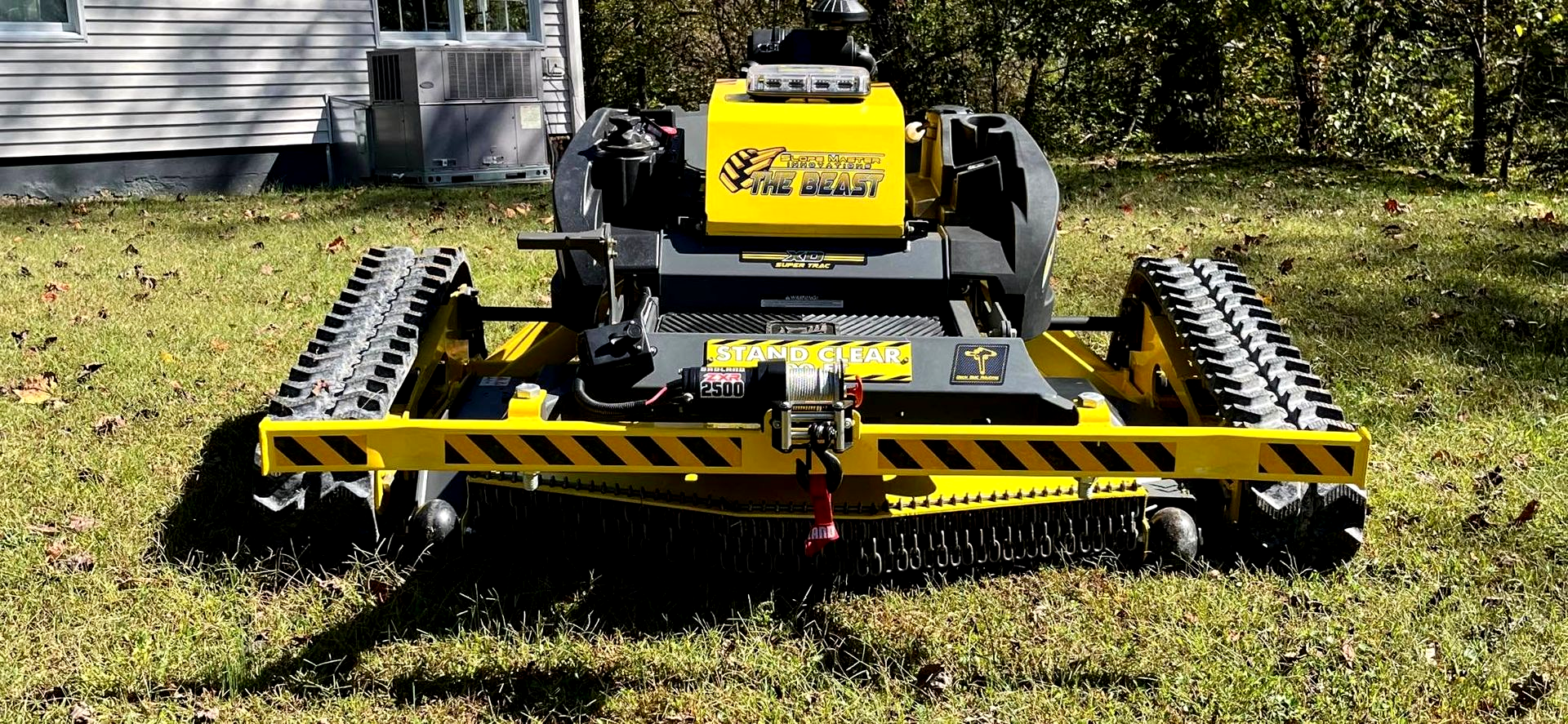
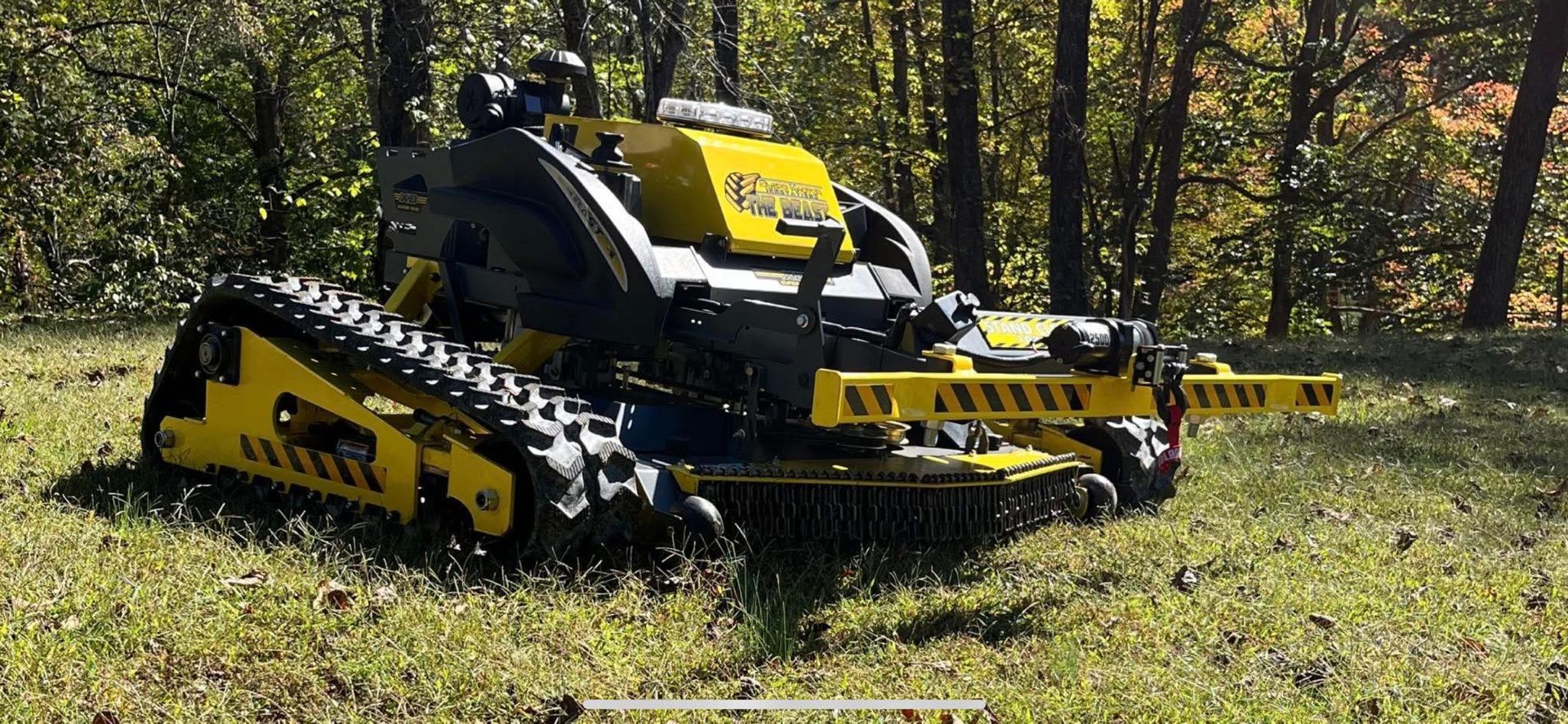
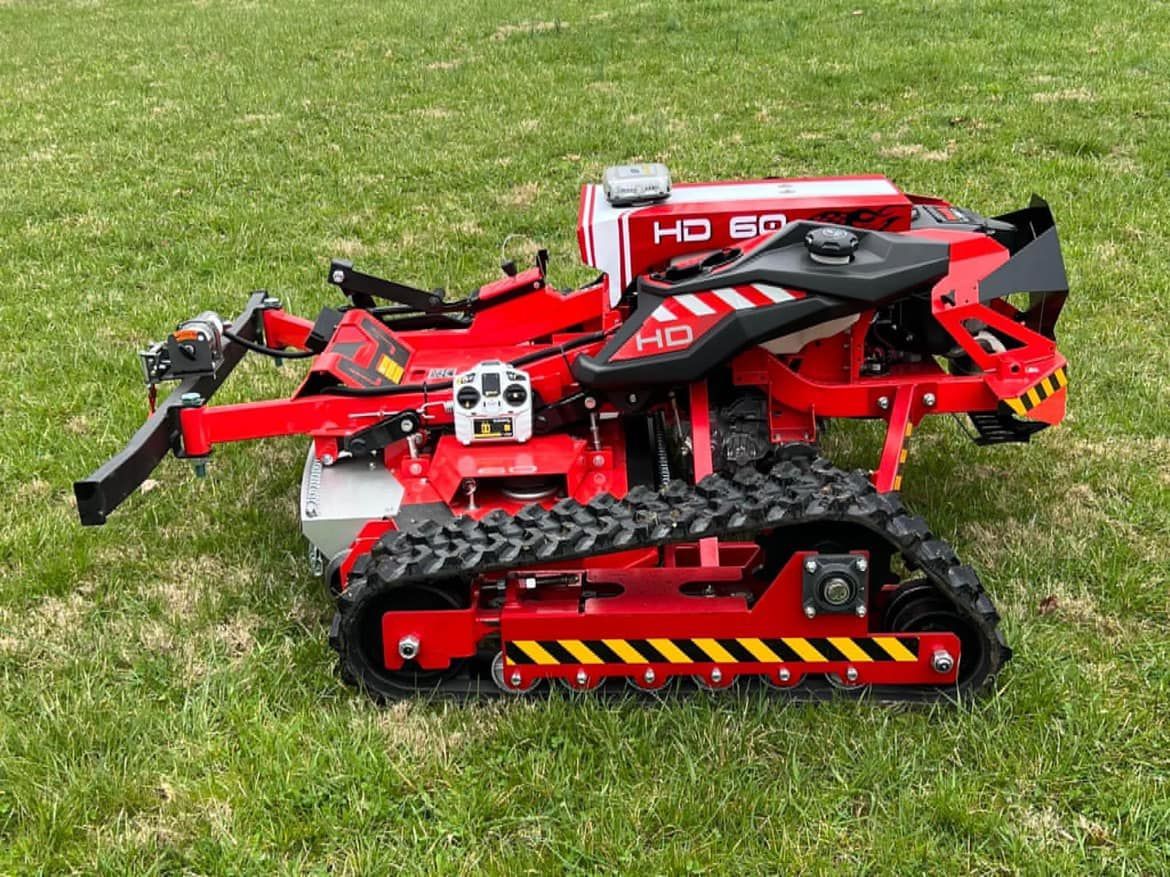
The Spider lists a 52-inch finish cut, the Industrial Dual Cut a 60-inch finish cut, and The Beast a 61-inch finish cut. Each model page lists a 1.5–5-inch cutting-height range. Confirm the specifications and options in the final equipment quote.
Deck width is only one purchasing factor. Check machine width against gates, trailer capacity against the full transported load, and service access against your maintenance resources. The included winch and available second winch should be discussed with Slope Master along with approved use and training.
Build a Practical Municipal Pilot
- Select representative work: include an accessible bank, an obstacle-heavy area and the finish standard your department actually needs.
- Document boundaries: map no-go areas, public access, utilities, traffic exposure and a suitable operator position.
- Train the team: confirm machine inspection, radio-control checks, emergency-stop procedures, slope limits and recovery procedures against the operator’s manual.
- Record results: track crew-hours, fuel, maintenance, interruptions and quality of finish across repeated visits.
- Review the decision: compare ownership with current operations or contracted service using realistic annual utilization.
Questions Public Works Buyers Should Ask
Will remote operation eliminate roadside hazards? No. It may change where the operator stands, but traffic management, exclusion zones and site supervision remain necessary.
Can the machine work on wet pond banks? A slope rating alone does not establish suitability. Soft soil, saturated ground and water-edge instability require a separate assessment and may make the site unsuitable.
Does purchasing a mower guarantee lower insurance costs? No. Discuss your actual operating procedures and coverage with your insurer; do not include a premium reduction in the budget unless it is confirmed.
Plan Your Municipal Mowing Evaluation
Slope Master Innovations manufactures remote-controlled slope mowers in Kentucky for commercial buyers across the USA. Share your route photos, slope measurements, access dimensions and mowing schedule so the team can help evaluate the fit.
Explore municipal and commercial applications, review the model lineup, or request a quote. Call (606) 226-1004 to discuss your sites.